
Constanza Rutherford. Instagram: @coniferasss
Fecha captura fotos: Entre diciembre 2022 y marzo 2023.


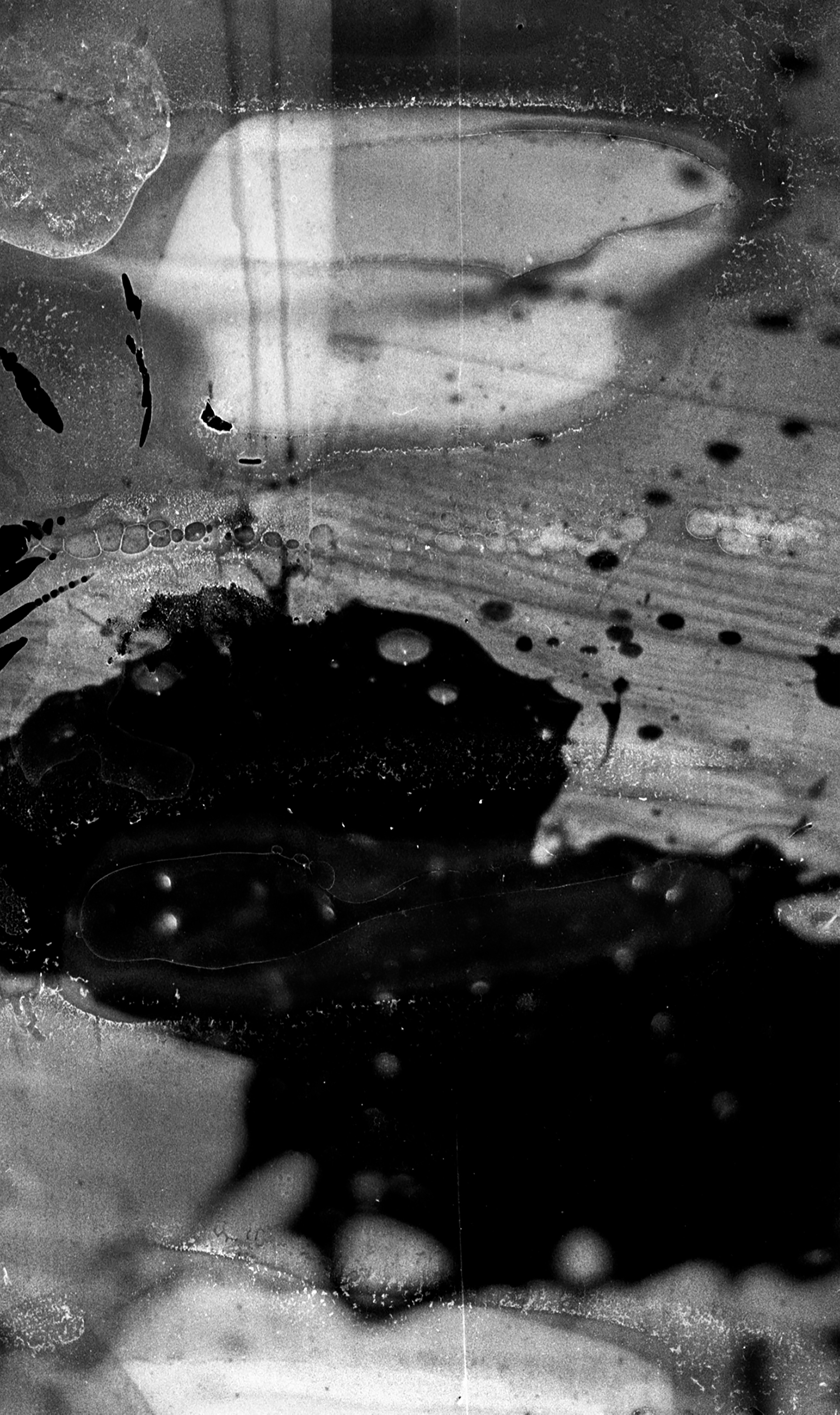

Nombre de las fotos: 1. Sostener algo tan intangible como la ciclicidad del cuerpo. 2. Desprendimiento de las paredes internas del útero. 3. La sangre menstrual representa más que la simple ausencia de un óvulo fecundado. 4. Hay que observarse ante un espejo.
La primera vez me dijeron que no había tocarla, que era sucia. También, que no había que mojarse el pelo, y mucho menos nadar. Estas fotografías buscan resignificar el ciclo menstrual a través de la experimentación, utilizando la sangre como material para revelar fotografías durante un ritual mensual, creando un paralelismo entre ambos ciclos. Al implicar las manchas de menstruación en el proceso de revelado, y hacerla evidente, me permito pasar sobre algunas nociones impuestas o límites, como mantener la menstruación en secreto y oculta, como un simple desecho. Mis manos autoetnográficas que tocan y palpan la menstruación, me regalan la posibilidad de rebelarme ante los estigmas, así como voy revelando fotografías con mi sangre menstrual.
¿Por qué son importantes estas fotografías en particular para su investigación?
Este proyecto inicia con un cuestionamiento hacia la narrativa en torno a la menstruación, posicionándose en contra de la percepción negativa, la carga simbólica y patriarcal que se proyecta sobre el ciclo menstrual. Para ello, se realizó una revisión de diferentes definiciones en torno al ciclo menstrual, analizando los estigmas relacionados y el origen del asco hacia la sangre menstrual, desde una postura feminista y decolonial. Se siguió una metodología autoetnográfica, recolectando datos por medio de un foto-diario y la toma de notas de campo durante los días de sangrado, así como la recolección de sangre a partir de productos ecológicos de higiene menstrual, la cual se utiliza para intervenir el proceso químico de revelado, estableciendo un paralelismo entre ambos ciclos. De esta forma, resultan imágenes abstractas que aluden a las diferentes etapas del ciclo menstrual, así como las emociones y reflexiones registradas en las notas de campo, dando paso a una exploración personal que resignifica la menstruación a partir de sus posibilidades creativas.
How to keep a secret
Constanza Rutherford. Instagram: @coniferasss
Name of pictures: 1) Holding onto something as intangible as the cyclicity of the body. 2) Detachment of the inner walls of the uterus. 3) Menstrual blood represents more than the mere absence of a fertilized egg. 4) One must observe oneself in front of a mirror.
Dates of pictures: December 2022 – March 2023.
The first time I was told not to touch it, that it was dirty. Also, not to wet my hair, and don’t even think about swimming. These photographs seek to reinterpret the menstrual cycle through experimentation, using blood as a material to develop photos during a monthly ritual, creating a parallel between both cycles.
By involving menstrual stains in the developing process and making them evident, I allow myself to challenge some imposed notions or boundaries, such as keeping menstruation a secret and hidden, as a mere waste. My autoethnographic hands that touch and feel menstruation give me the possibility to rebel against the stigmas, as I develop photos with my menstrual blood.
Why are those particular photographs important to your research?
This project begins with a questioning of the narrative surrounding menstruation, taking a stance against the negative perception, symbolic burden, and patriarchal projections onto the menstrual cycle. To achieve this, a review of various definitions surrounding the menstrual cycle was conducted, analyzing related stigmas and the origins of disgust towards menstrual blood from a feminist and decolonial perspective. An autoethnographic methodology was followed, collecting data through a photo diary and field notes during the days of menstruation, as well as the collection of menstrual blood using eco-friendly hygiene products. This menstrual blood is then used to intervene in the chemical development process of photographs, establishing a parallel between the two cycles. In this way, abstract images emerge that allude to the different stages of the menstrual cycle, as well as the emotions and reflections recorded in the field notes. This leads to a personal exploration that redefines menstruation through its creative possibilities.
 Narrativas Visuales/Visual Narratives