
Angélica Alvites Baiadera, CCONFINES-UNVM-CONICET. Instagram: @angelica_alvites_baiadera Twitter: @AngelicAlvitesB
Fecha de captura de las fotos: Chile, en la ciudad de Iquique: 1) mayo, 2022. 2) febrero, 2022. 3) marzo, 2022. 4) julio,2022.
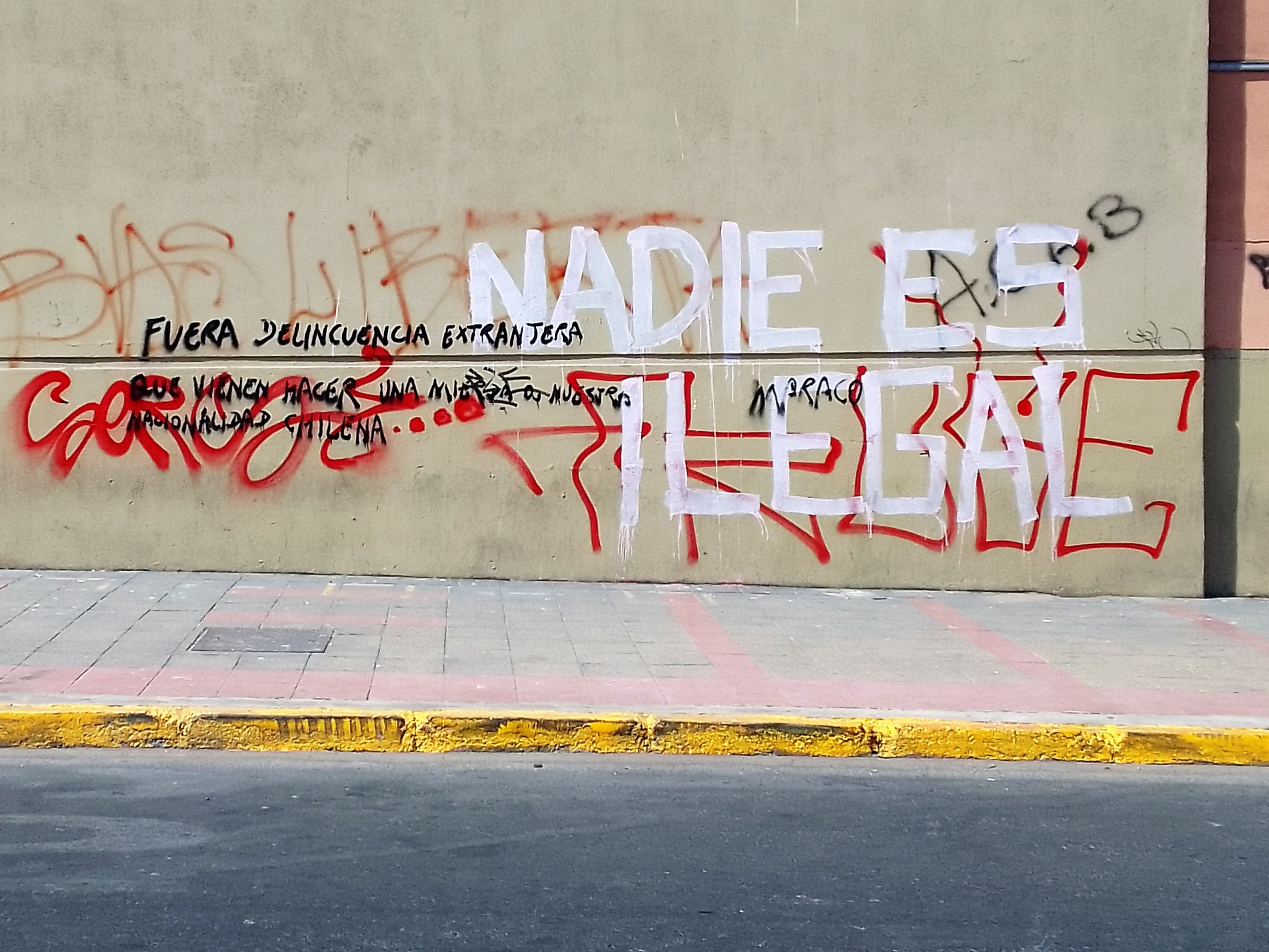
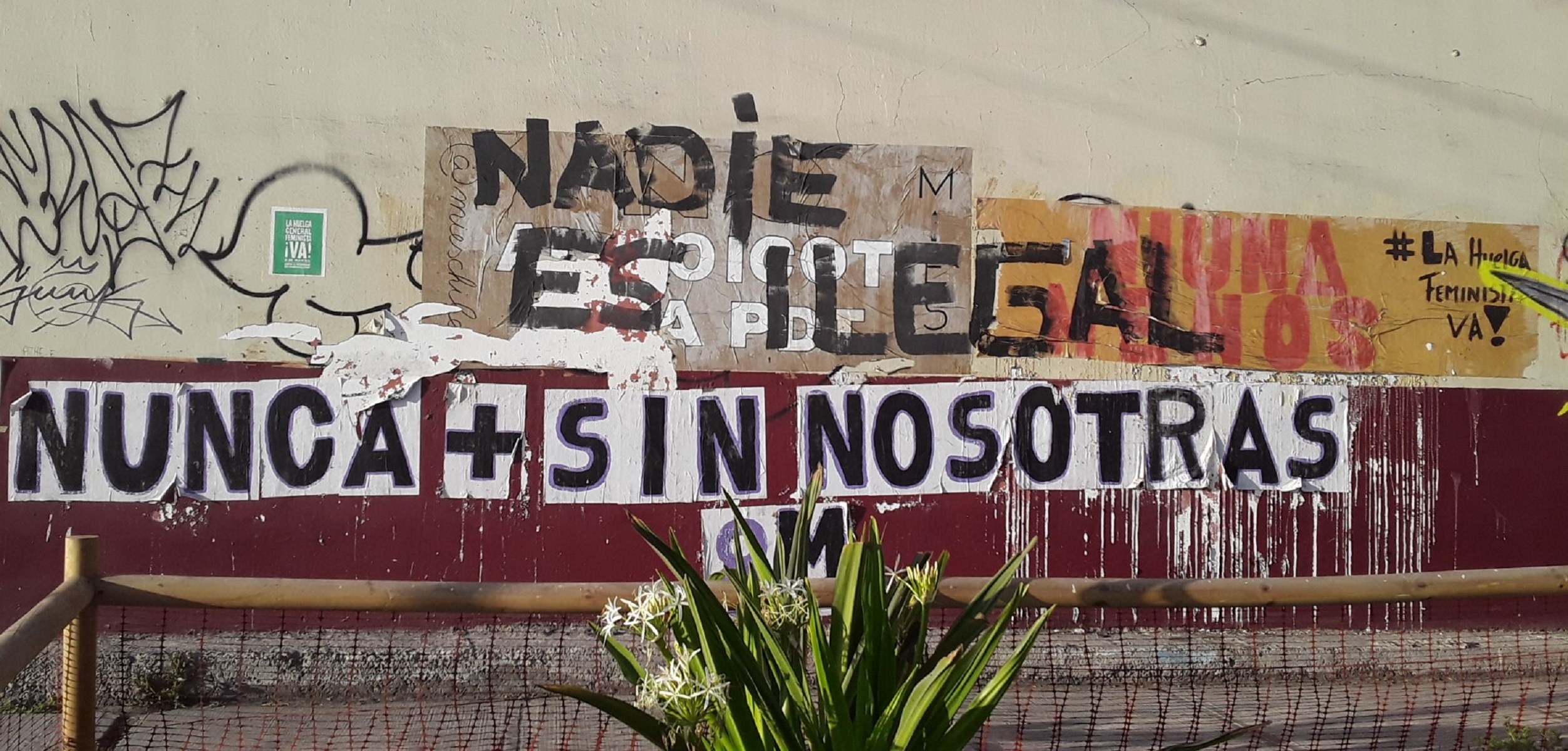
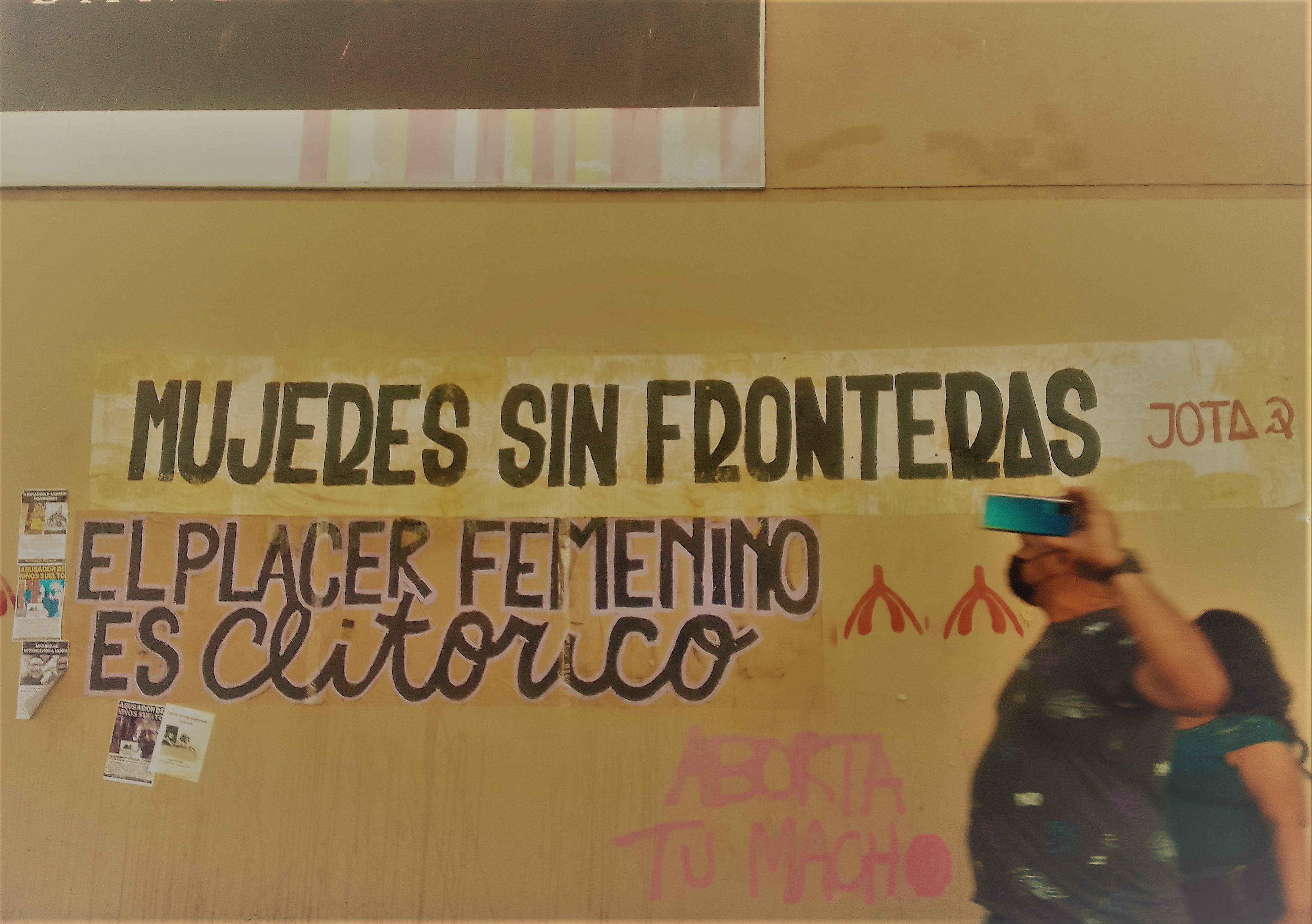
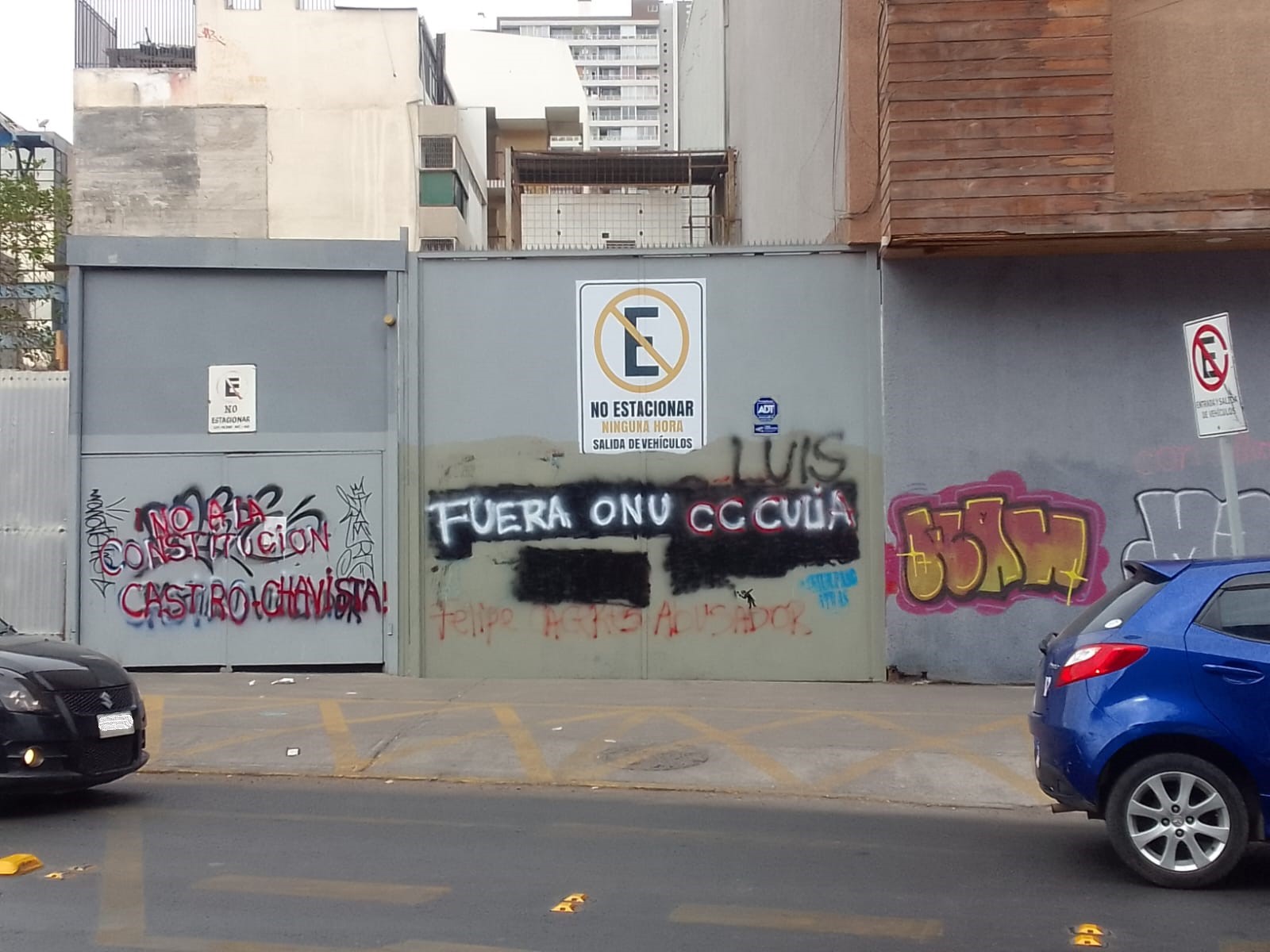
Nombre de las fotos: 1) Entre la criminalización y la solidaridad con las migraciones. 2) Entre migraciones y feminismos. 3) Entre feminismos y fronteras. 4) Entre desacuerdos y prohibiciones.
Las denominada “crisis migratoria” en el norte de Chile es un tema recurrente en la agenda mediática y política del país. Ésta ha tenido su correlato en criminalizar las migraciones y la solidaridad. El uso de comillas para referirse a esta crisis sugiere una mirada crítica sobre el término. Sayad (2010), ya en los años de 1980, señalaba la preocupación de cómo se adjetivaban las crisis. Así el autor cuestiona si es verdaderamente una crisis migratoria o de refugiados, o, por el contrario, son complicaciones, reflejo o síntoma de los modos en que están constituidas las sociedades y sus instituciones. Contemporáneamente, varios autores comparten esta preocupación, al centrarse en la crisis generalizada del gobierno y del control de la movilidad humana instigada en los diferentes regímenes fronterizos (De Genova y Tazzioli, 2016). Particularmente, en Chile se constituyeron diferentes mecanismos para superar tal “crisis”. Así, se aumentaron las infraestructuras fronterizas de control y vigilancia, se crearon albergues temporales, se fortaleció la intervención de organismos internacionales y agencias socias, se continuaron las medidas de expulsiones y rechazos en fronteras y se promovió el uso del control biométrico para personas que habían ingresado por pasos no habilitados estatalmente. Estos son algunos de los aspectos que componen la política chilena, la cual implicó múltiples dificultades para las personas migrantes. Desde reacciones explícitas de racismo y xenofobia hasta la imposibilidad de acceso formal a servicios y equipamientos; ampliándose los riesgos de sufrir violencia (incluso mortal) en el tránsito y cruces de fronteras.
¿Por qué son importantes estas fotografías en particular para su investigación?
Las fotografías las realice durante mi estancia en el norte de Chile desde noviembre de 2021 hasta marzo de 2023, como parte de mis inquietudes en la intersección entre los estudios de migraciones y de fronteras, al buscar comprender los complejos de seguridad fronterizos, los controles y las experiencias migrantes. Durante mi trabajo de campo realice registros (visuales y sonoros) de diversas vivencias relacionadas con el tránsito, las fronteras, las violencias y los controles. Estas imágenes no solo me permiten recordar ciertos paisajes urbanos y fronterizos, para describir detalladamente varios fenómenos sociales, sino también ampliar mi perspectiva sobre lo que se ha denominado como “crisis migratoria”. Las paredes actúan como espacios donde se tensionan y exponen visiones antagónicas, por ejemplo, entre la solidaridad y la criminalización de las migraciones, o posibles conexiones o acuerdos, como pueden ser las distintas luchas sociales (fronterizas, migrantes, feministas). Las paredes se convierten en escenarios de debates y reflexiones, donde se manifiestan opiniones divergentes o acuerdos entre quienes quieren manifestar sus pareceres sobre ciertas coyunturas sociales y políticas. Personas escriben mensajes, otras responden, algunas tachan lo dicho y expresan su punto de vista. Las paredes se convierten en testigos de nuestras preocupaciones y reflejan los temas debatidos tanto en los medios de comunicación, la política y, también, en las calles.
“Wall Discussions” on Migrations and Borders
Angélica Alvites Baiadera, CCONFINES-UNVM-CONICET. Instagram: @angelica_alvites_baiadera Twitter: @AngelicAlvitesB
Names of the pictures: 1) Between the Criminalisation and Solidarity with Migrations. 2) Between Migrations and Feminisms. 3) Between Feminisms and Borders. 4) Between Disagreements and Prohibitions.
Date and city/country of capture: Chile, in the city of Iquique: 1) May, 2022. 2) February, 2022. 3) March, 2022. 4) July, 2022.
The so-called “migration crisis” in northern Chile has been a recurring topic in the country’s media and political agenda. This has been paralleled by the criminalisation of migrations and solidarity. The use of quotation marks to refer to this crisis suggests a critical perspective on the term. Sayad (2010), as early as the 1980s, highlighted concerns about how crises were being described. Thus, the author questions whether it is genuinely a migration or refugee crisis, or, conversely, whether these are complications, reflections, or symptoms of the ways in which societies and their institutions are constituted. Concurrently, several authors share this concern, focusing on the widespread crisis of government and control of human mobility instigated across different border regimes (De Genova and Tazzioli, 2016). Particularly in Chile, various mechanisms were established to address such the “crisis”. Consequently, border control and surveillance infrastructures were intensified, temporary shelters were established, intervention by international bodies and partner agencies was strengthened, measures of expulsion and border rejections persisted, and the use of biometric control was encouraged for individuals who had entered through state unauthorized passages. These represent some of the issues comprising Chilean policy, which brought forth multiple challenges for migrants. These issues range from explicit reactions of racism and xenophobia to the formal inability to access services and amenities, consequently heightening the risks of facing violence (even fatal) during transit and border crossings.
Why are those particular photographs important to your research?
I captured these photographs during my stay in northern Chile from November 2021 to March 2023, as part of my exploration into the intersection between migration studies and border studies. I sought to comprehend the complexities of border security, controls, and migrant experiences. Throughout my fieldwork, I recorded visual and auditory documentation of various encounters associated with transit, borders, violence, and controls. These images not only allow me to reminisce about specific urban and border landscapes, facilitating a detailed description of several social phenomena, but also enable me to broaden my perspective on what has been termed as the “migration crisis.” Walls serve as spaces where conflicting views are juxtaposed and exposed. For instance, tensions emerge between solidarity and the criminalisation of migrations, or potential connections and agreements among different social struggles (border-related, migrant, feminist). Walls become settings for debates and reflections, where diverse opinions are voiced or agreements are reached among those wishing to express their viewpoints on social and political junctures. People write messages, others respond, some strike out statements and express their perspectives. Walls become witnesses to our concerns and reflect the topics debated in the media, politics, and even on the streets.
 Narrativas Visuales/Visual Narratives