
Carla Bravo Rojas, Estudiante del Erasmus Mundus Master’s Degree in Women’s and Gender Studies (GEMMA), Granada University – Lodz University. Instagram: @carlanaloga @carlalracdarla
Fecha y lugar captura de fotos: 25 de noviembre de 2021, Alameda, Santiago de Chile. 11 de septiembre de 2023, Estadio Nacional, Santiago de Chile.
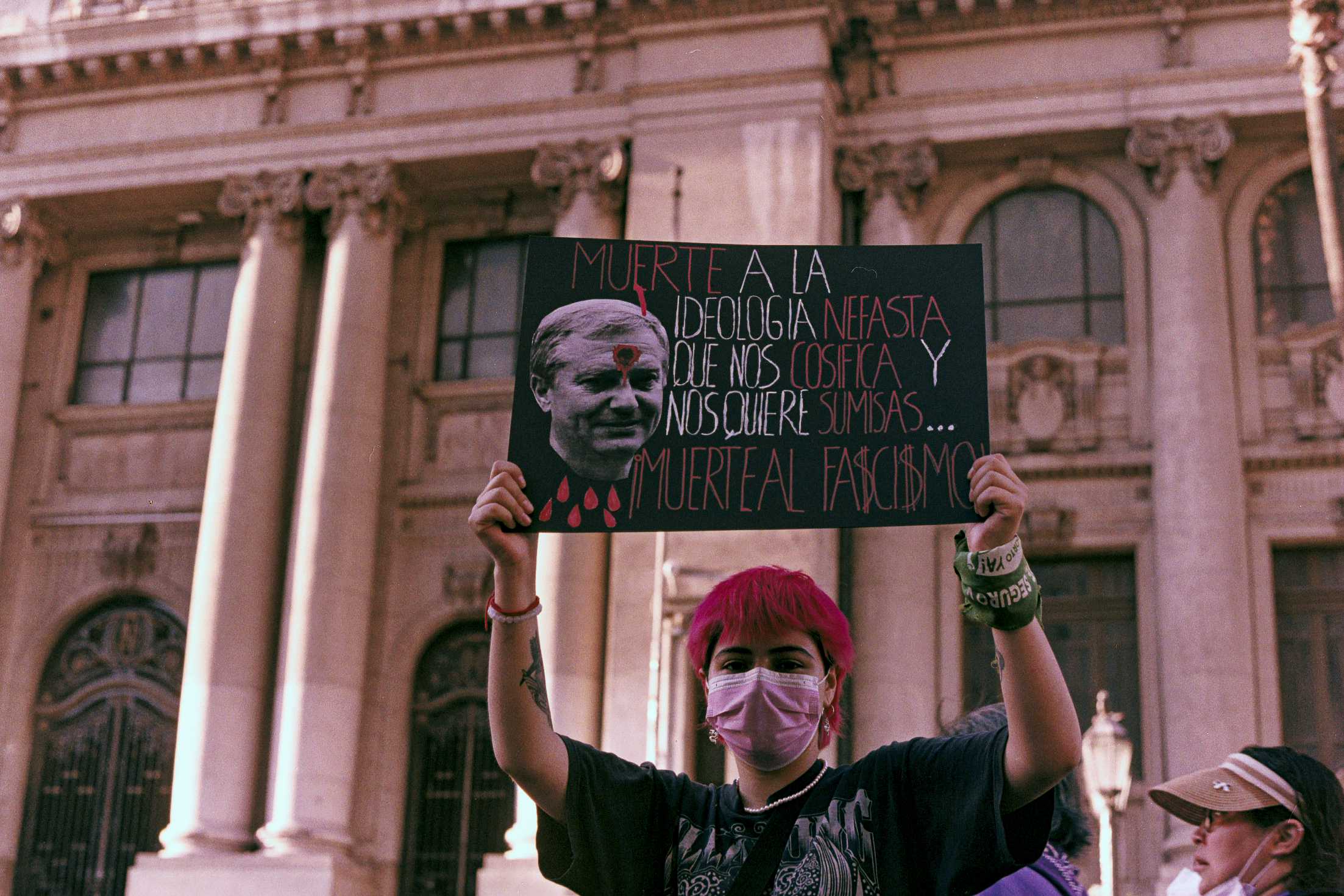

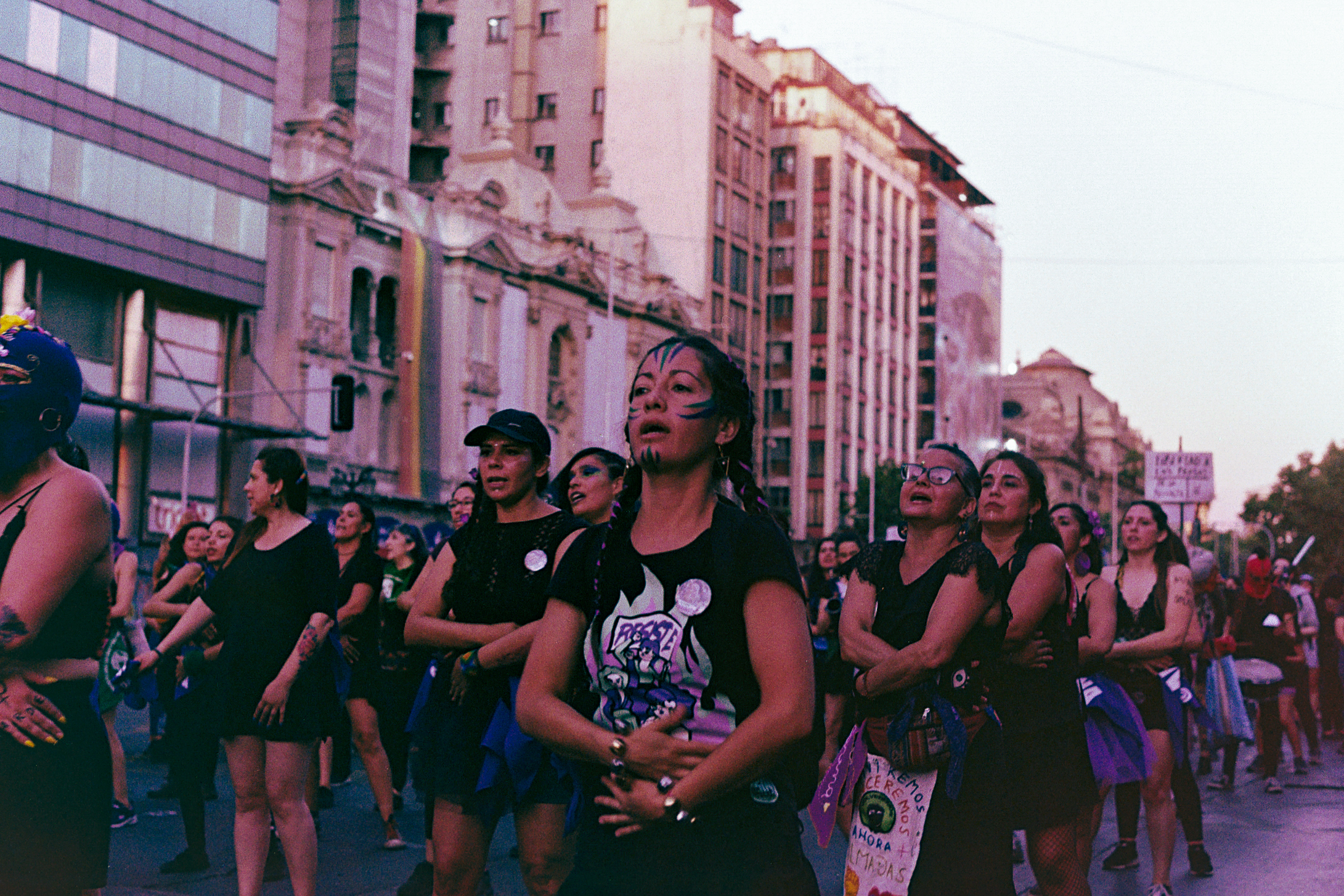
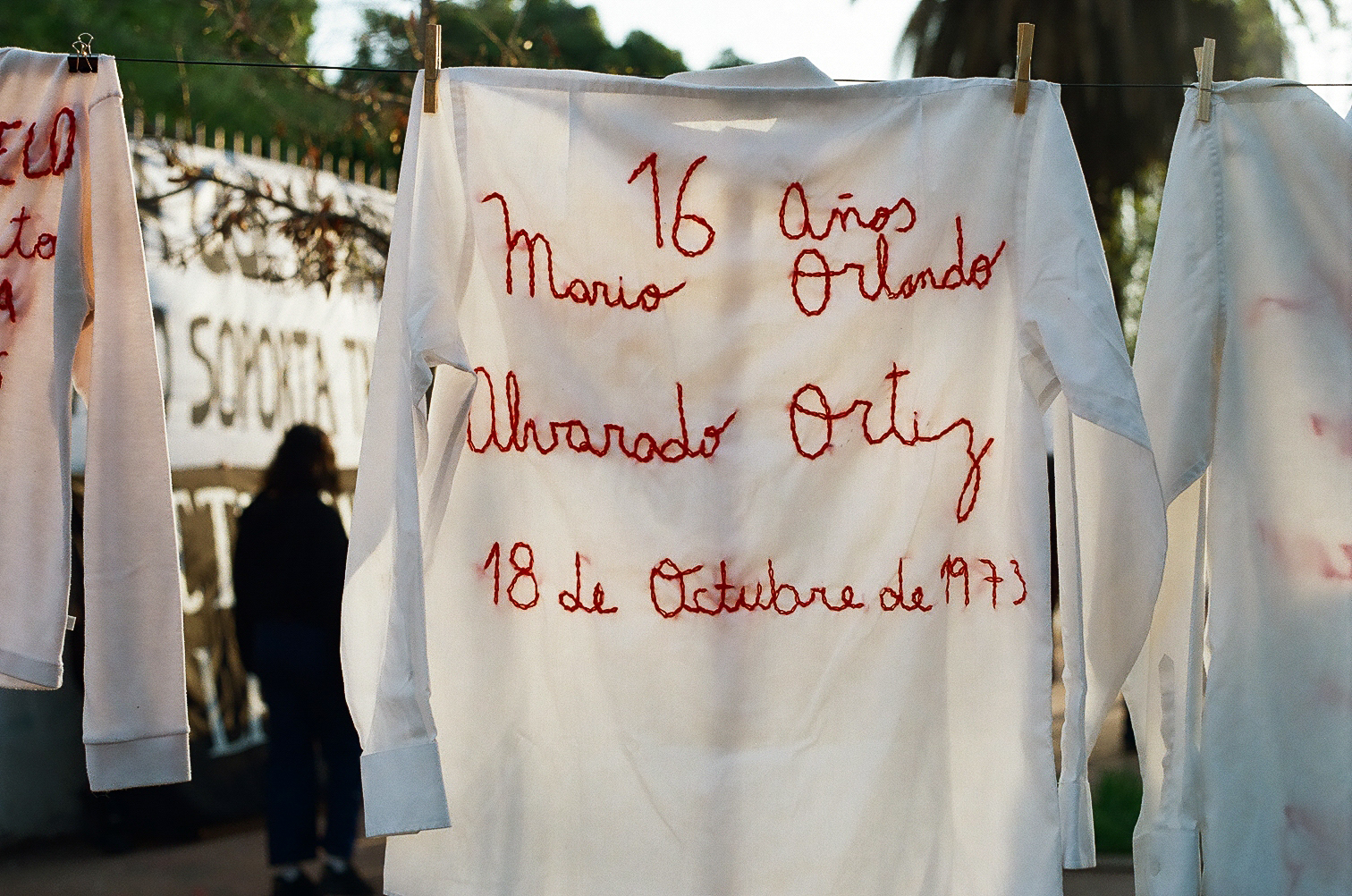
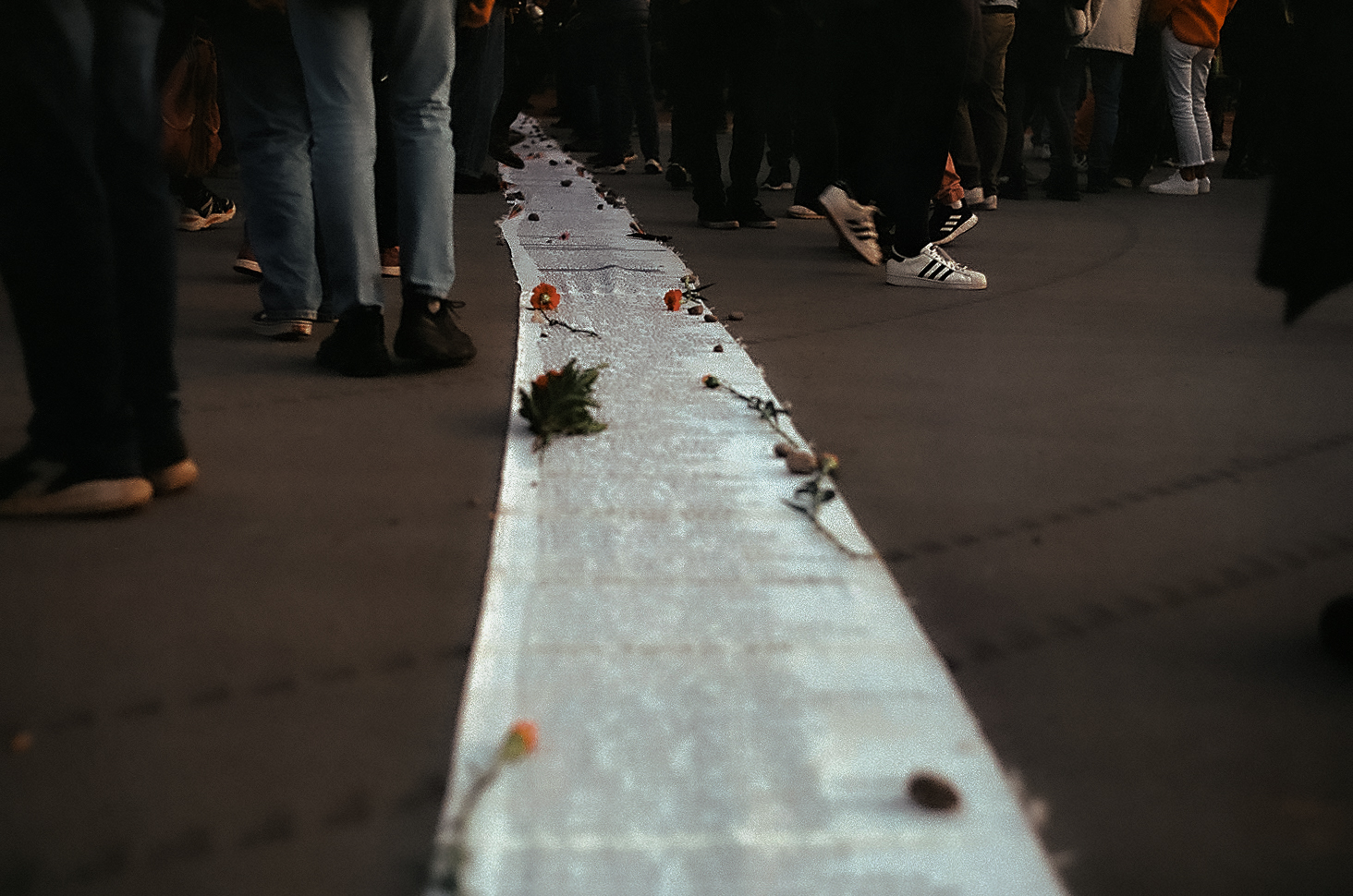
Nombre de las fotos: 1. Habitando la pancarta. 2. Habitando la capucha. 3. Habitando el cuerpo. 4. Habitando la ausencia. 5. Habitando la memoria.
Chile en los últimos 50 años, las protestas han cobrado especial relevancia en la lucha contra el fascismo y el sistema neoliberal extractivista impuesto en dictadura. Desde diferentes colectivos, las protestas ponen en dialogo la calle, el cuerpo y la memoria colectiva, dando cuenta que habitar la calle es fundamental para la reivindicación de nuestros derechos.
Las fotografías 1, 2 y 3 fueron capturadas en la marcha del 25 de noviembre del 2021, en el Día internacional contra la violencia hacia las mujeres, en Santiago de Chile −días antes de las elecciones presidenciales entre Boric y Kast− momento en el que las feministas pusimos el cuerpo en las calles para gritar frente a la amenaza que los movimientos antigénero representaban con la figura de José Antonio Kast, y que por ende no íbamos a dar un paso atrás en esa lucha.
Las fotografías 4 y 5 fueron sacadas el 11 de septiembre de 2023, en la conmemoración de los 50 años del Golpe de Estado de 1973, en el Estadio Nacional, día en el que miles de personas nos congregamos en el principal centro de tortura durante la dictadura de Pinochet, para volver a recordar lo frágiles que son nuestros derechos.
¿Por qué son importantes estas fotografías en particular para su investigación?
Desde las marchas del 2011 por la educación gratuita, hasta las masivas manifestaciones en octubre del 2019, la materialidad y el artivismo (Delgado, 2020) se han quedado en mi memoria. Ya sea por los recuerdos de mi padre arrancando de los balazos en las marchas contra el régimen de Pinochet, o por los cuidados de mis amigas repartiendo limones en las marchas del mayo feminista del 2018, considero que las manifestaciones son espacios de memoria colectiva en los que, entre pancartas, gritos, cantos, lienzos, pinturas, bailes, fuego y lacrimógenas, se van tejiendo infinitas narrativas visuales y corporales de la resistencia.
Las imágenes presentadas forman parte de un proyecto personal de fotografías análogas, que tiene como objetivo el registro de las múltiples expresiones de artivismo en las marchas de Santiago de Chile desde octubre de 2019. A través de la fotografía análoga he podido cristalizar las múltiples expresiones de la protesta, dando cuenta de las materialidades, corporalidades y movilidades que confluyen en la calle. La importancia de estas fotografías recae en el registro del habitar colectivo del espacio público, vinculado a la memoria de la lucha contra los fascismos y de la fragilidad de las democracias y nuestros derechos.
Delgado, M. (2020). Ciudadanismo: La reforma ética y estética del capitalismo. Los Libros de la Catarata.
Inhabiting the Streets: The Memory of Protest in Santiago, Chile
Carla Bravo Rojas, Student of the Erasmus Mundus Master’s Degree in Women’s and Gender Studies (GEMMA), Granada University – Lodz University. Instagram: @carlanaloga @carlalracdarla
Dates: November 25th, 2021, Alameda, Santiago de Chile. September 11th, 2023, National Stadium, Santiago de Chile.
Name of the pictures: 1) Inhabiting the banners. 2) Inhabiting the capuchas. 3) Inhabiting the body. 4) Inhabiting the absence. 5) Inhabiting the memory.
Chile over the last 50 years: protests have gained significant importance in the struggle against fascism and the extractivist neoliberal system imposed during the dictatorship. From various collectives, those protests engage in a dialogue involving the streets, the body, and collective memory highlighting that inhabiting the streets in essential for the assertion of our rights.
Photographs 1, 2 and 3 were captured during the march on November 25th, 2021, on the International Day for the Elimination of Violence against Women in Santiago, Chile −days before celebrating the presidential elections between Boric and Kast−. It was a moment when feminist took the streets to voice their concerns about the threat posed by anti-gender movements represented by the figure of Kast.
We were determined not to take a step back in that fight. Photographs 4 and 5 were taken on September 11th, 2023, during the commemoration of the 50th anniversary of the 1973 coup at the National Stadium. On this day, thousands of people gathered at the main torture center during Pinochet’s dictatorship to once again reflect on the fragility of our rights.
Why are those particular photographs important to your research?
Since the student manifestations for free education in 2011 to the massive demonstrations in October 2019, the materiality and artivism (Delgado, 2020) have stayed with me in memory. Whether it’s the memories of my father fleeing from gunshots during protest against Pinochet’s regime or the care of my friends distributing lemons during the feminist protest of May 2018, I believe that protests are spaces of collective memory. Between banners, shouts, song paintings, dance, fire and tear gas, countless visual and bodily narratives of resistance are woven.
The presented images are part of a personal project of analog photographs, aiming to document the diverse expressions of artivism in the marches of Santiago, Chile, since October 2019. Through analog photography, I have been able to capture the various forms of protest, depicting the materialities, body’s and mobilities converging in the streets. The significance of these photographs lies in documenting the collective inhabitation of public space, linked to the memory of the struggle against fascisms and the fragility of democracies and our rights.
Delgado, M. (2020). Ciudadanismo: La reforma ética y estética del capitalismo. Los Libros de la Catarata.
 Narrativas Visuales/Visual Narratives