
Francisca Luco. Instagram: @flucot
Fecha de captura fotos: Octubre 2023, Iquique, Chile.
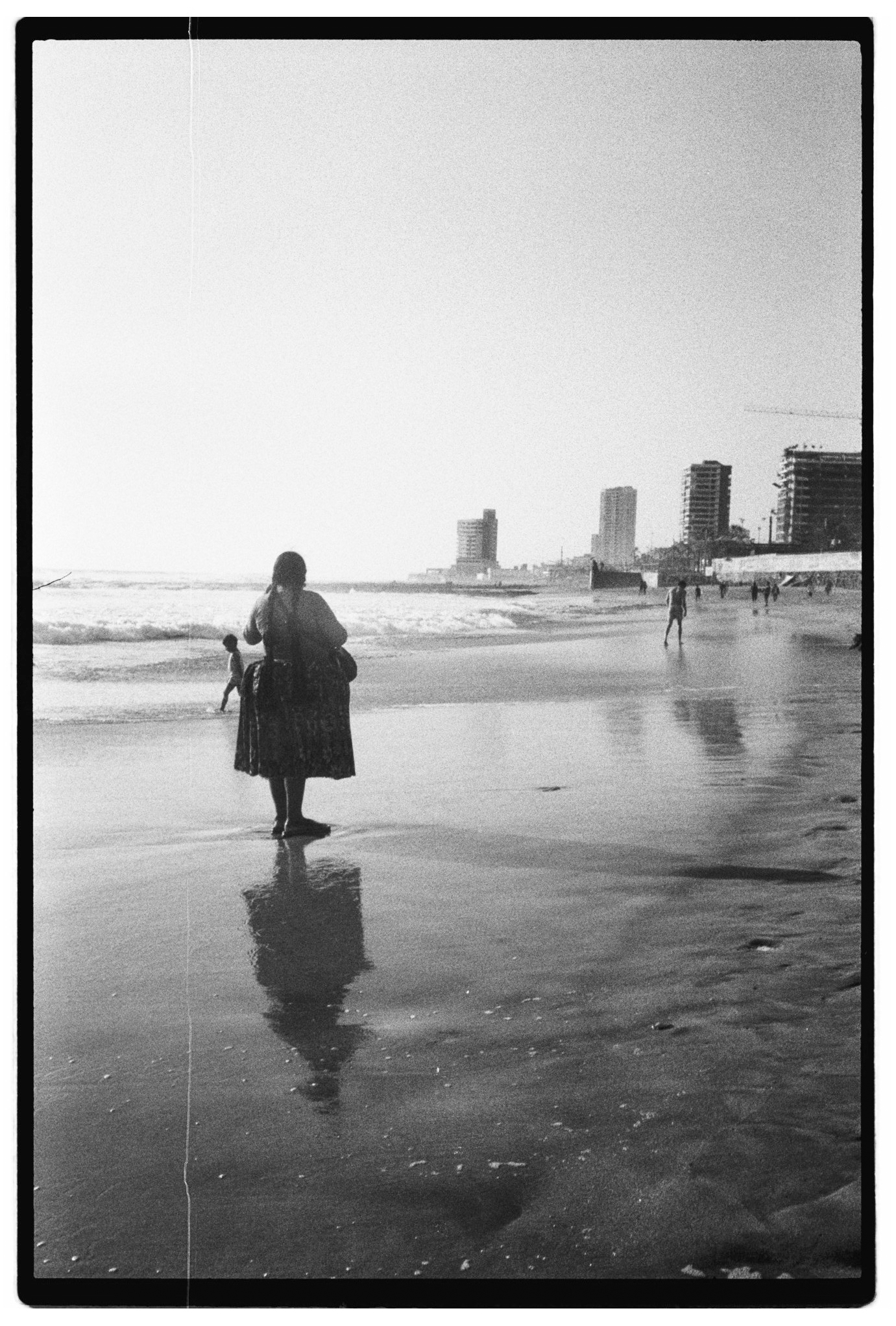
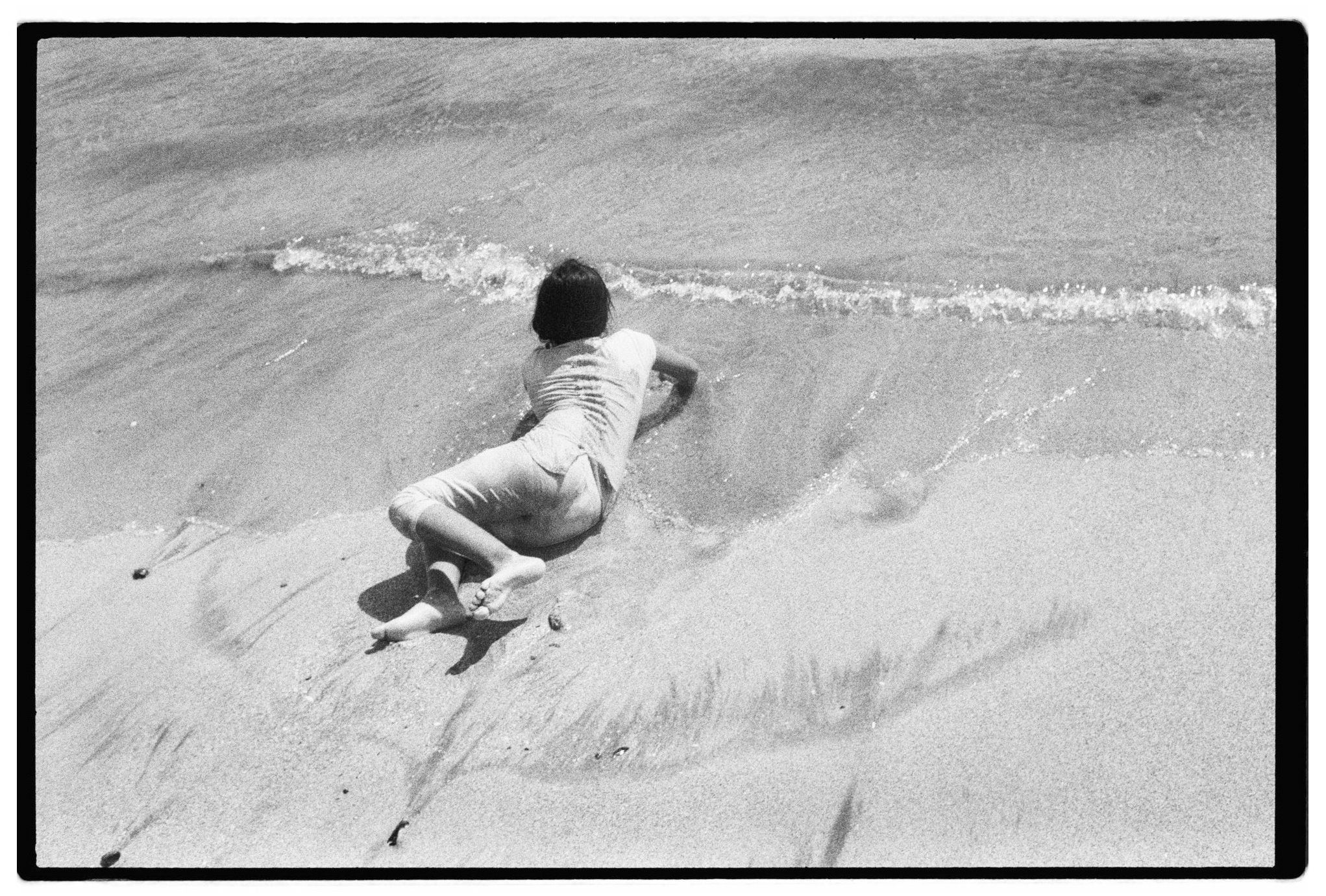
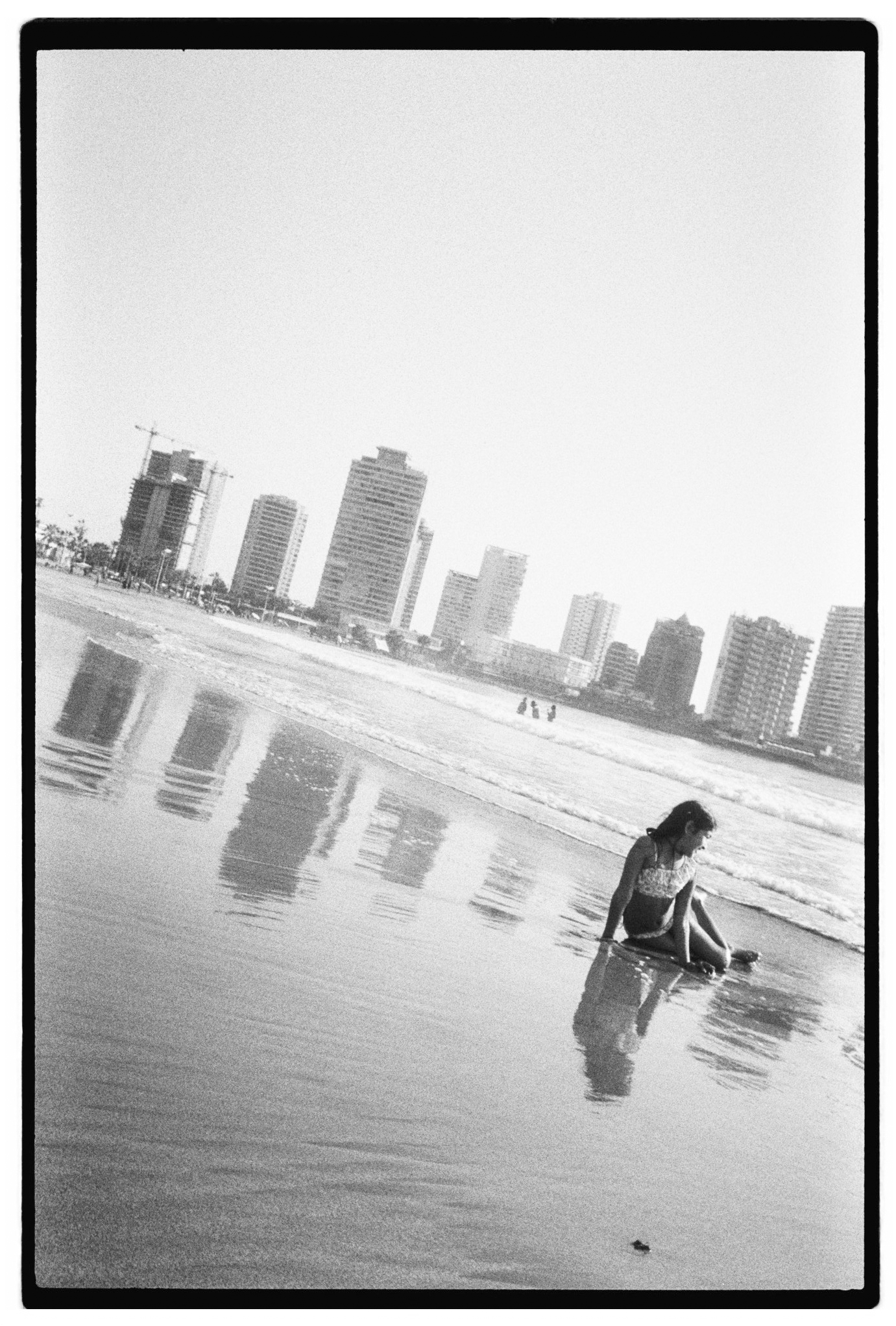
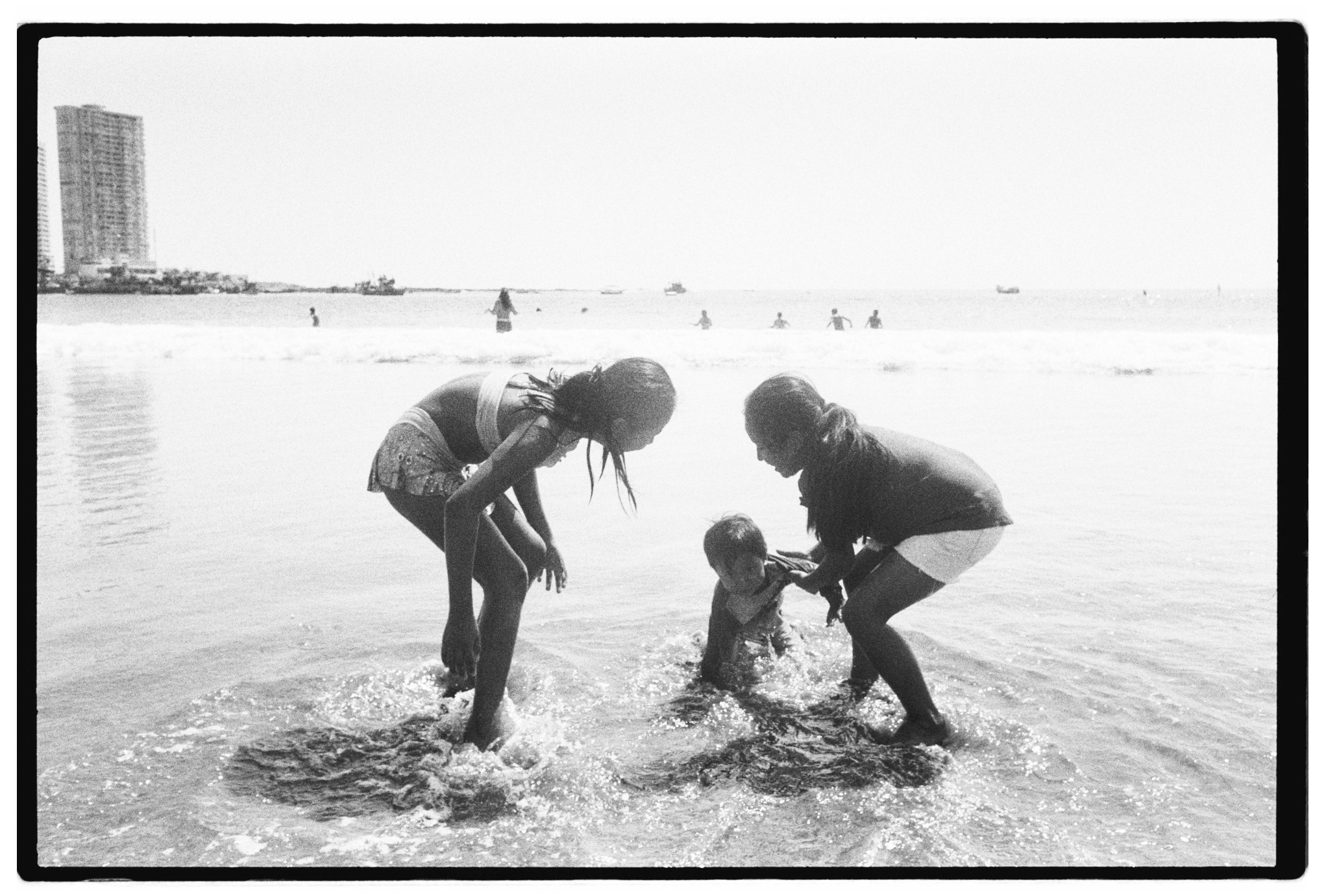
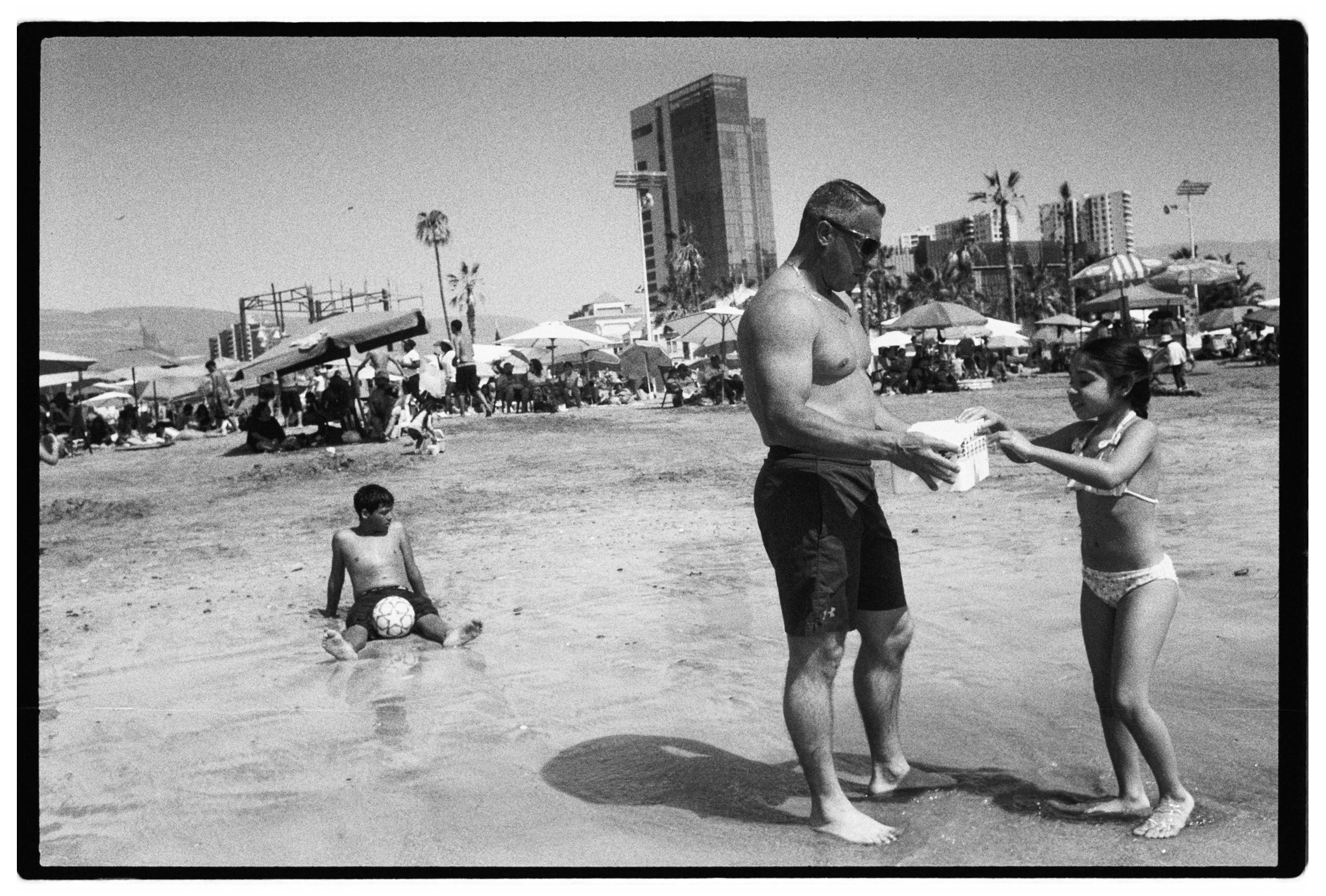
Las fotos muestran como transcurre la vida en el borde costero haciendo énfasis en cómo varía el uso del cuerpo de los sujetos en presencia del mar. La corporalidad se aleja de lo bípedo, y las extremidades adoptan gestos marinos. El juego se apodera del entendimiento, adultos y niños crean ficciones con arena. El agua invita a explorar movimientos y modos de accionar extracotidianos, ya no tiene mucho sentido estar de pie. Creo que no sólo las fotos hablan de lo que estrictamente sucede en ellas, sino también del fotógrafo, así como los sujetos cambian frente al mar, también lo hace el fotógrafo. La humedad, la salinidad y la posibilidad de ser acusado de voyeur modifican también el cuerpo de quién fotografía.
¿Por qué son importantes estas fotografías en particular para su investigación?
Mi investigación visual se centra en obtener imágenes sin usar visor, sin tener una idea previa de la imagen que se va a obtener, sino “mirar” a través de las manos, y ojalá desde todo el cuerpo. ¿Qué sucede cuando no miramos con un visor para hacer una fotografía? ¿Cómo es que la foto se transforma en un ejercicio de memoria muscular, e incluso, en una forma de habitar el cuerpo? ¿Cómo son estas nuevas imágenes? He intentado responder estas preguntas a través del trabajo con una cámara análoga ciega, la Voigtlander Bessa L. Todo mi trabajo es análogo, en 35mm. Las fotos que presento aquí son full frame y no poseen edición. Estas fotos sin importantes porque son una de las respuestas que ido encontrando a las preguntas ya mencionadas. Creo que la pregunta por el cuerpo del fotógrafo debe venir acompañada de una reflexión respecto al cuerpo de los sujetos también, estas fotos de playa recogen esa idea.
Sirens do exist
Francisca Luco. Instagram: @flucot
Date: October 2023, Iquique, Chile.
The photos depict life on the coastal edge, emphasizing how the use of the subjects’ bodies varies in the presence of the sea. Corporeality moves away from bipedalism, and limbs adopt marine gestures. Playfulness takes over understanding; adults and children create fictions with sand. The water invites exploration of non-routine movements and actions; it no longer makes much sense to stand. I believe that not only do the photos speak of what strictly happens within them, but also of the photographer. Just as the subjects change in front of the sea, so does the photographer. Moisture, salinity, and the possibility of being accused of voyeurism also modify the body of the photographer.
Why are those particular photographs important to your research?
My visual research focuses on capturing images without using a viewfinder, without having a preconceived idea of the image to be obtained, but rather ‘looking’ through the hands, and ideally from the entire body. What happens when we don’t use a viewfinder to take a photograph? How does the photo become an exercise in muscle memory and even a way of inhabiting the body? What do these new images look like? I have attempted to answer these questions through working with a blind analog camera, the Voigtlander Bessa L. All my work is analog, in 35mm. The photos presented here are full frame and have no editing. These photos are significant because they are one of the answers I have found to the aforementioned questions. I believe that the question about the photographer’s body should be accompanied by a reflection on the bodies of the subjects as well; these beach photos capture that idea.
 Narrativas Visuales/Visual Narratives