
Valentina Infante Batiste, Centro de Estudios de Conflicto y Cohesión Social (COES) y ANID-Instituto Milenio para la Investigación en Violencia y Democracia (VioDemos). Instagram: Valentina_infante_batiste Twitter: @Titainfanteb
Fecha de captura: 13 de septiembre 2023, Santiago de Chile.
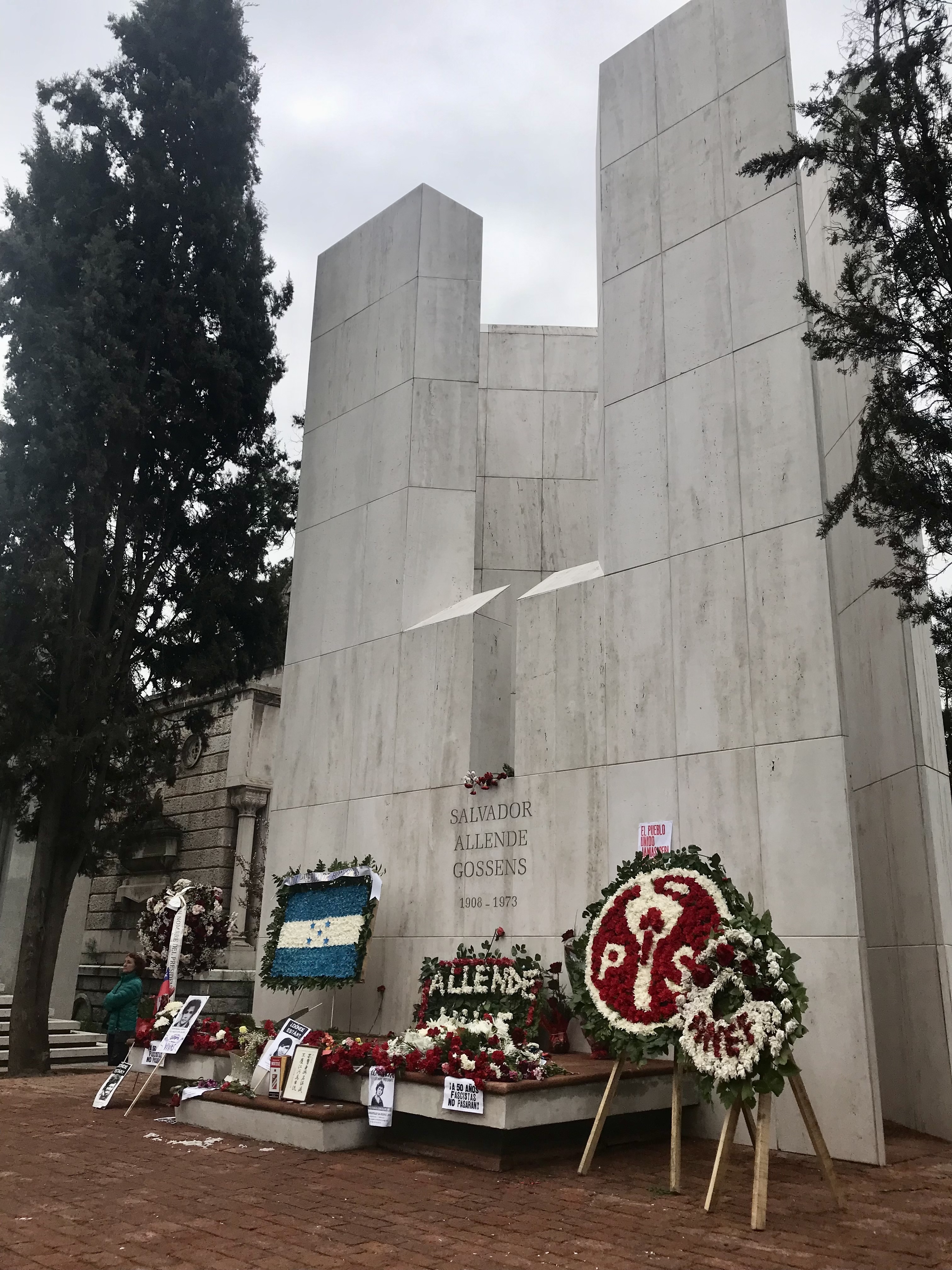
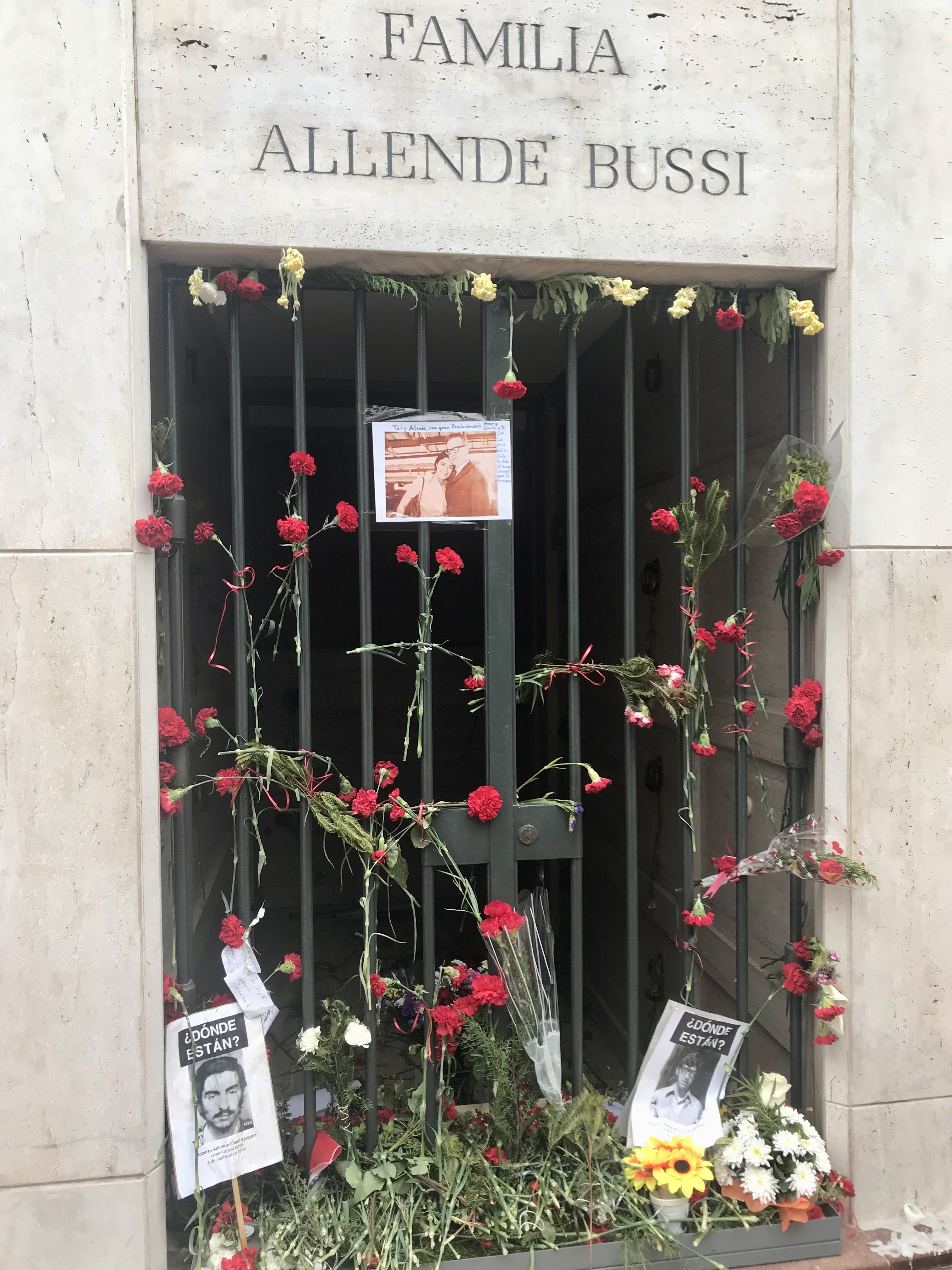
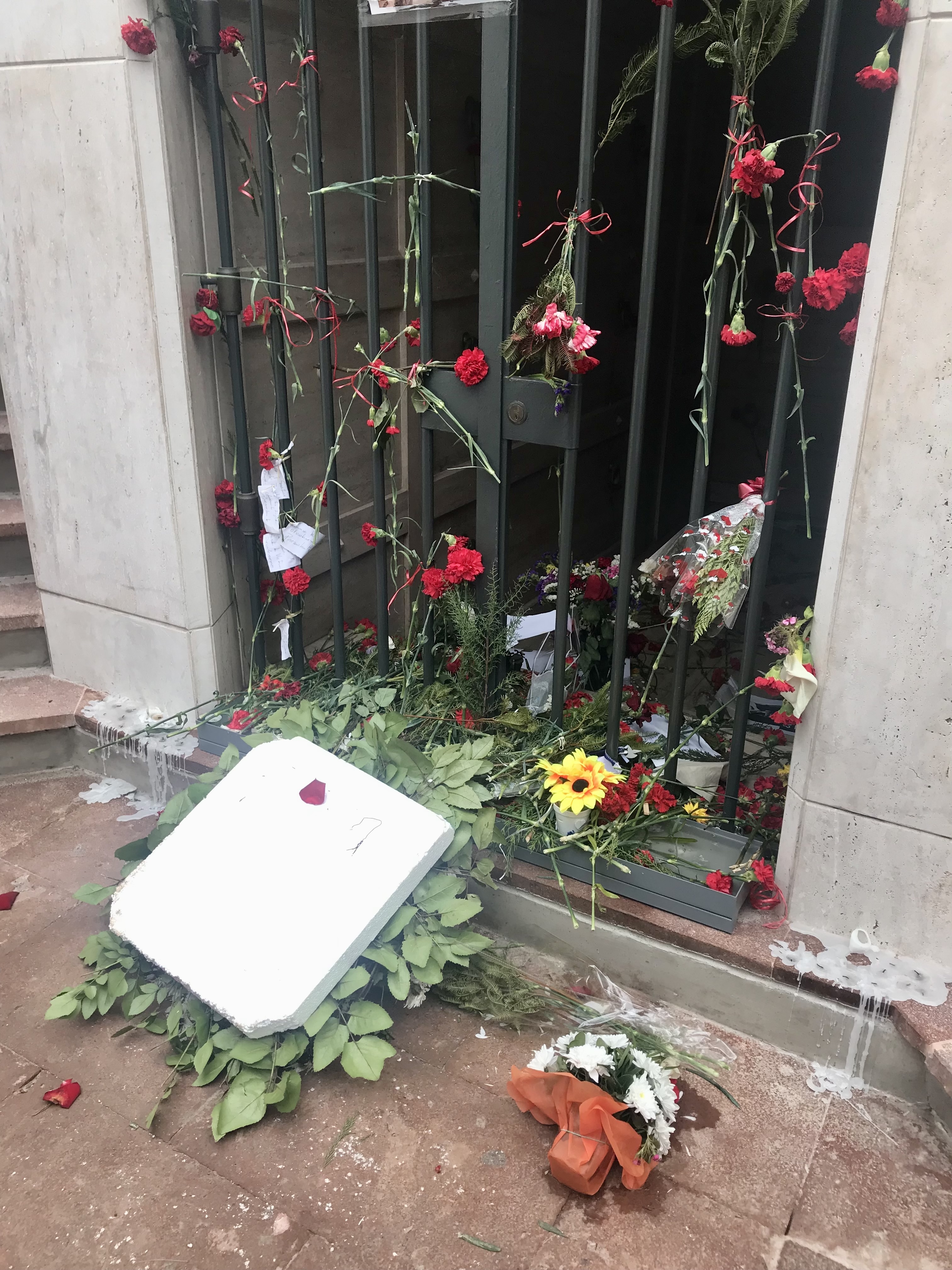
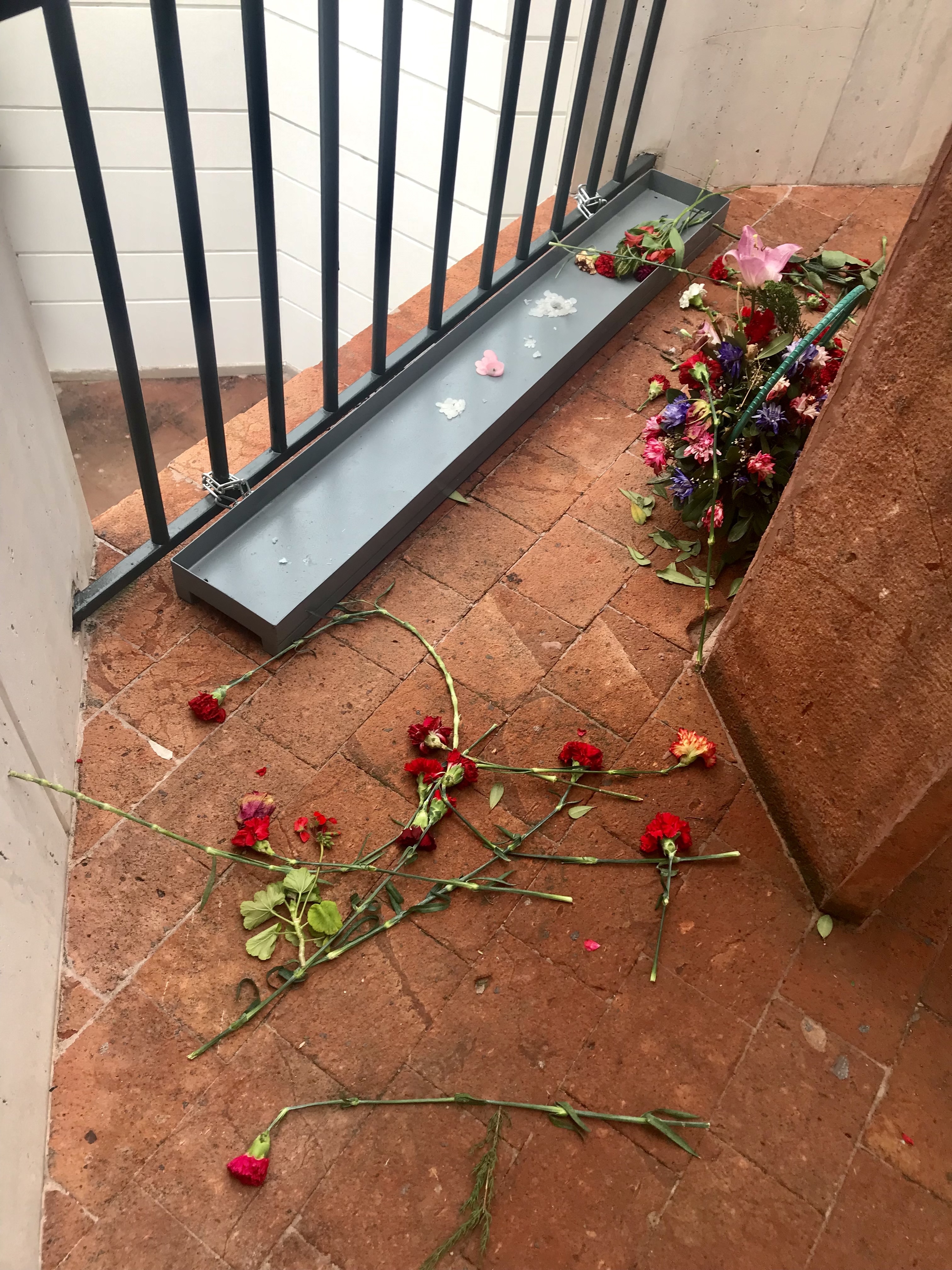
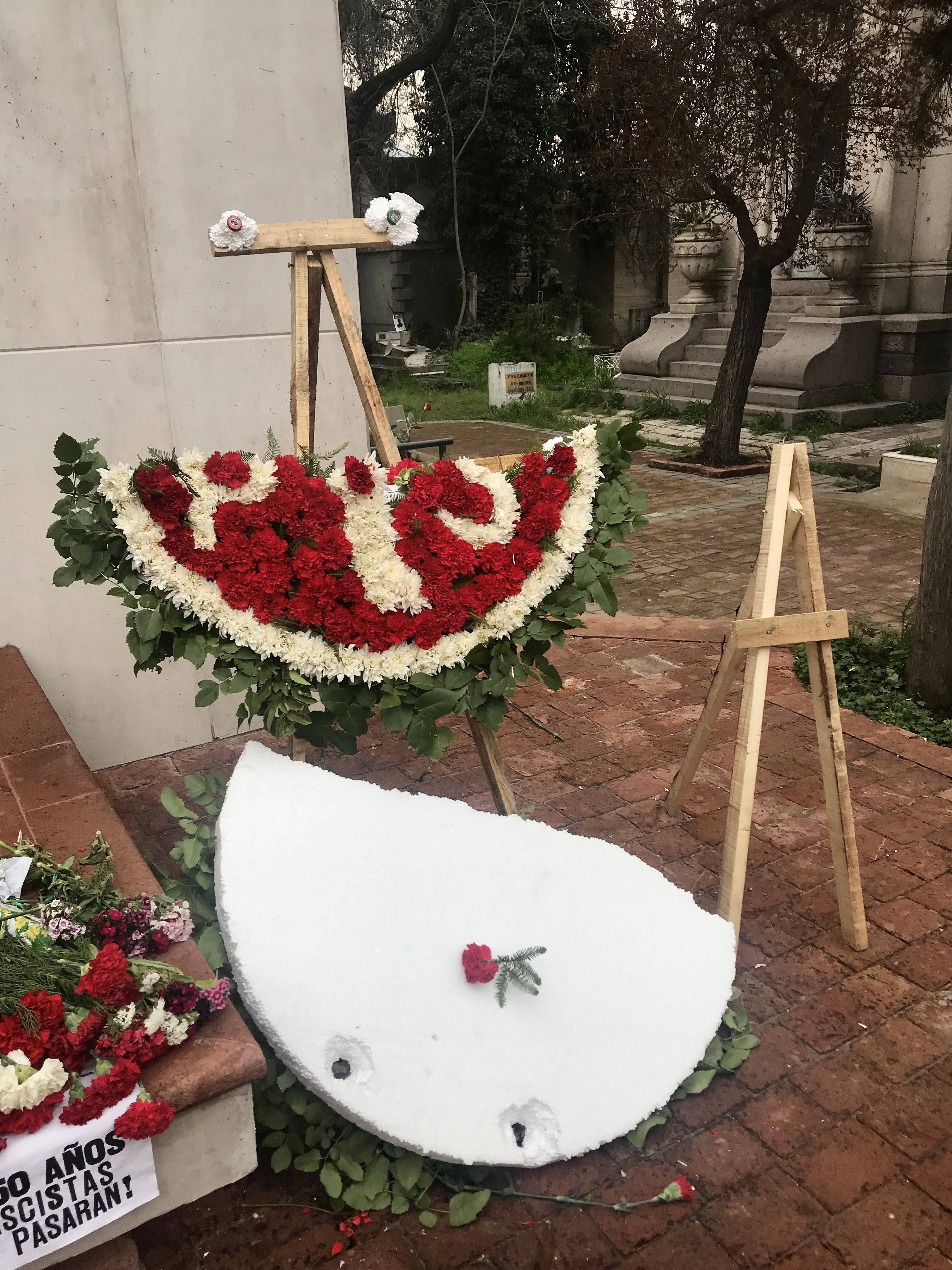
Nombre de las fotos: 1. Honores para Allende (sur). 2. Honores para Allende (norte). 3. Deconmemoración (norte). 4. Deconmemoración (interior). 5. Deconmemoración (sur).
El 13 de septiembre de 2023 fui al Cementerio General de Santiago para fotografiar las tumbas más icónicas de estos 50 años del golpe de Estado, entre ellas el memorial a los Detenidos Desaparecidos y Ejecutados Políticos de la dictadura militar (1973 – 1990), y la tumba del presidente socialista Salvador Allende, depuesto en un golpe de Estado el 11 de septiembre de 1973. Cuando llegué a la tumba de Allende, ésta se encontraba hermoseada y decorada con diferentes objetos y ofrendas florales en su honor. Fotografié tanto la parte sur como norte de la tumba, observando cómo cada uno de estos 2 elementos (objetos, flores, cintas, imágenes) habían sido cuidadosamente puestos para honrar la figura de Allende. A las 17:39 minutos, cuando ya me iba del Cementerio, pasé nuevamente al lado de la tumba, y descubrí que alguien había destrozado todas las ofrendas florales y botado al piso las flores y objetos que se encontraban ahí. Era como si hubiese pasado un torbellino, somo si alguien se hubiese preocupado de dejar el lugar hecho un desastre. El pasado reciente de Chile continúa formando “torbellinos” que se manifiestan en la forma de conmemoraciones y de-conmemoraciones de memorias contrapuestas sobre nuestra historia reciente.
¿Por qué son importantes estas fotografías en particular para su investigación?
Actualmente investigo las contramanifestaciones y contra-memorias de la ultra-derecha en Chile, la cual se identifica con Pinochet y detesta el legado y memoria de Salvador Allende. Estas imágenes reflejan esas acciones de contra-memorialización y de-conmemoración que ciertos grupos realizan para instalar sus propias memorias en el espacio público. Reflejan los procesos de polarización política que actualmente está viviendo Chile. Las fotografías muestran, también, que los actos de de-conmemoración tienen sus propias lógicas. En este caso, por ejemplo, no se trató sólo de destruir el lugar, sino también de cambiar la posición de ciertos elementos, y también robar objetos. La cinta que pertenecía a la ofrenda floral de Venezuela fue robada, y las flores que se encontraban encima del podio fueron botadas y re-ubicadas en el suelo. Todo esto en función de profanar la figura de Allende, pero también, para mandar un mensaje más amplio: la “otra” memoria también existe, y “no se va a dejar atropellar”. De esta forma, las imágenes tomadas (en un lapso de tiempo muy corto) ayudan a evidenciar y comprender cómo las distintas memorias luchan por apoderarse del espacio público, y cómo la ultra-derecha recurre a acciones de de-conmemoración que tienen sus propias lógicas.
(De)commemoration
Valentina Infante Batiste, Center for Social Conflict and Cohesion Studies & ANID- Millennium Institute on Violence and Democracy Research (VioDemos). Instagram: Valentina_infante_batiste Twitter: @Titainfanteb
Date: September 13, 2023. Santiago, Chile.
Name of the pictures: 1. Honors for Allende (south). 2. Honors for Allende (south). 3. Decommemoration (north). 4. Decommemoration (interior). 5. Decommemoration (south).
On September 13, 2023, I visited the General Cemetery of Santiago to capture images of the most significant tombs related to the 50th anniversary of the coup d’état. Among these, I focused on the memorial dedicated to the Political Detainees, Disappeared, and Executed during the military dictatorship from 1973 to 1990, and the tomb of the former socialist president, Salvador Allende, who was overthrown in a coup on September 11, 1973. Upon reaching Allende’s tomb, I found it adorned with various objects and floral tributes in his honor. I meticulously documented the southern and northern sections of the grave, taking note of the deliberate arrangement of items, including objects, flowers, ribbons, and images, all placed with great care to pay homage to Allende. As I left the cemetery at 17:39, I passed by Allende’s grave again, only to discover that someone had vandalized the floral tributes, scattering the flowers and objects across the ground. It appeared as if a whirlwind had swept through the area, leaving behind a chaotic scene. This incident is a stark reminder that Chile’s recent history continues to give rise to conflicting commemorations and acts of de-commemoration, reflecting the competing narratives surrounding our nation’s past.
Why are those particular photographs important to your research?
I am researching the counter-demonstrations and counter-memories propagated by the far-right in Chile. This group aligns itself with Pinochet and vehemently opposes the legacy and remembrance of Salvador Allende. These visual records document the tactics employed in counter-memorialization and de-commemoration by certain factions aiming to imprint their own historical narratives onto public spaces. These images offer insights into the ongoing political polarization in Chile. They also demonstrate that acts of de-commemoration are not random but follow a particular rationale. In this specific instance, the objective was not solely the destruction of the site but also the rearrangement of particular elements and the theft of certain items. For example, the ribbon from the Venezuelan wreath was stolen, and the flowers originally placed on the podium were discarded and relocated to the ground. These actions were intended to desecrate the memory of Allende and convey a broader message: an alternative memory exists, and it refuses to be disregarded. These images, captured in a short time frame, offer valuable insights into the struggle for control over public spaces by divergent memories and how the far-right employs de-commemoration tactics driven by its own rationale.
 Narrativas Visuales/Visual Narratives