
María José Clunes Squella, Doctorado en Historia, Universidad de Santiago de Chile. Fondecyt 11190715. Instagram: @pepitalunesconce
Captura de fotos: Mayo, 2023. San Joaquín, Chile.
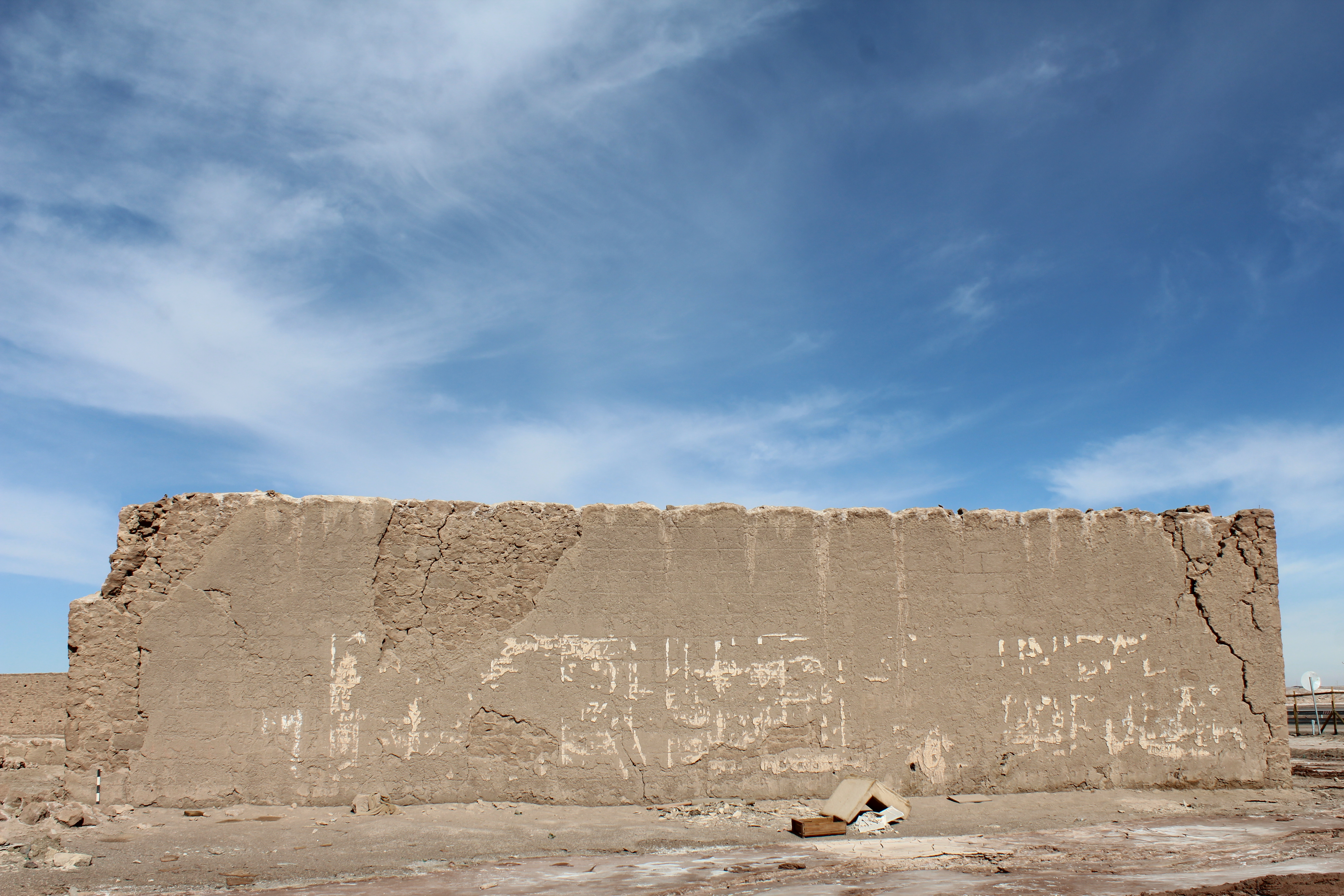
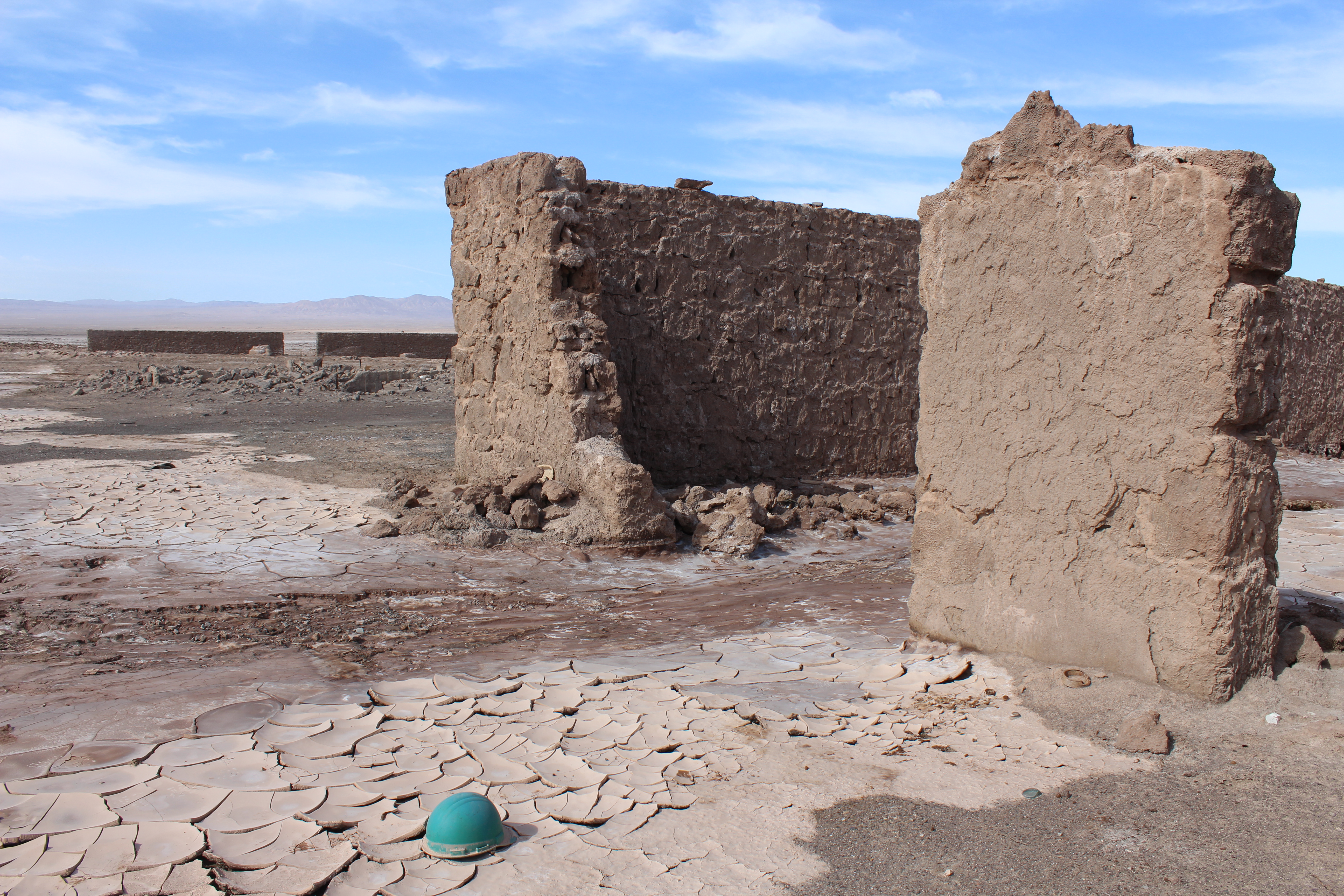
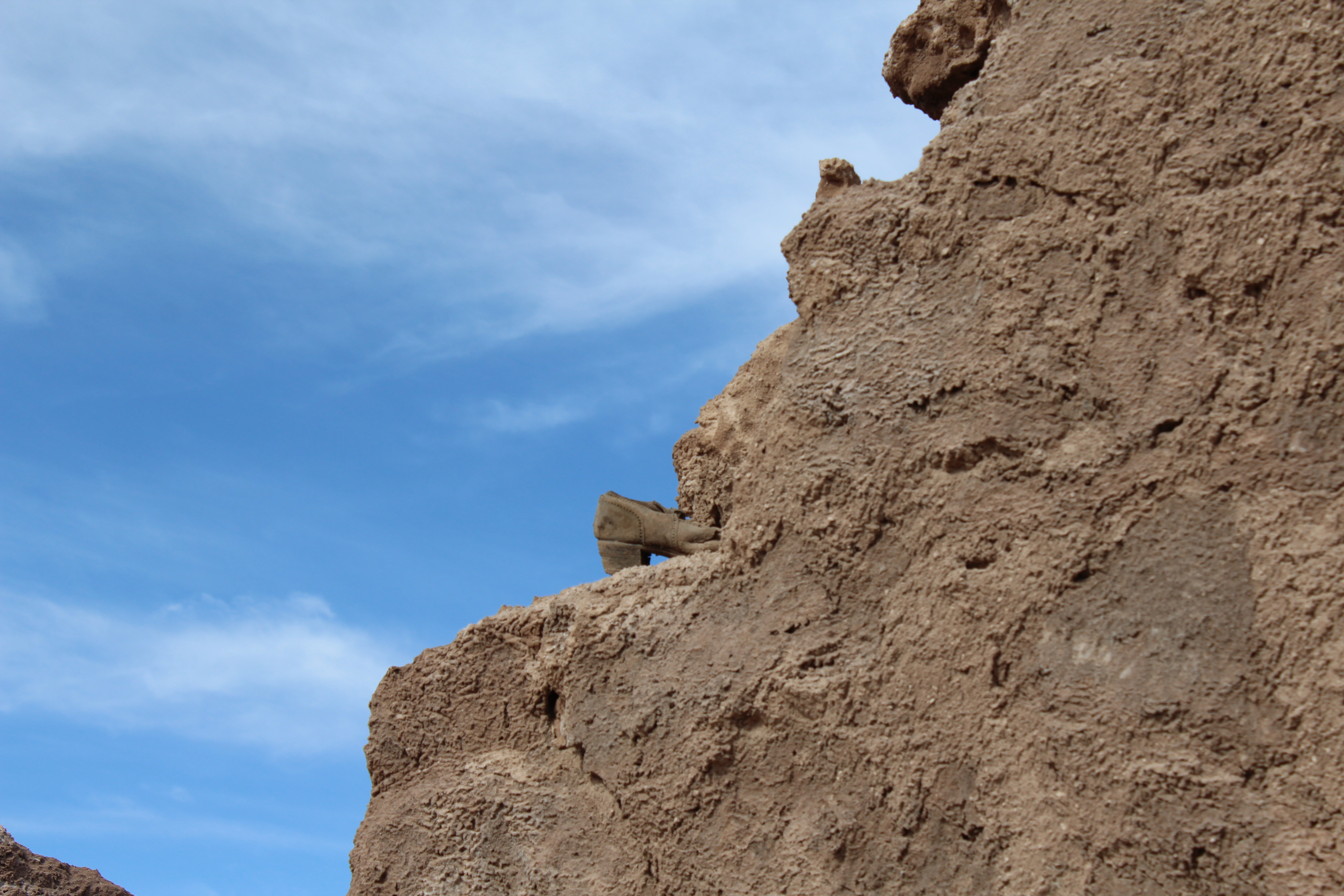
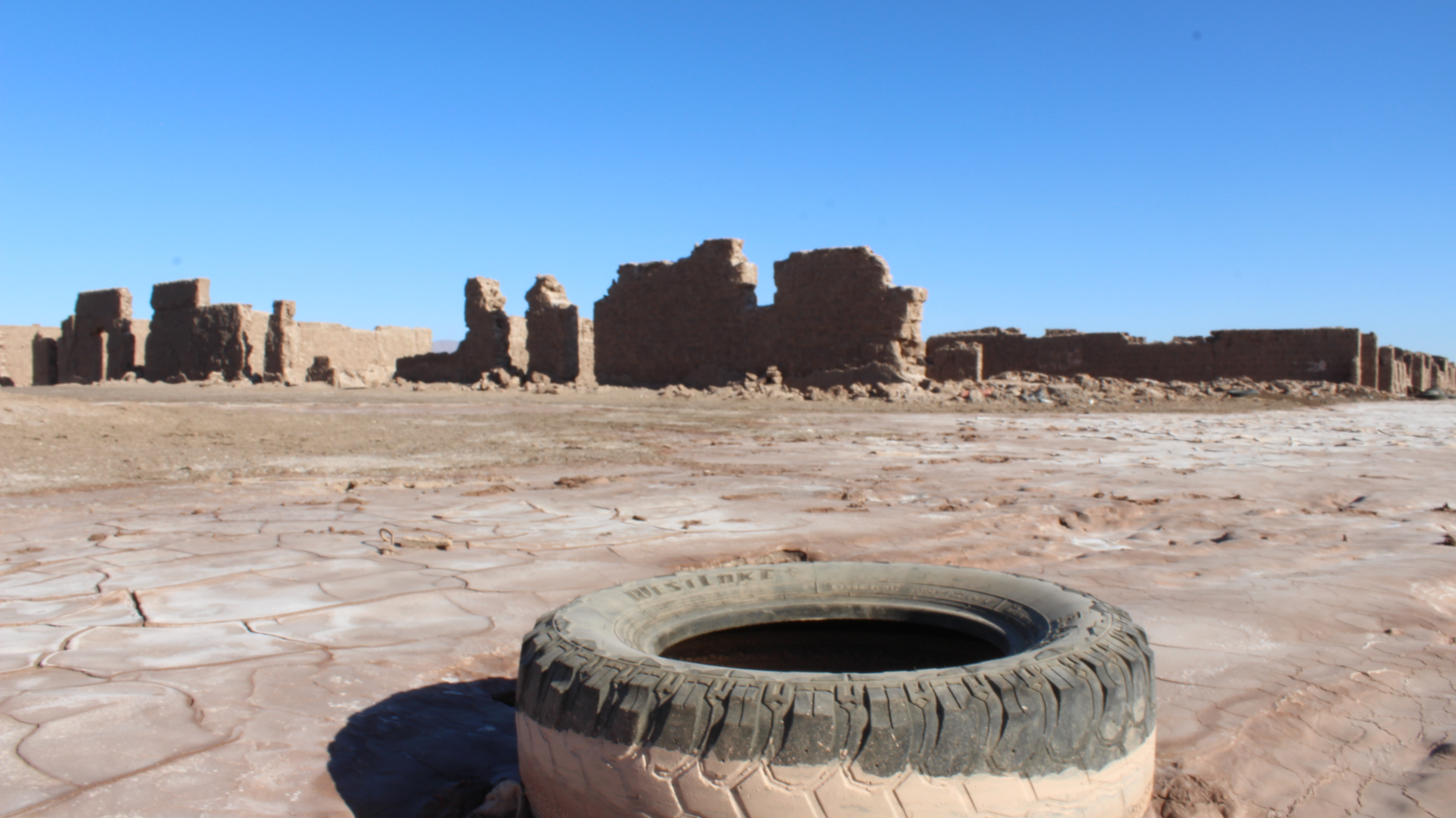
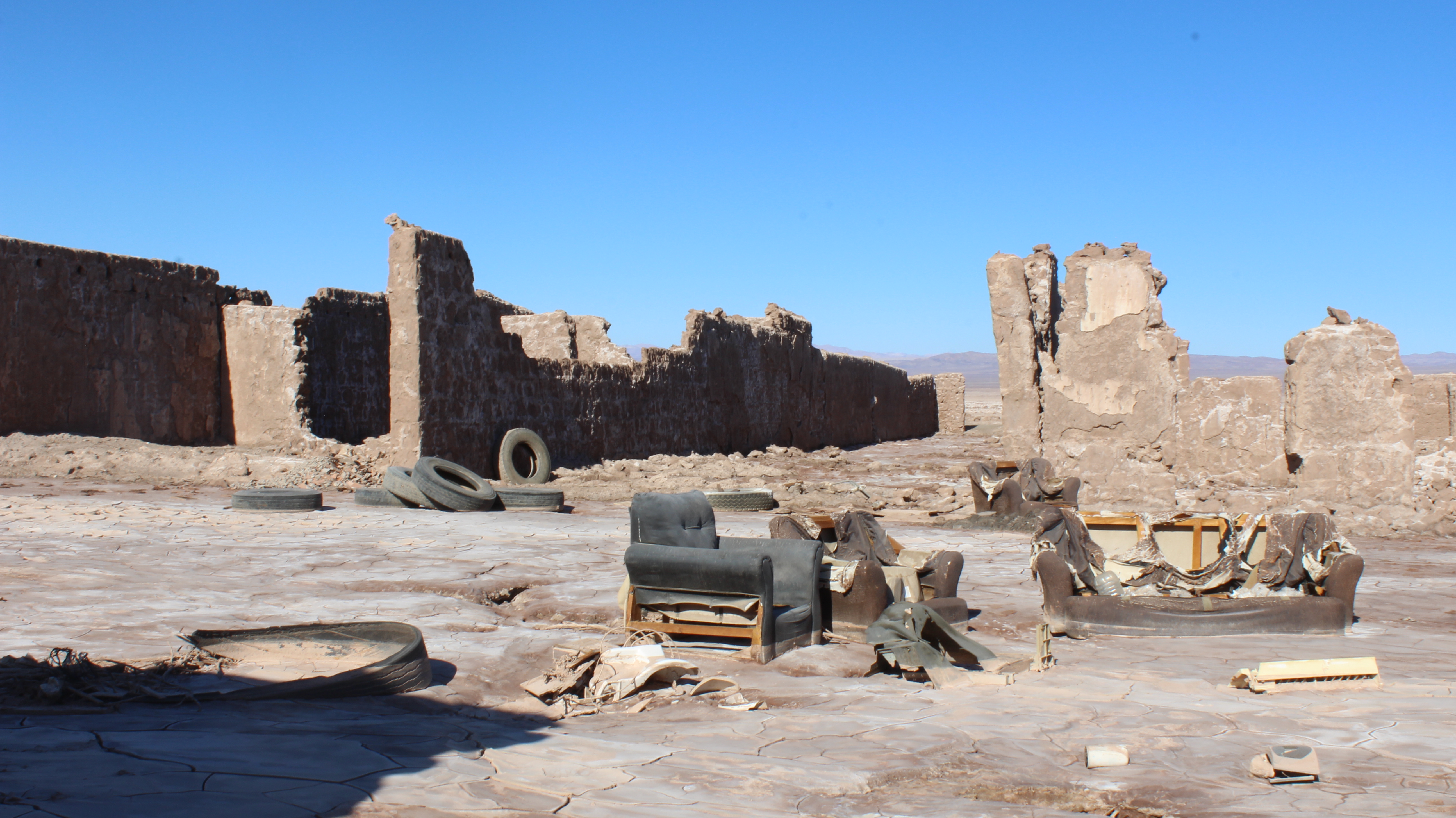
Nombre de las fotos: 1. Ruinas y basura. Una belleza compleja (IMG_2491). 2. Un pueblo ‘basureado’ solo por existir (IMG_2549). 3. Relieves de un pueblo ignominioso para la patronal (IMG_2526). 4.Efigies de una memoria obscena (IMG_2518). 5.Vestigios de una memoria erosionada (IMG_2504).
Su historia se encuentra en la periferia de la historia del salitre, pues esta zona permanece casi inexplorada respecto a la abundante bibliografía sobre el salitre en Tarapacá. Mas Pampa Unión no era periférico, era un centro de encuentros en medio del denominado Cantón Central de Antofagasta. Las huellas que permanecen hoy, grabadas en el desierto, hablan de la centralidad del pueblo, donde la comunidad obrera pampina confluía y donde trabajadoras sexuales, comerciantes de toda índole y otros actores, fueron protagonistas claves de las formas de resistencia para vivir en medio del desierto. Este y otros pueblos salitreros, fueron la única opción al rigor que significaba vivir en la oficina.
En este entorno hostil, sin rincones, de abierto horizonte y vigilancia, donde se ‘charquea’ el suelo y los cuerpos se magullan a fuerza de explotación y lucha, Pampa Unión fue una alternativa, un oasis. Aquí la oferta de servicios sexoafectivos, licores, comidas y otros, constituyó su principal atractivo. El pueblo ofrecía un refugio, un espacio para solazarse.
Estudiar Pampa Unión permite observar las capas de sentido que encierra un patrimonio subalterno e industrial abandonado en el presente, en medio del desierto. Se plasma la incomodidad de una memoria de un pueblo que funcionó al margen de la formalidad y la moral patronal. Es un testimonio material de las narrativas ocultas para los ojos de la Historia, pues hablar de trabajo sexual, mercado negro y otras costumbres del bajo pueblo, siempre tensiona. Y ahí la apuesta: desafiar la mirada hegemónica sobre la historia del salitre y la vida en la pampa salitrera, poniendo de relieve a otras/os actores fundamentales para en este territorio en su período de apogeo.
¿Por qué son importantes estas fotografías en particular para su investigación?
Estudiar las experiencias de las trabajadoras sexuales de Pampa Unión exige analizar las relaciones de poder en este espacio, para comprender cómo las estructuras, el patriarcado y el capitalismo, influyeron en la forma en que se valoró el trabajo sexual en este contexto.
Para ello, se requiere de un enfoque crítico y reflexivo, que considere las dinámicas de género y clase que moldearon la percepción social del trabajo sexual.
A partir de ahí, estas imágenes buscan interpelar el olvido de esta presencia en la pampa. Son un acicate para develar los sesgos morales que pudieron estigmatizar y marginar a las trabajadoras sexuales de en la industria del salitre en Chile (tanto en su vida, como en la Historia) y dar lugar a sus experiencias.
Con el objeto de indagar en la intimidad de quienes habitaron en este pueblo y alrededores más allá del modelo que ha totalizado el imaginario sobre la vida en la pampa salitrera, para imaginar otros marcos de vida y formas de relación posibles, fuera del encuadre de la oficina donde todo se encuentra abierto a vigilancia en un horizonte eterno de arena.
María José Clunes Squella, Doctorado en Historia, Universidad de Santiago de Chile. Fondecyt 11190715. Instagram: @pepitalunesconce
Date/Location: Mayo, 2023. San Joaquín, Chile.
Name of photos: 1.Ruins and garbage. A complex beauty (IMG_2491). 2.A town ‘trashed’ just for existing (IMG_2549). 3.Reliefs of an ignominious town for the bosses (IMG_2526). 4.Effigies of an obscene memory (IMG_2518). 5.Vestiges of an eroded memory (IMG_2504).
These photos were taken during a field visit to the town of Pampa Unión, which existed between 1911 and 1954.
Its history is on the periphery of the history of saltpeter, as this area remains almost unexplored compared to the abundant bibliography on saltpeter in Tarapacá. But Pampa Unión was not peripheral, it was a meeting center in the middle of the so-called Central Canton of Antofagasta. The traces that remain today, engraved in the desert, speak of the centrality of the town, where the working-class community of Pampas came together and where sex workers, merchants of all kinds and other actors were key protagonists of the forms of resistance to living in the middle of the desert. This and other saltpeter towns were the only option to the rigor that meant living in the office.
In this hostile environment, without corners, with an open horizon and surveillance, where the ground is ‘charqueado’ and bodies are bruised by exploitation and struggle, Pampa Unión was an alternative, an oasis. Here, the offer of sexual services, liquor, food and others, constituted its main attraction. The town offered a refuge, a space to enjoy oneself.
Studying Pampa Unión allows us to observe the layers of meaning that enclose a subaltern and industrial heritage abandoned in the present, in the middle of the desert. The discomfort of a memory of a town that functioned outside of formality and employer morality is reflected. It is a material testimony of the narratives hidden from the eyes of History, because talking about sexual work, the black market and other customs of the lower classes, always creates tension. And there the challenge: to challenge the hegemonic view on the history of saltpeter and life in the saltpeter pampas, highlighting other key actors in this territory in its period of apogee.
Why are those particular photographs important to your research?
Studying the experiences of sex workers in Pampa Unión requires analyzing the power relations in this space, to understand how structures, patriarchy and capitalism, influenced the way in which sex work was valued in this context.
To do so, a critical and reflective approach is required, which considers the gender and class dynamics that shaped the social perception of sex work.
From there, these images seek to challenge the oblivion of this presence in the pampas. They are an incentive to reveal the moral biases that may have stigmatized and marginalized sex workers in the saltpeter industry in Chile (both in their lives and in history) and gave rise to their experiences. The aim is to investigate the intimacy of those who lived in this town and its surroundings, beyond the model that has dominated the imagination of life in the saltpeter pampas, in order to imagine other possible frameworks for life and forms of relationship, outside the framework of the office where everything is open to surveillance in an eternal horizon of sand.
 Narrativas Visuales/Visual Narratives