
Ana Caroline Avanco, estudiante doctoral, Universidad Mayor. Mayarí Castillo. Rodrigo Pérez-Silva.
Captura de fotografías: Diciembre, 2023. San Rafael, Chile.


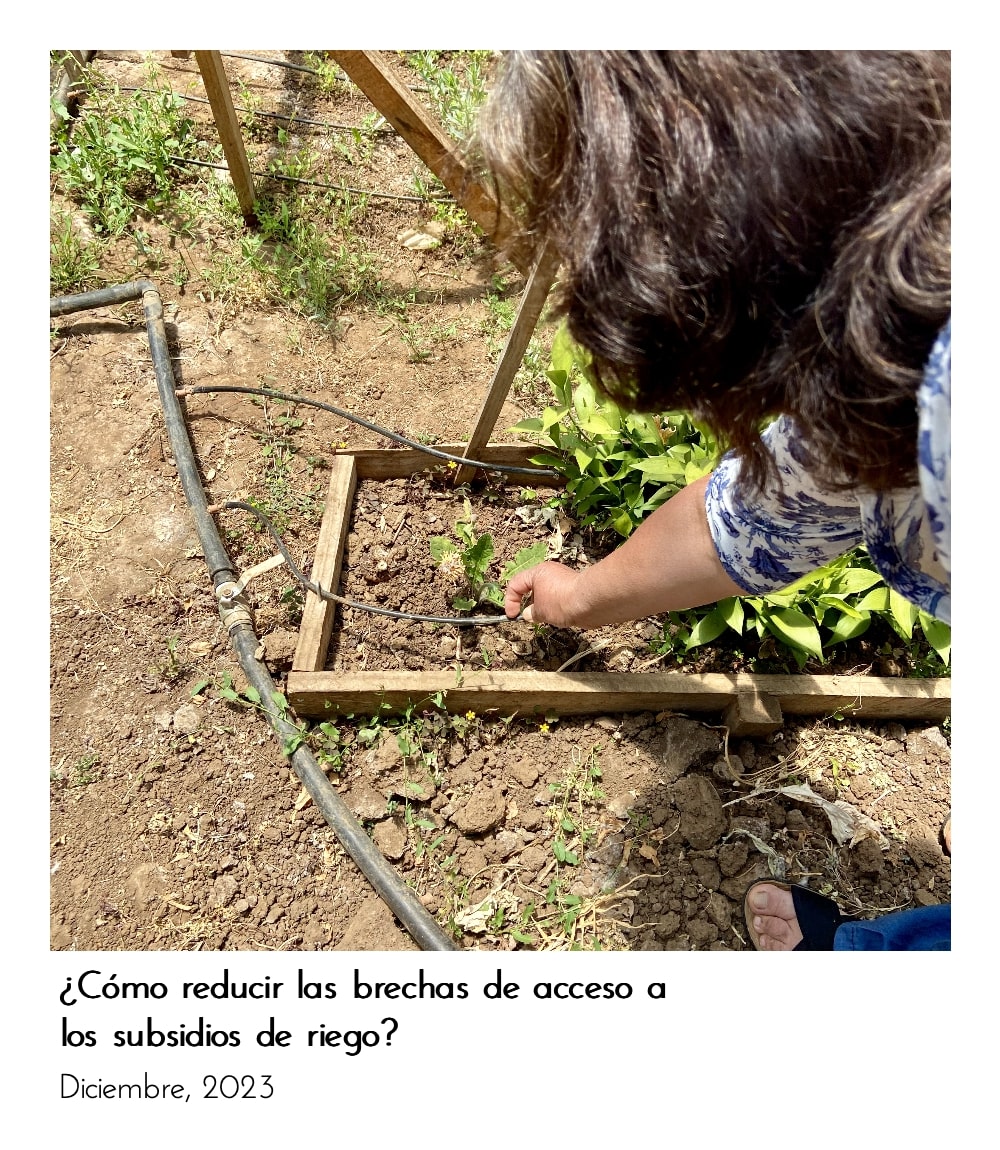
Nombre de las fotos: 1. Frutillas para el mercado global. 2. El efecto rebote del riego tecnificado: Eficiencia que impulsa mayor consumo. 3. ¿Cómo reducir las brechas de acceso a los subsidios de riego?
Las fotografías fueron tomadas en la comuna de San Rafael, ubicada en la Región del Maule, una zona de gran relevancia agrícola en Chile. Afectada por la megasequía, la Región del Maule concentra los mayores montos destinados la tecnificación del riego a través de los subsidios otorgados por Ley No. 18.450, que promueven la inversión en obras de riego y drenaje.
¿Por qué son importantes estas fotografías en particular para su investigación?
Las fotografías tomadas durante el trabajo de campo fueron cruciales para ilustrar y contextualizar los hallazgos numéricos de la investigación “El rol del Estado en la reproducción de la escasez hídrica en territorios agrícolas. Un análisis a los subsidios de riego en la Región del Maule, Chile” (Avanco, A. C., Castillo, M., & Pérez Silva, R., 2025). Este estudio indica que, además de los efectos propios de la sequía, el incremento en la superficie de los proyectos de riego tecnificado ha causado una disminución significativa en el nivel de los caudales de los ríos. Estos resultados sugieren que el Estado tiene un rol activo en la exacerbación de los efectos de la sequía en los territorios agrícolas del Maule.
La primera imagen, titulada “Frutillas para el mercado global”, muestra cómo los cultivos de frutales, que requieren grandes cantidades de agua y que han sido facilitados por la ley de riego, han crecido significativamente en el país. La segunda imagen, “El efecto rebote del riego tecnificado: eficiencia que impulsa mayor consumo”, evidencia como la ley ha contribuido al aumento del área cultivable, incluso en áreas de secano. Finalmente, la imagen “¿Cómo reducir las brechas de acceso a los subsidios de riego?”, ilustra la necesidad urgente de reducir las barreras de entrada para los pequeños productores, quienes históricamente han sido excluidos de los beneficios de la ley.
Financiamiento: Fondecyt Regular 1210858 “Etnografía del Estado y Producción de Desigualdades Socioecológicas. Análisis de políticas ambientalmente relevantes en Chile Contemporáneo”. Núcleo Milenio Centro para el Desarrollo Integral de los Territorios NCS2022_013 (CEDIT).
The role of the state in the reproduction of water scarcity in agricultural territories. An analysis of irrigation subsidies in the Maule Region, Chile.
Ana Caroline Avanco, Doctoral student, Universidad Mayor. Mayarí Castillo. Rodrigo Pérez-Silva
Name of the photos: 1. Strawberries for the Global Market. 2. The Rebound Effect of Irrigation Technology: Efficiency Driving Increased Consumption. 3. How to Reduce Gaps in Access to Irrigation Subsidies?
Date of pictures: December 2023.
The photographs were taken in the commune of San Rafael, located in the Maule Region, an area of significant agricultural importance in Chile. Affected by the megadrought, the Maule Region concentrates the largest amounts allocated for irrigation technology through the subsidies provided by Law No. 18.450, which promotes investment in irrigation and drainage.
Why are those particular photographs important to your research?
The photographs taken during the fieldwork were crucial in illustrating and contextualizing the numerical findings of the research “The Role of the State in the Reproduction of Water Scarcity in Agricultural Territories: An Analysis of Irrigation Subsidies in the Maule Region, Chile” (Avanco, A. C., Castillo, M., & Pérez Silva, R., 2025). This study indicates that, in addition to the effects of drought itself, the increase in the areas dedicated to irrigation technology projects has caused a significant decrease in river flow levels. These results suggest that the State plays an active role in exacerbating the effects of drought in agricultural territories in Maule.
The first image, titled “Strawberries for the Global Market”, shows how fruit crops, which require large amounts of water and have been facilitated by the irrigation law, have significantly expanded in the country. The second image, “The Rebound Effect of Irrigation Technology: Efficiency Driving Increased Consumption”, highlights how the law has contributed to the expansion of arable land, even in dryland areas. Finally, the image “How to Reduce Gaps in Access to Irrigation Subsidies?” illustrates the urgent need to lower entry barriers for small farmers, who have historically been excluded from the benefits of the law.
Funding: Fondecyt Regular 1210858 “Ethnography of the State and Production of Socio-Ecological Inequalities: Analysis of Environmentally Relevant Policies in Contemporary Chile”. Núcleo Milenio Centro para el Desarrollo Integral de los Territorios NCS2022_013 (CEDIT).
 Narrativas Visuales/Visual Narratives