
José Luis Dardón Galicia, Universidad Autónoma Metropolitana / Posgrado en Psicología social. Instagram: @c0ntra_tiemp0
Date of pictures: 30 de agosto de 2023. Puebla, México.
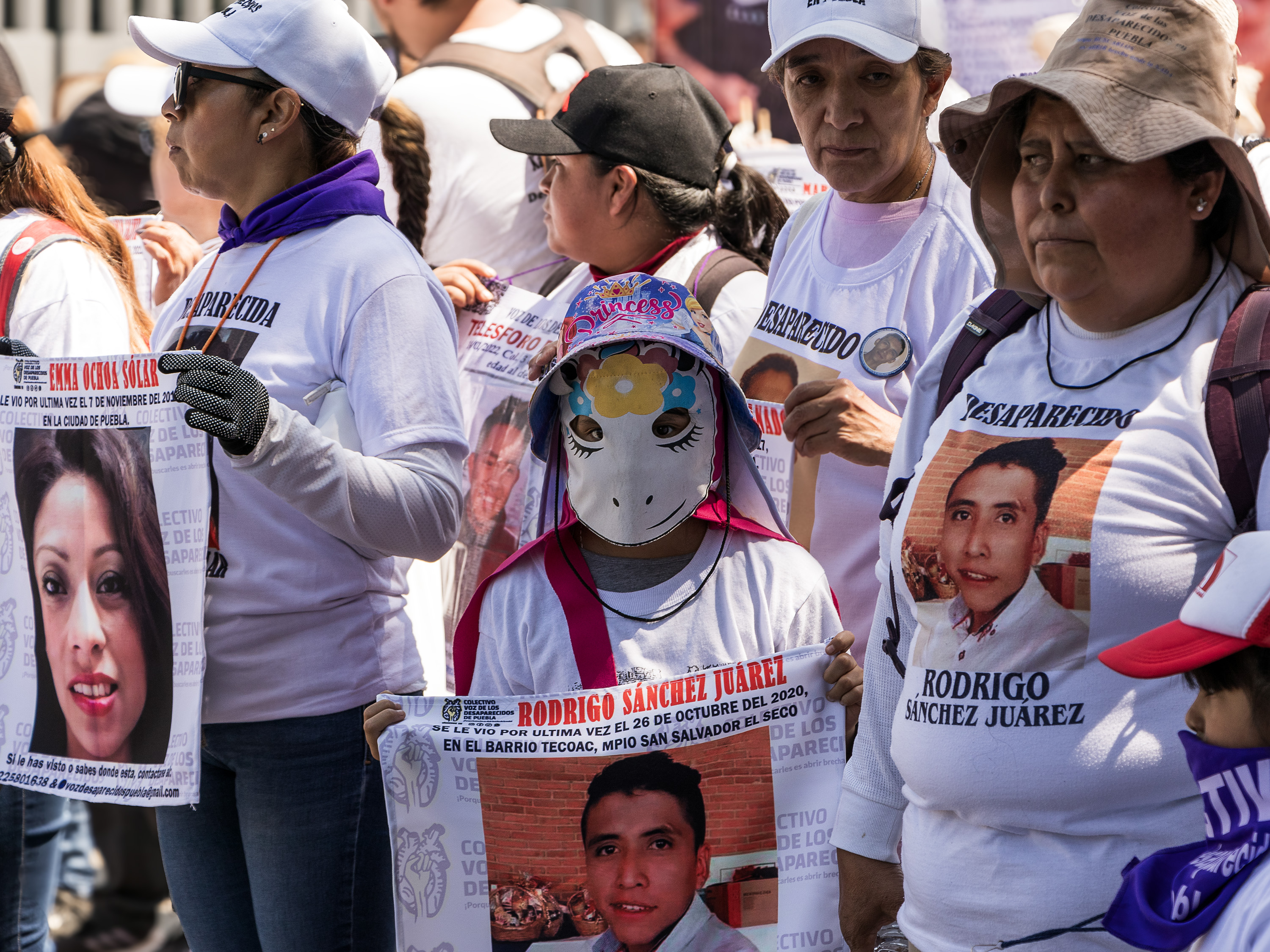
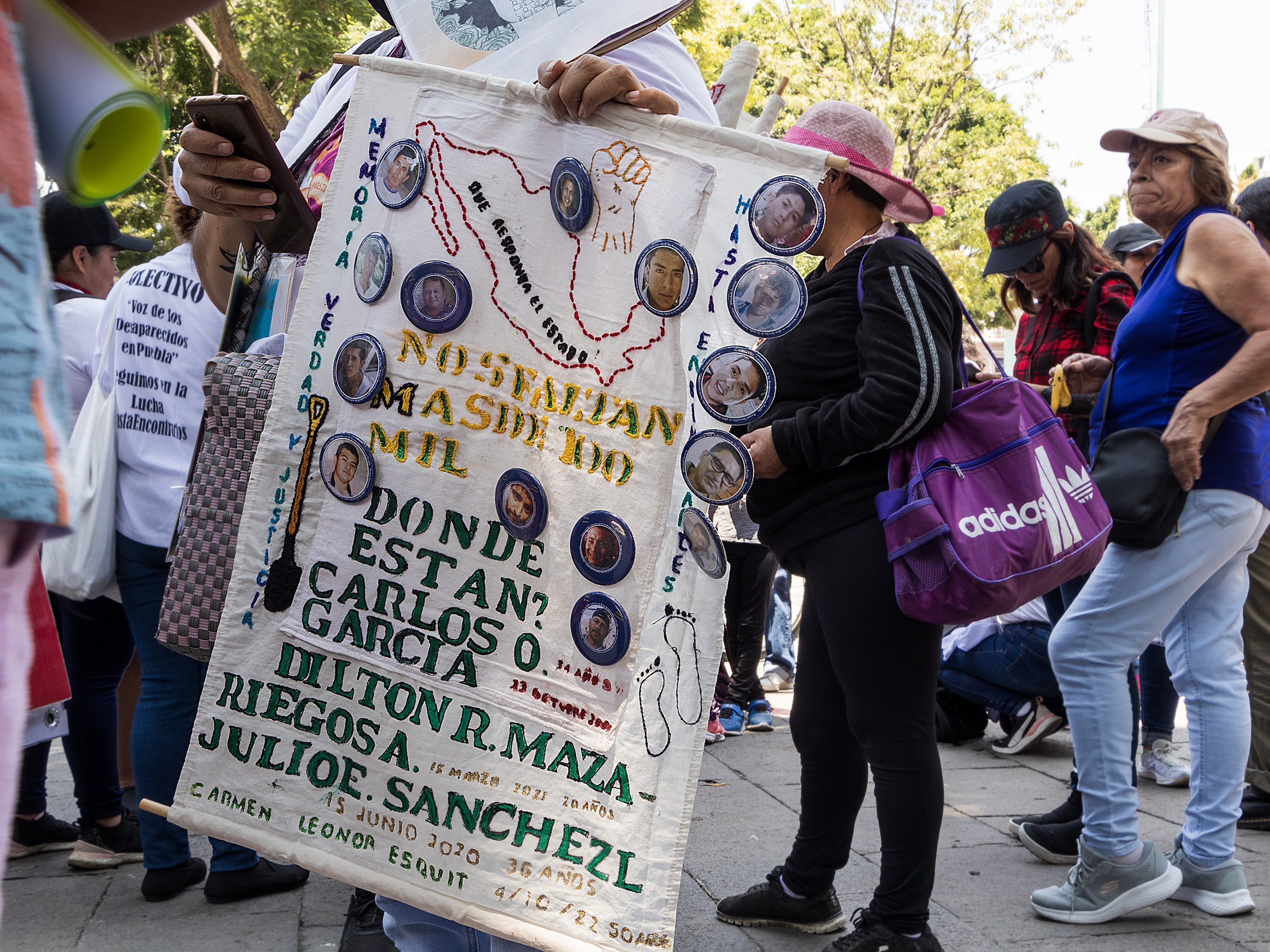


Name of the photos: 1.Búsqueda generacional. 2.Michelle Jiménez. 3.Bordados. 4.Presencia. 5.Tomar el espacio. 6.Nombrar para visibilizar. 7.Consignas.
El 30 de agosto de 2023, en el marco de la Conmemoración Internacional de la Desaparición Forzada, se realizó en la capital de Puebla la quinta marcha convocada por el colectivo La Voz de los Desaparecidos Puebla, para exigir a las instituciones estatales encargadas en el tema, acciones y respuestas ante la actual problemática de la desaparición forzada y social en el territorio. Así como, para visibilizar y sensibilizar sobre lo que sucede actualmente alrededor de la desaparición de personas. La desaparición no es algo que impacta únicamente a nivel personal o familiar, sino que afecta diferentes esferas psicosociales de la cotidianidad de quienes la viven y habitan desde las acciones de búsqueda.
“¿Por qué los buscamos?, ¡porque los amamos!”, “¡hija, escucha, tu madre está en la lucha!”, “¡no están solas!”, son algunas de las consignas más representativas que mediante el grito, la exigencia y los afectos colectivos que se comparten van performando los espacios que se habitan desde la protesta social como una de las tantas expresiones del buscar.
¿Por qué son importantes estas fotografías en particular para su investigación?
Estas fotografías se enmarcan durante una primera fase de trabajo de campo realizada desde la observación militante junto al colectivo la Voz de los desaparecidos en Puebla. La investigación tiene como objetivo identificar las prácticas de cuidados comunes que se dan en contextos de búsquedas de personas desaparecidas. Durante esta fase, participe en diferentes actividades donde pude documentar, para la posterior discusión junto al grupo de mujeres con quienes se ha trabajado la investigación, prácticas de cuidados desde la esfera afectiva. En este caso, el gritar, el caminar, la expresión corporal colectiva, el habitar las calles desde la protesta y las consignas, se vuelven ese componente afectivo que narra otros escenarios, otras luchas y, sobre todo, otras presencias que van más allá de lo que el Estado hace y que, además, toman una forma política de la colectividad y el cuidado común, el cual logra, de alguna manera, sensibilizar, socializar y transformar un entorno.
Performing spaces from social protest
José Luis Dardón Galicia, Universidad Autónoma Metropolitana / Posgrado en Psicología social. Instagram: @c0ntra_tiemp0
Date of pictures: 30 de agosto de 2023. Puebla, México.
On August 30, 2023, in the framework of the International Commemoration of the Enforced Disappearance, the fifth march was held in the capital of Puebla, called by the collective La Voz de los Desaparecidos Puebla, to demand the state institutions in charge of the issue, actions and answers to the current problem of enforced and social disappearance in the territory. As well as, to make visible and raise awareness about what is currently happening around the disappearance of people. Disappearance is not something that impacts only at a personal or family level, but affects different psychosocial spheres of the daily life of those who live and inhabit it from the search actions.
“Why are we looking for them, because we love them!”, ‘daughter, listen, your mother is in the struggle!’, ‘they are not alone!’, are some of the most representative slogans that through the cry, the demand and the collective affections that are shared are performing the spaces that are inhabited from the social protest as one of the many expressions of searching.
Why are those particular photographs important to your research?
These photographs are framed during a first phase of fieldwork carried out from the militant observation with the collective La Voz de los desaparecidos in Puebla. The research aims to identify common care practices that occur in contexts of searches for missing persons. During this phase, I participated in different activities where I was able to document, for later discussion with the group of women with whom the research has been carried out, care practices from the affective sphere. In this case, shouting, walking, collective corporal expression, inhabiting the streets from protest and slogans, become that affective component that narrates other scenarios, other struggles and, above all, other presences that go beyond what the State does and that, in addition, take a political form of collectivity and common care, which manages, in some way, to sensitize, socialize and transform an environment.
 Narrativas Visuales/Visual Narratives