
Aracely Veloso San Martin, Estudiante de programa de doctorado en antropología UCN-UTA Chile, Colaboradora académica de carrera de Antropología UDEC Chile. Arica, Chile. Website: https://flic.kr/ps/2UxZRT Instagram: @kletre
Captura de las fotos: (1) 4 de mayo 2024 Codpa Chile. (2) 25 de mayo 2024 Codpa Chile. (3) 11 de julio 2022 Codpa Chile. (4) 26 de mayo 2024 Codpa Chile. (5) 14 de Julio 2025 Codpa Chile.
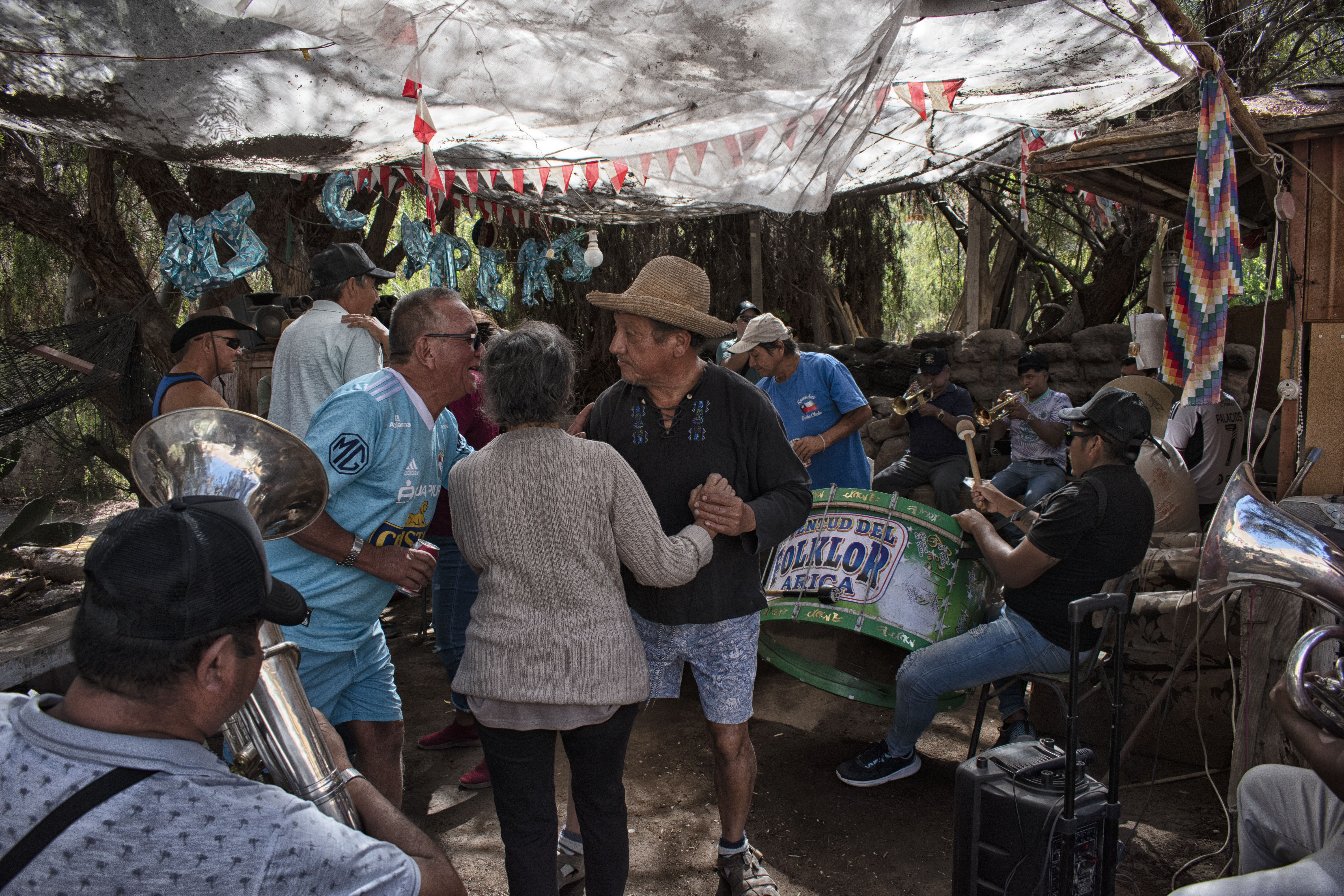
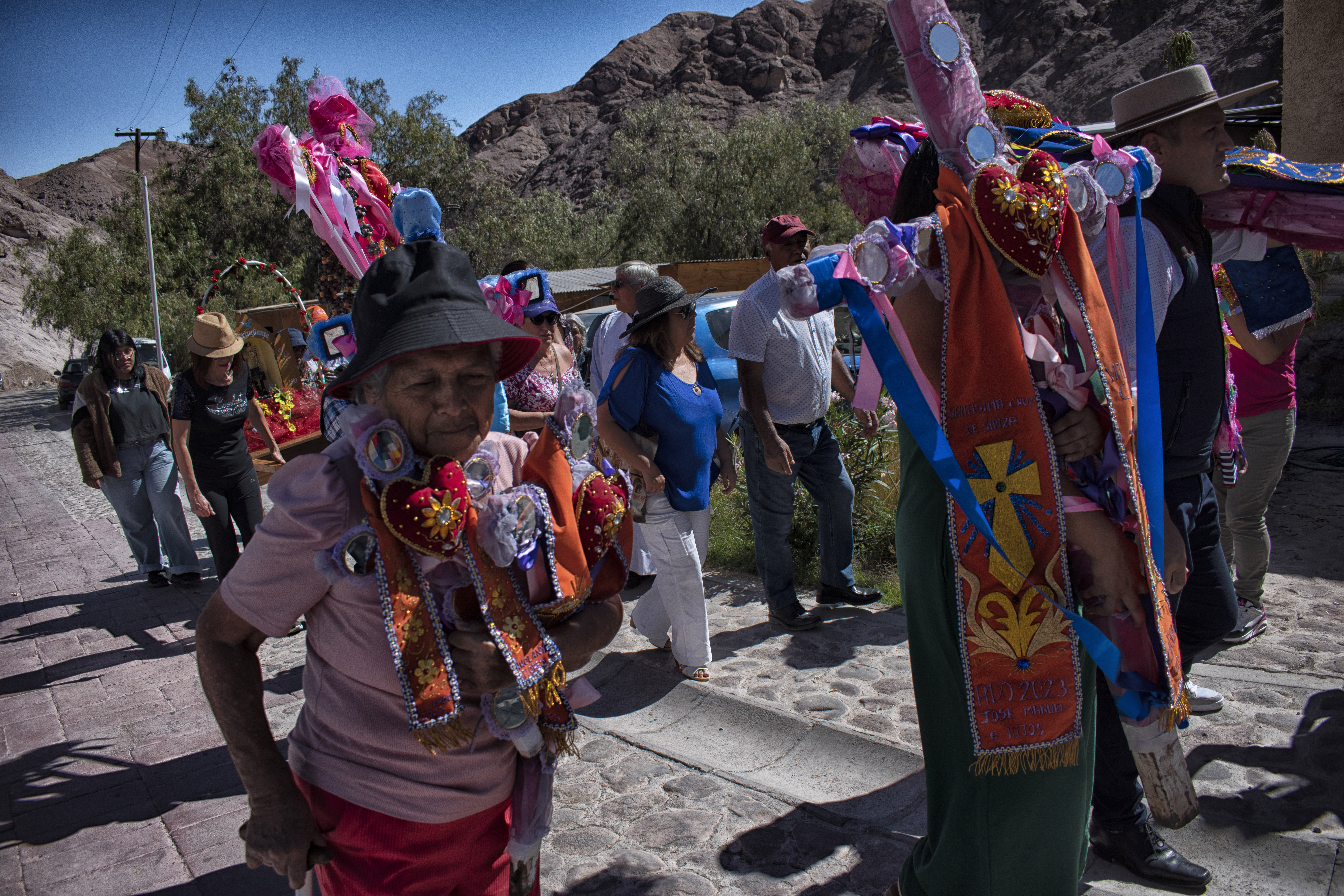
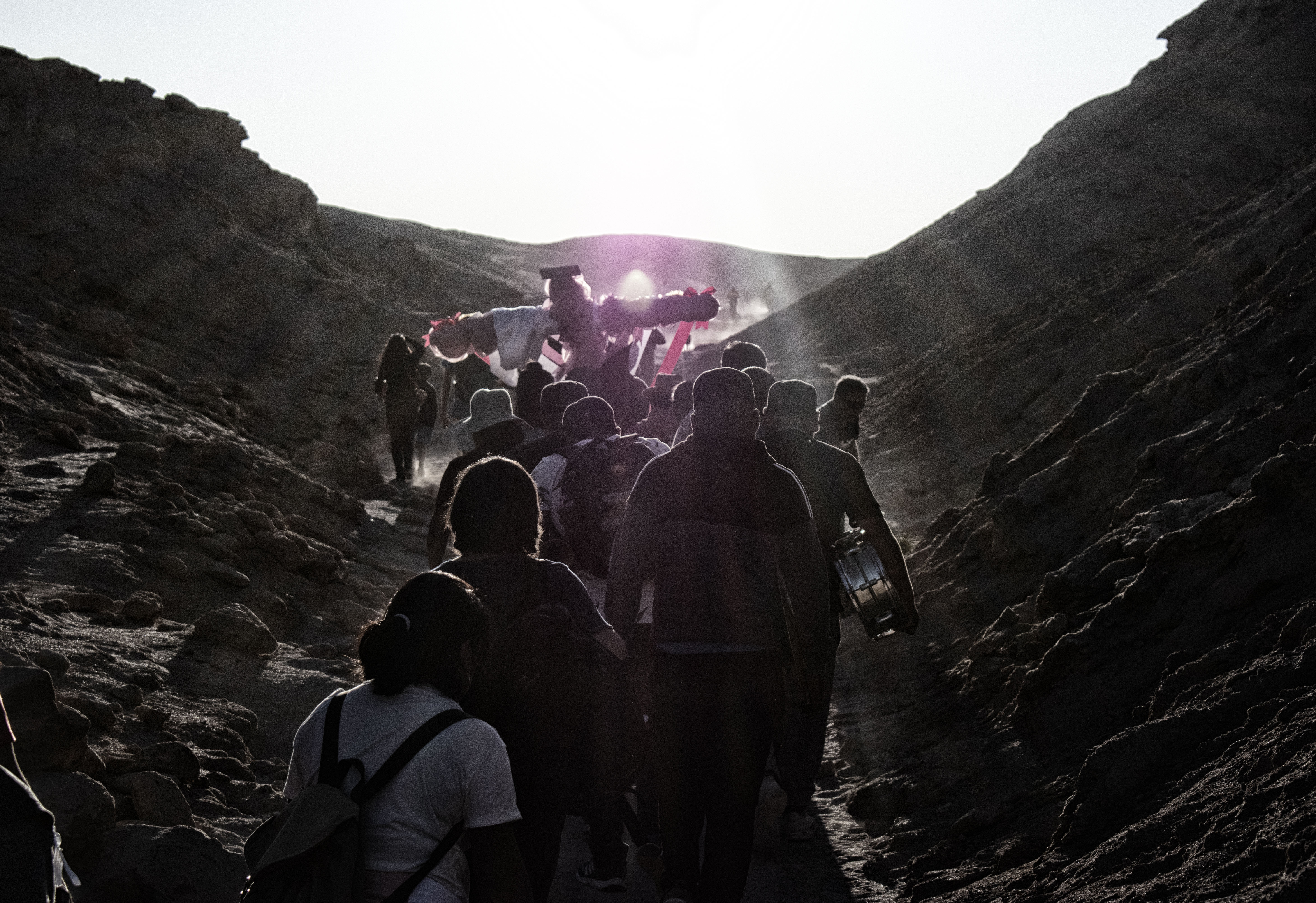
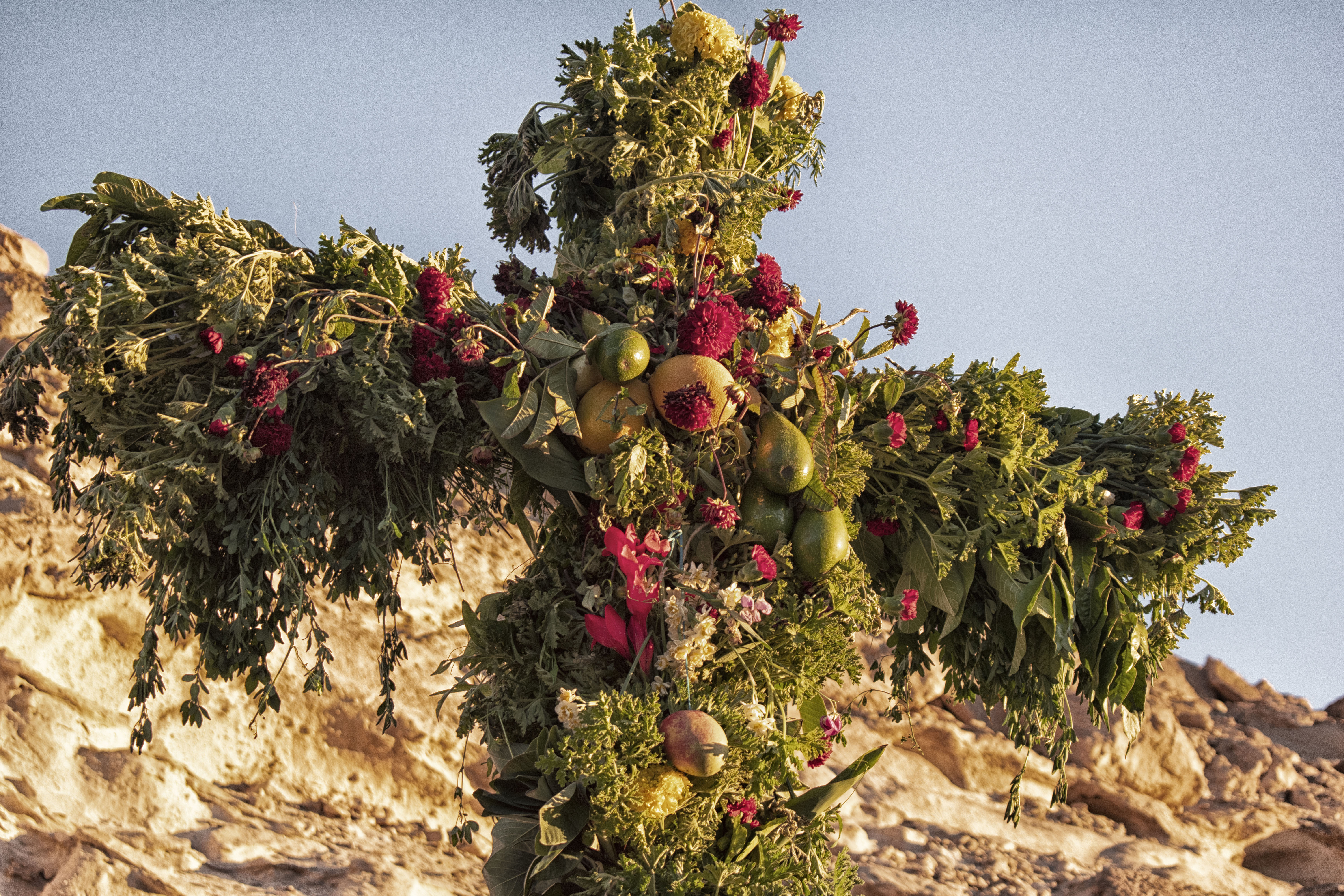
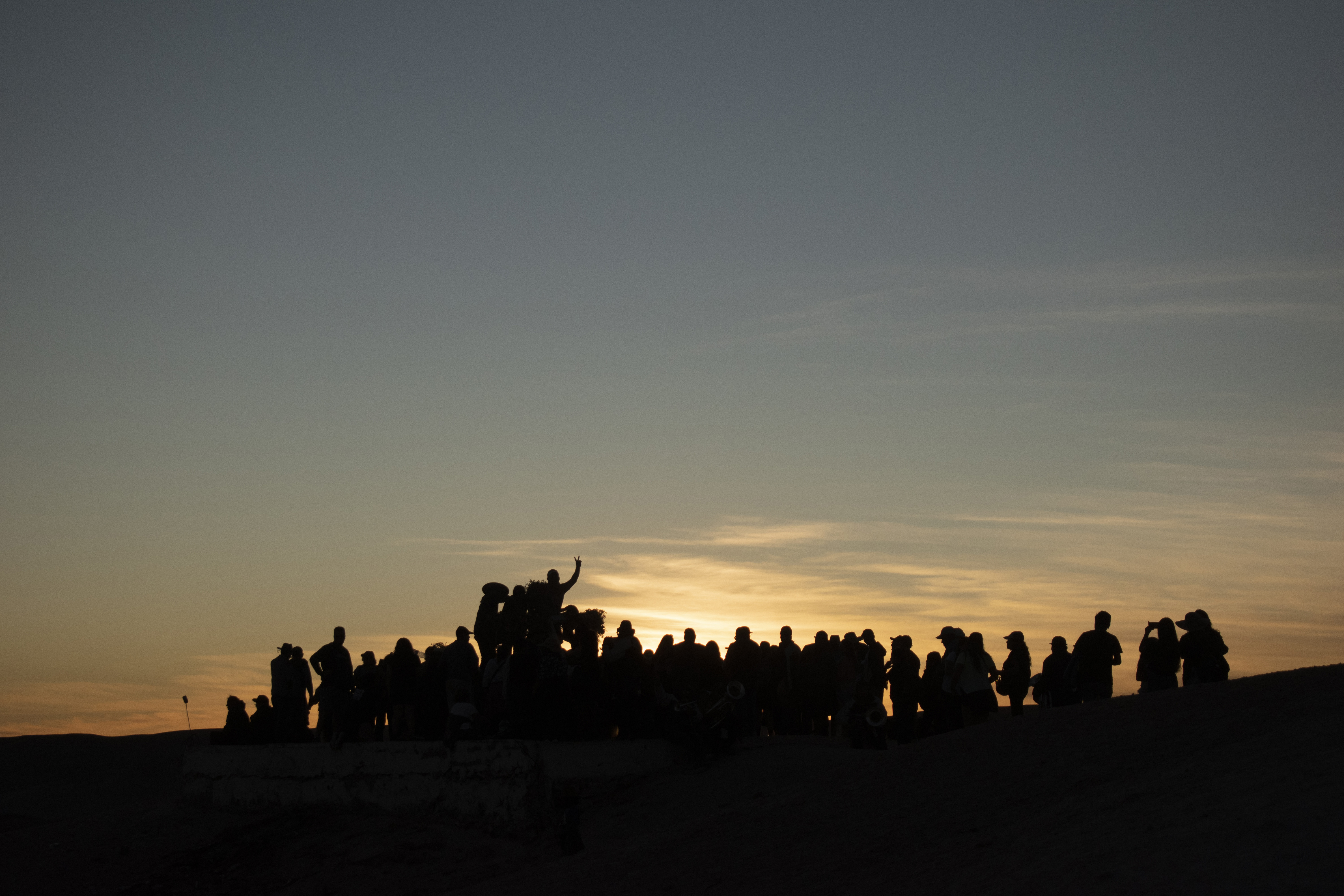
Nombre de las fotos: (1) Bailando (2) Procesión Marquirave (3) Pampa y Cruz (4) El Guardian (5) Despedida en el desierto.
Las fotografías fueron tomadas en el valle de Codpa, en el extremo norte de Chile, durante la festividad de las Cruces 2022-2024. En este territorio árido, donde los cerros son guardianes y las casas de adobe aún son la arquitectura más común, la comunidad se reúne en el pueblo desde diferentes puntos del país, cada año para celebrar, agradecer y renovar su vínculo con el territorio.
El paisaje se transforma en cuerpo ritual: se camina, se reza, se bebe y se baila en torno a las cruces que marcan los cerros y los chacras familiares. La banda de bronce, los olores de la calapurca y el polvo acompañan los cuerpos de quienes retornan al valle.
Estas imágenes nacen de una etnografía encarnada, donde la cámara se funde con el cuerpo que observa y participa. Más que documentar, buscan evocar la textura sensorial del rito: la persistencia de lo sagrado en los gestos cotidianos, el ritmo colectivo que reanima la memoria. Todo este registro está enmarcado en mi investigación Doctoral.
¿Por qué son importantes estas fotografías en particular para su investigación?
Estas fotografías son esenciales porque condensan el modo en que el paisaje ritual (concepto fundante de mi investigación) se hace visible y sensible durante las festividades de las Cruces. No son meras ilustraciones, sino fragmentos de una experiencia corporal y afectiva que revela cómo la comunidad de Codpa reinscribe su pertenencia al territorio a través de gestos, desplazamientos y materialidades.
Cada imagen captura la tensión entre tradición y transformación: los cuerpos que suben los cerros, los brillos metálicos de las bandas, los colores del altar. En conjunto, conforman un archivo visual que permite pensar la persistencia del rito en un tiempo de movilidad, migración y cambio generacional.
Para mi investigación, estas fotografías funcionan como un modo de pensar con el cuerpo, con la afectividad en la mirada: permiten leer el paisaje no como escenario, sino como agente que participa en la producción de lo social. Constituyen, por tanto, una herramienta analítica y poética a la vez, que ayuda a comprender cómo el rito habita la imagen y cómo la imagen, a su vez, prolonga el rito.
To the Pampas with the Crosses.
Aracely Veloso San Martin, Student, PhD program in Anthropology, UCN-UTA, Chile. Academic Collaborator, Anthropology Department, UDEC, Chile. Arica, Chile. Website: https://flic.kr/ps/2UxZRT Instagram: @kletre
Location and dates of the photos: (1) May 4, 2024 Codpa Chile. (2) May 25, 2024 Codpa Chile. (3) July 11, 2022 Codpa Chile. (4) May 26, 2024 Codpa Chile. (5) July 14, 2025 Codpa, Chile.
Name of the photos: (1) Dancing. (2) Marquirave Procession. (3) Pampa and Cross. (4) The Guardian. (5) Farewell in the Desert.
The photographs were taken in the Codpa Valley, in the far north of Chile, during the 2022-2024 Festival of the Crosses. In this arid territory, where the hills stand guard and adobe houses are still the most common architecture, the community gathers in the town from different parts of the country each year to celebrate, give thanks, and renew their connection to the land.
The landscape becomes a ritual body: people walk, pray, drink, and dance around the crosses that mark the hills and family farms. The brass band, the aromas of calapurca (a traditional Chilean drink), and the dust accompany the bodies of those returning to the valley.
These images are born from an embodied ethnography, where the camera merges with the body that observes and participates. More than documenting, they seek to evoke the sensory texture of the ritual: the persistence of the sacred in everyday gestures, the collective rhythm that reanimates memory. This entire record is framed within my doctoral research.
Why are those particular photographs important to your research?
These photographs are essential because they condense the way in which the ritual landscape (a foundational concept of my research) becomes visible and tangible during the festivities of the Crosses. They are not mere illustrations, but fragments of a bodily and affective experience that reveals how the community of Codpa re-inscribes its belonging to the territory through gestures, movements, and material elements.
Each image captures the tension between tradition and transformation: the bodies climbing the hills, the metallic gleam of the sashes, the colors of the altar. Together, they form a visual archive that allows us to consider the persistence of ritual in a time of mobility, migration, and generational change.
For my research, these photographs function as a way of thinking with the body, with affect in the gaze: they allow us to read the landscape not as a backdrop, but as an agent that participates in the production of the social. They constitute, therefore, an analytical and poetic tool that helps us understand how ritual inhabits the image and how the image, in turn, prolongs the ritual.
 Narrativas Visuales/Visual Narratives