
Carla Fica Chueca, Universidad Santo Tomás. Santiago, Chile. Instagram: @carlotafica
Captura de las fotos: 14 de junio 2025.
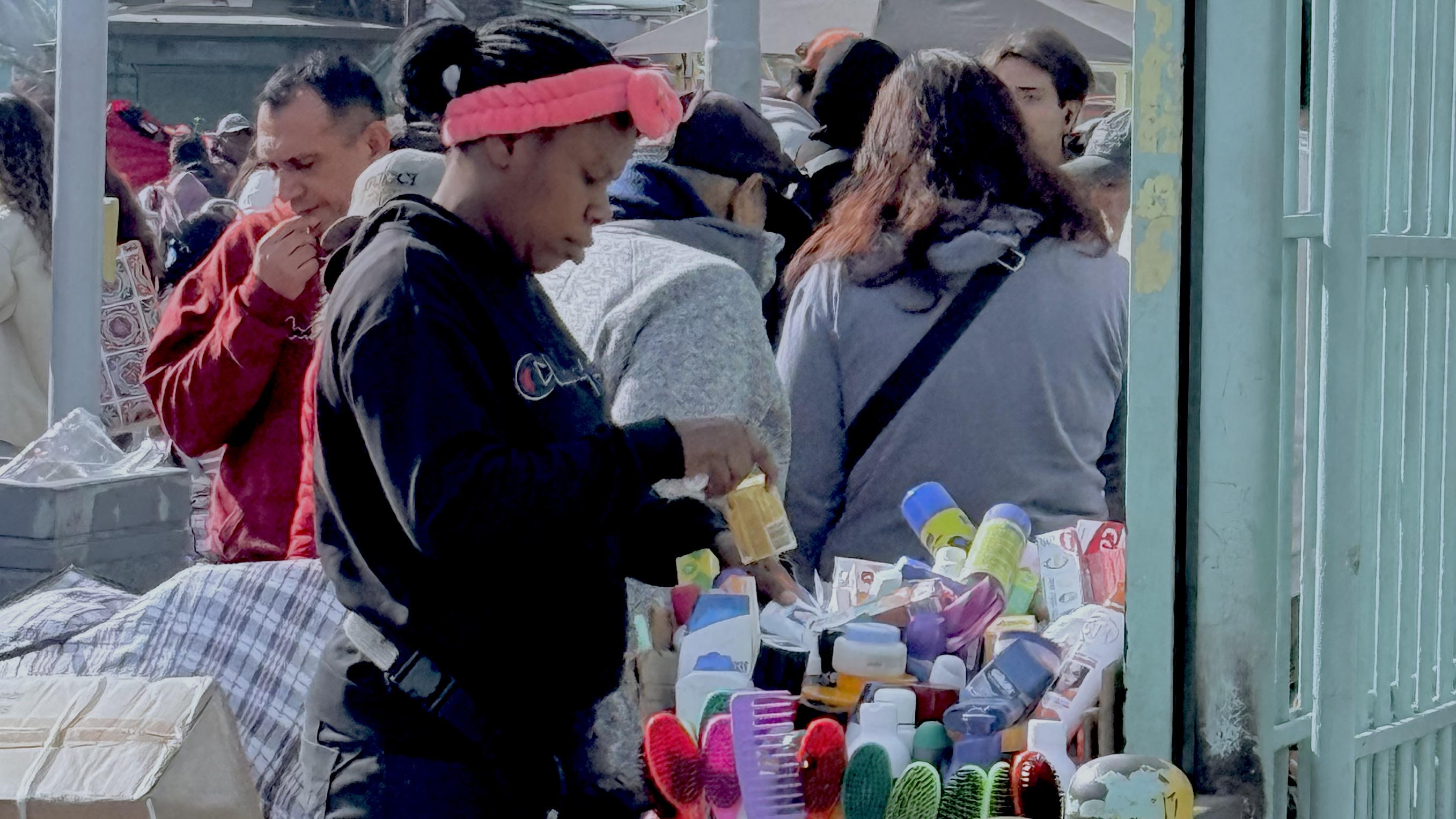
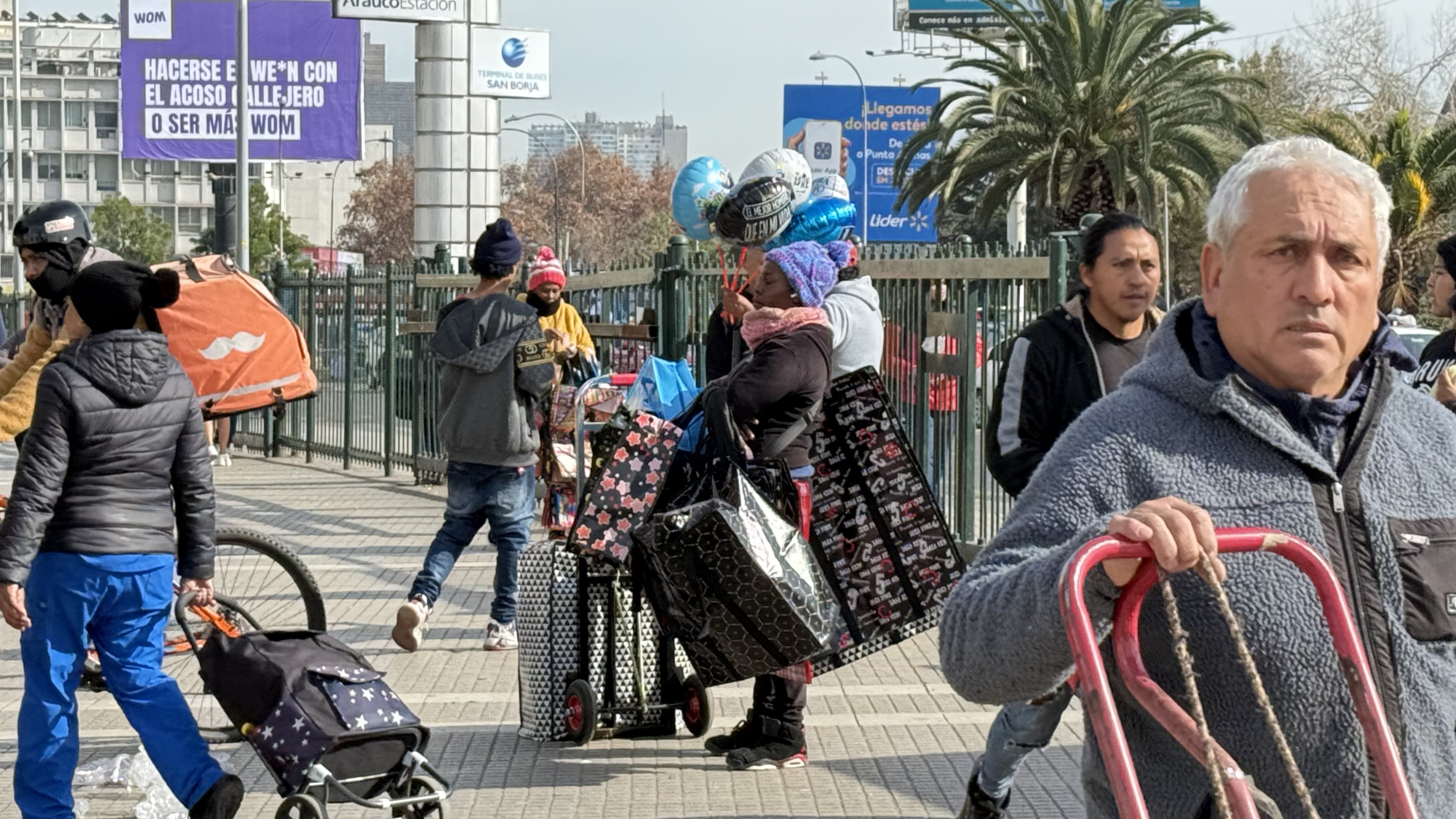
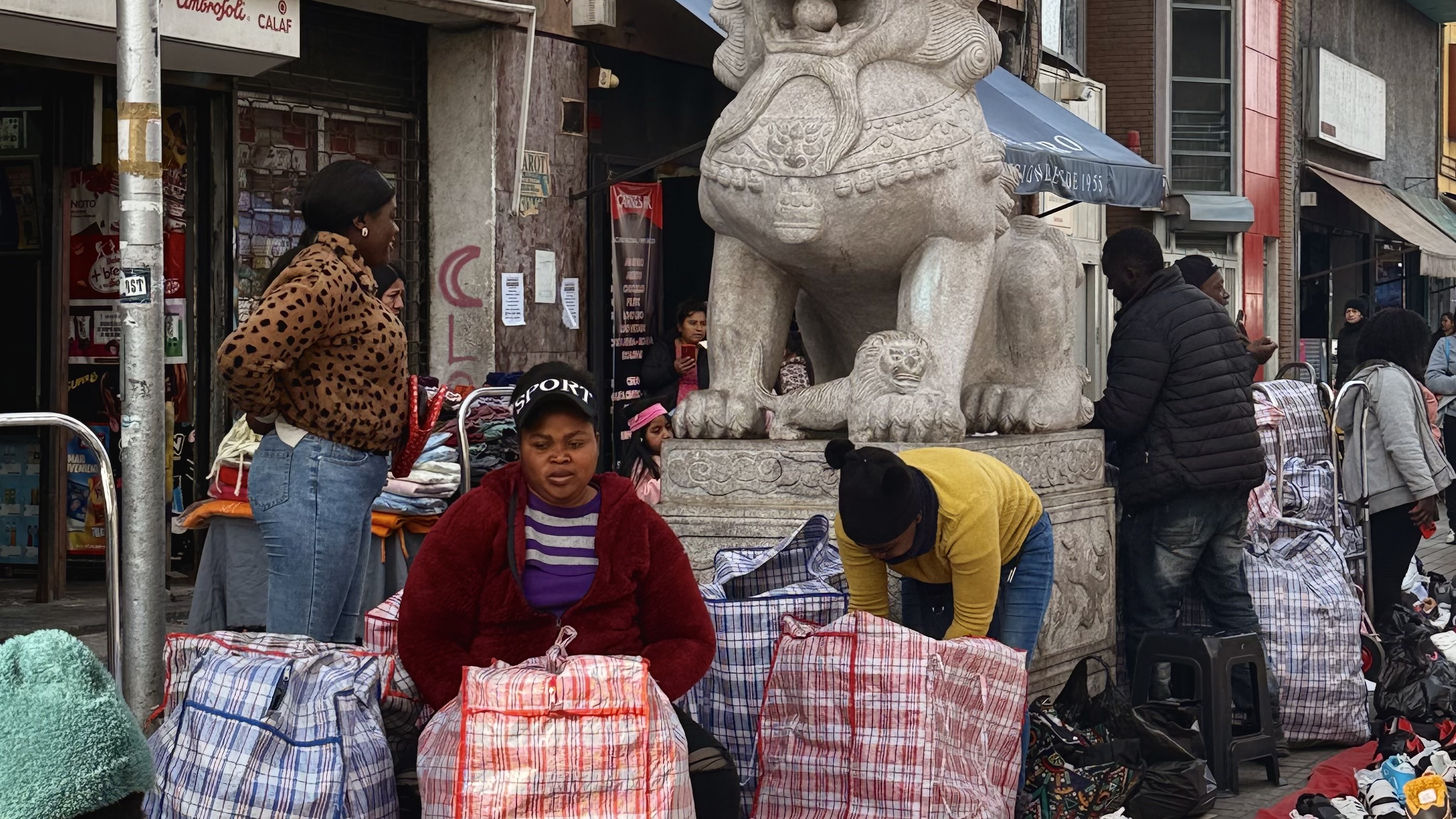
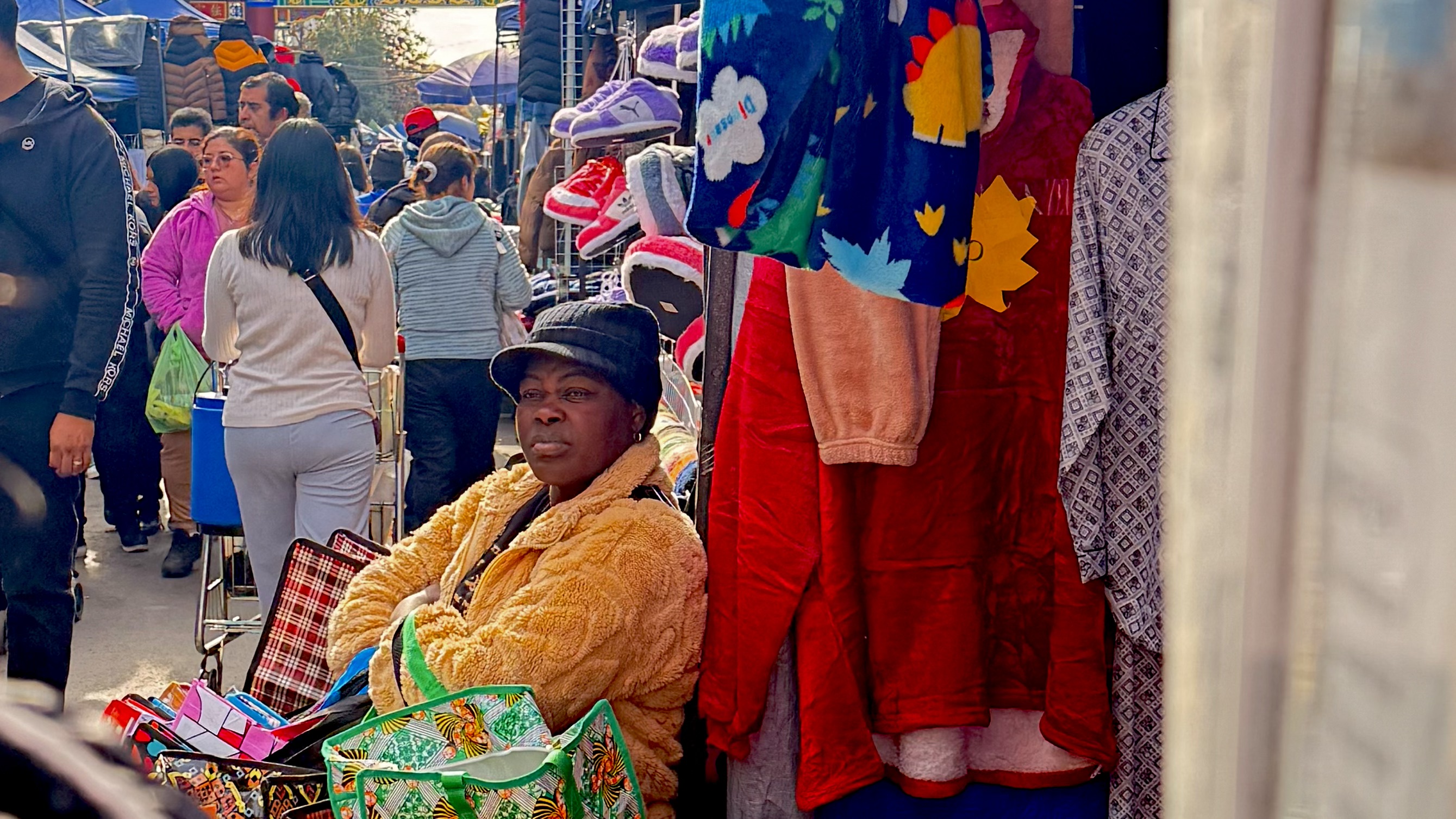
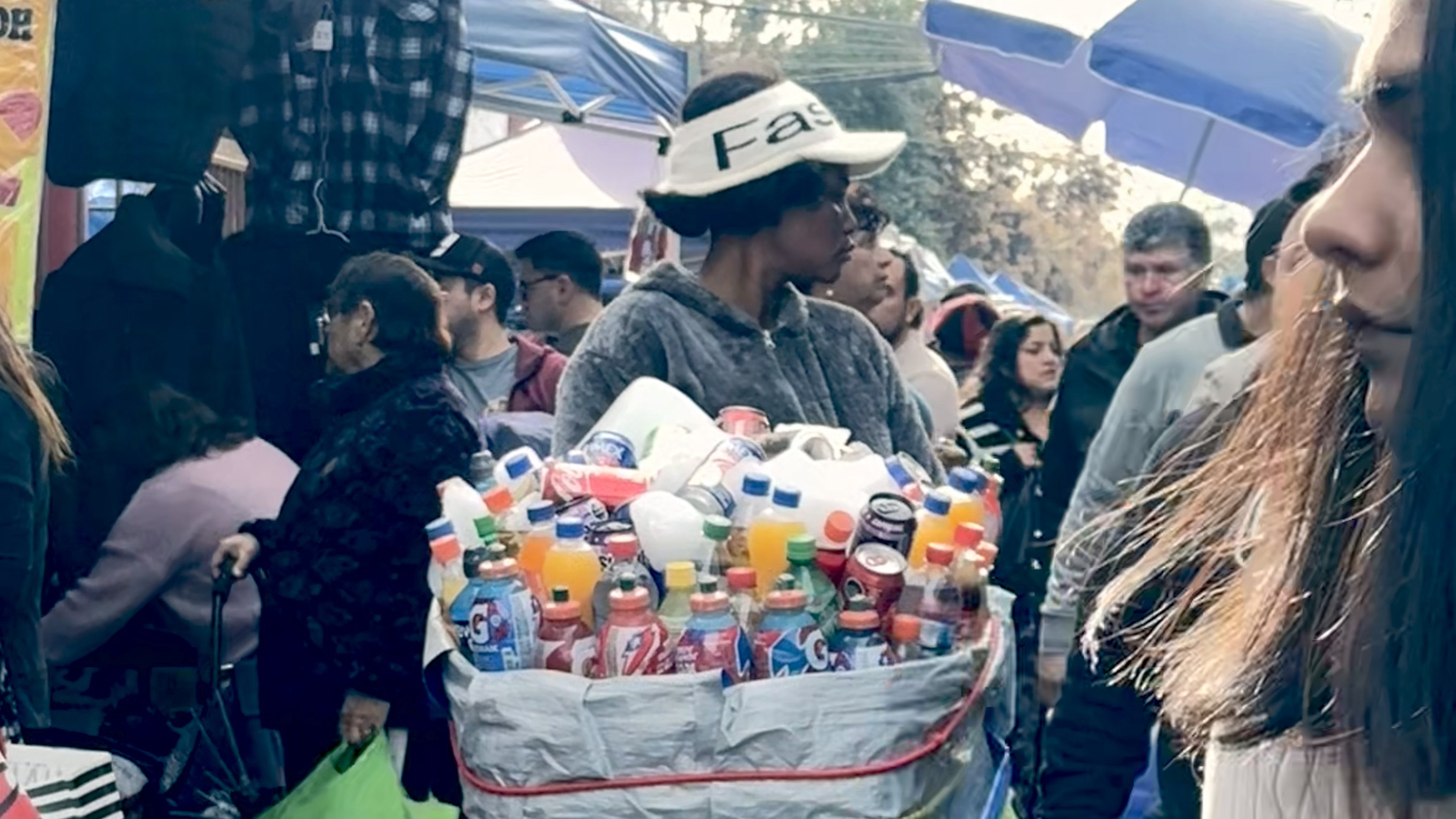
Nombre de las fotos: 1.- Primera necesidad. 2.- Sostener el peso. 3.-Choque cultural. 4.-La frontera. 5.-La oferta.
Las fotografías fueron tomadas en el barrio Meiggs, un sector emblemático de Santiago de Chile caracterizado por su intensa actividad comercial y su diversidad cultural. Este espacio urbano, históricamente asociado al comercio informal y a la migración, se ha transformado en un punto de encuentro para comunidades extranjeras, entre ellas la haitiana, que busca oportunidades laborales y redes de apoyo.
En sus calles se mezclan puestos ambulantes, almacenes de ropa y productos importados, pequeños talleres y restaurantes, generando un paisaje dinámico pero también marcado por la precariedad y la competencia. El barrio funciona como un espacio de tránsito y permanencia: lugar de trabajo, de socialización y, a la vez, escenario de exclusión y control policial.
Para las mujeres migrantes haitianas, Meiggs representa tanto una oportunidad económica —al facilitar ingresos mediante el comercio y los servicios— como un entorno desafiante donde enfrentan discriminación racial y de género, largas jornadas laborales y condiciones inestables. Las fotografías capturan estos contrastes: el movimiento constante, la resiliencia y el esfuerzo por construir un lugar propio en un territorio ajeno. Este contexto permite comprender cómo la interseccionalidad de género, raza y clase se materializa en la vida diaria y el trabajo informal.
¿Por qué son importantes estas fotografías en particular para su investigación?
Las fotografías seleccionadas son esenciales porque constituyen un registro visual directo de las experiencias cotidianas de las mujeres migrantes haitianas en Chile, permitiendo documentar aspectos que a menudo permanecen invisibles en los relatos escritos. A través de las imágenes se evidencian condiciones de trabajo, espacios habitados y gestos corporales que reflejan las dinámicas de precariedad, resistencia y cuidado.
Además, las fotografías aportan una dimensión emocional y contextual que enriquece el análisis cualitativo, permitiendo observar cómo el género, la raza y la clase se entrelazan en la vida laboral y comunitaria de estas mujeres. Son una herramienta clave para comprender cómo se construyen identidades y pertenencias en territorios ajenos, visibilizando tanto los desafíos de la inserción laboral como las estrategias de adaptación y solidaridad.Desde un enfoque crítico e interseccional, estas imágenes actúan como evidencia viva que respalda los hallazgos teóricos, conectando la investigación con la realidad material de las protagonistas. También cumplen un rol ético y político: contrarrestan estereotipos, fortalecen la narrativa propia de las mujeres retratadas y favorecen la producción de conocimiento situado, sensible a sus trayectorias migratorias y a las violencias estructurales que enfrentan.
Crossing Borders: Gender Intersectionality as an Invisible Barrier Shaping the Lives of Haitian Migrant Women Workers
Carla Fica Chueca, Santo Tomás University, Santiago, Chile. Instagram: @carlotafica
Photos taken: June 14, 2025.
Photo Titles: 1. Basic Need. 2. Bearing the Weight. 3. Culture Shock. 4. The Border. 5. The Offer.
The photographs were taken in the Meiggs neighborhood, an emblematic area of Santiago, Chile, characterized by its intense commercial activity and cultural diversity. This urban space, historically associated with informal commerce and migration, has become a meeting point for foreign communities, including the Haitian community, which seeks employment opportunities and support networks.
Its streets are a mix of street vendors, clothing stores and shops selling imported goods, small workshops, and restaurants, creating a dynamic landscape also marked by precariousness and competition. The neighborhood functions as a space of transit and permanence: a place of work, socialization, and, at the same time, a stage for exclusion and police control.
For Haitian migrant women, Meiggs represents both an economic opportunity—facilitating income through trade and services—and a challenging environment where they face racial and gender discrimination, long working hours, and unstable conditions. The photographs capture these contrasts: constant movement, resilience, and the effort to carve out a place for themselves in unfamiliar territory. This context allows us to understand how the intersectionality of gender, race, and class materializes in daily life and informal work.
Why are these photographs particularly important to your research?
The selected photographs are essential because they constitute a direct visual record of the everyday experiences of Haitian migrant women in Chile, allowing us to document aspects that often remain invisible in written accounts. Through the images, working conditions, inhabited spaces, and bodily gestures are revealed, reflecting the dynamics of precarity, resistance, and care.
Furthermore, the photographs provide an emotional and contextual dimension that enriches the qualitative analysis, allowing us to observe how gender, race, and class intertwine in the working and community lives of these women. They are a key tool for understanding how identities and sense of belonging are constructed in unfamiliar territories, making visible both the challenges of labor market integration and the strategies of adaptation and solidarity. From a critical and intersectional perspective, these images act as living evidence that supports the theoretical findings, connecting the research with the material reality of the women portrayed. They also fulfill an ethical and political role: they counter stereotypes, strengthen the women’s own narratives, and foster the production of situated knowledge that is sensitive to their migration trajectories and the structural violence they face.
 Narrativas Visuales/Visual Narratives