
Edith Galarza, Neuquén, Argentina. edithgalarza.blogspot.com Youtube: @egalarza1000 IG: edithgalarzapoeta
Captura de las fotos: Junio, 2023. Barrio Cumelén, Ciudad de Neuquén, Puelmapu, Argentina.
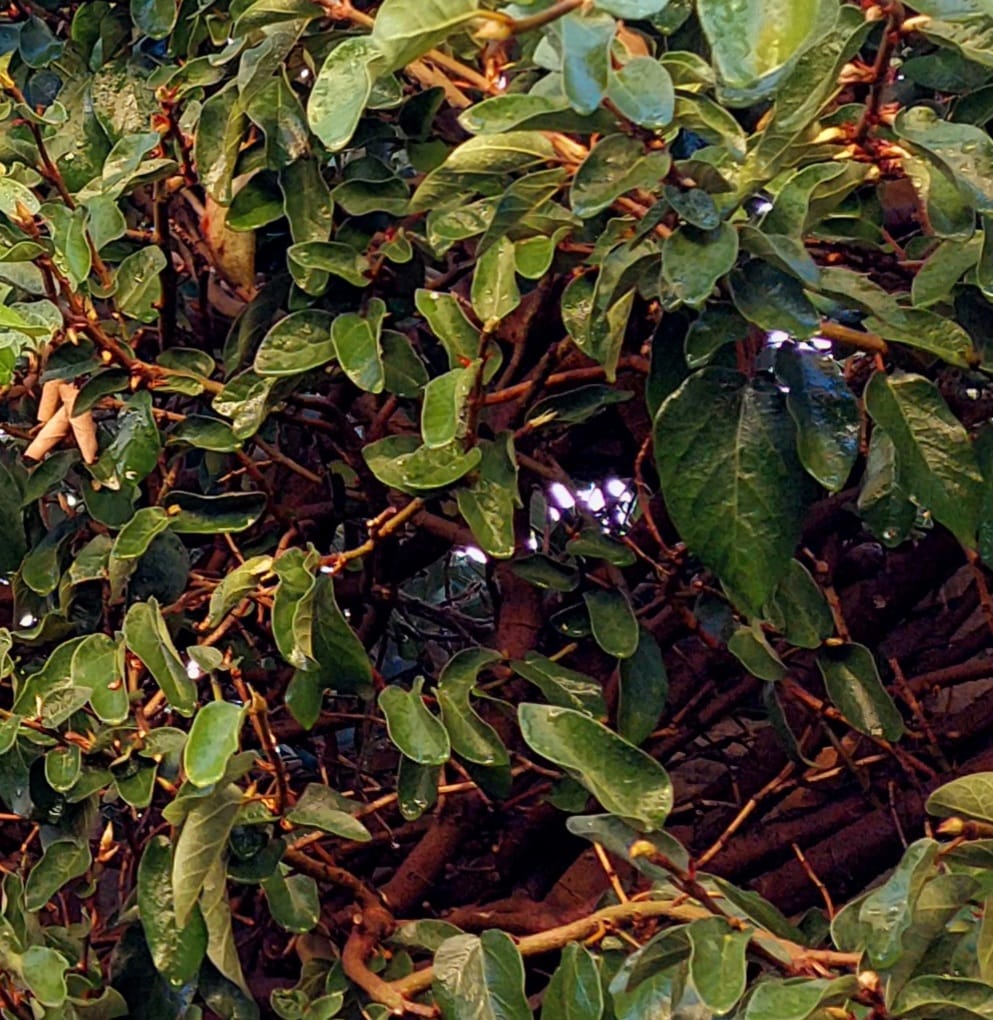
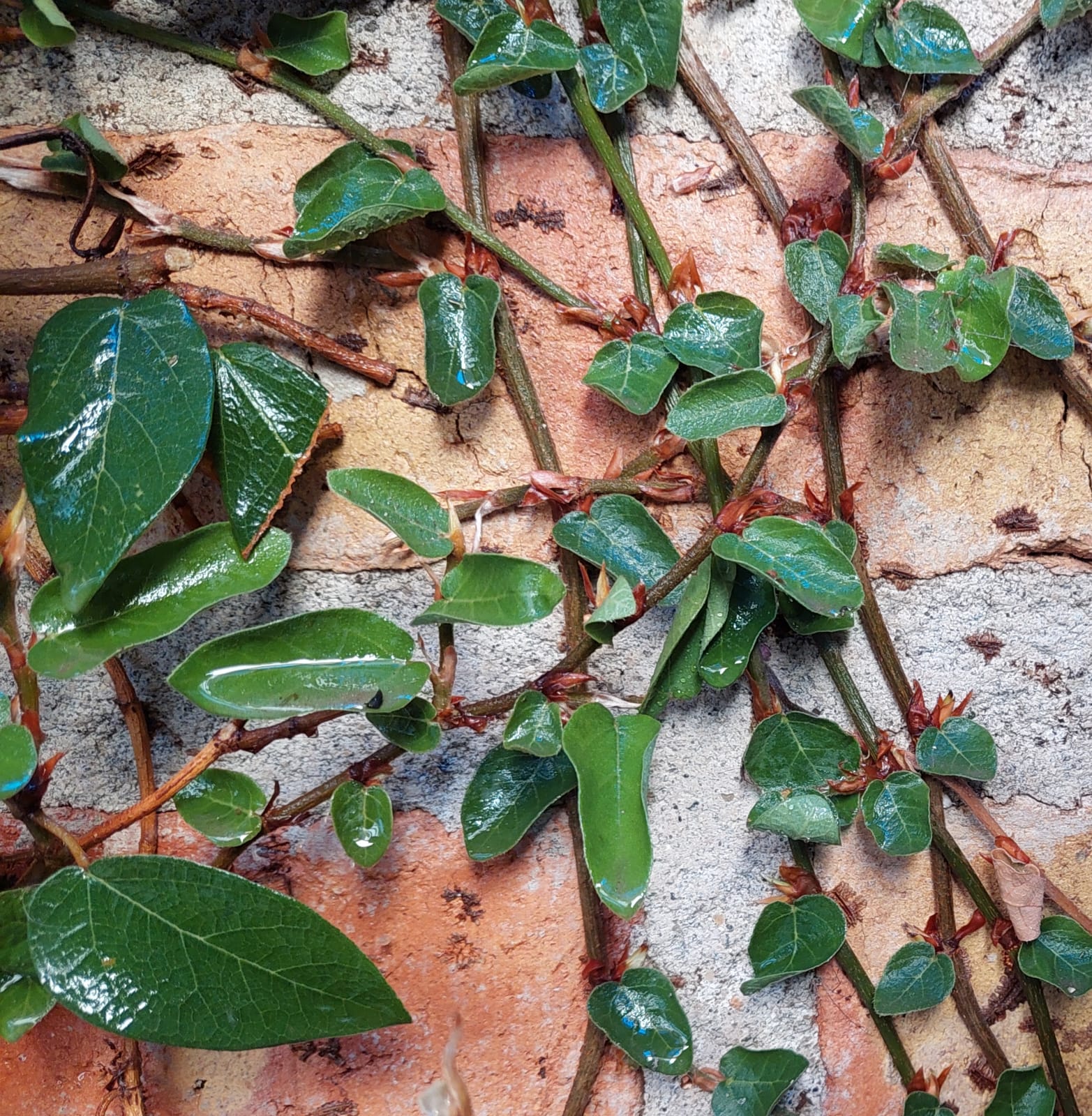
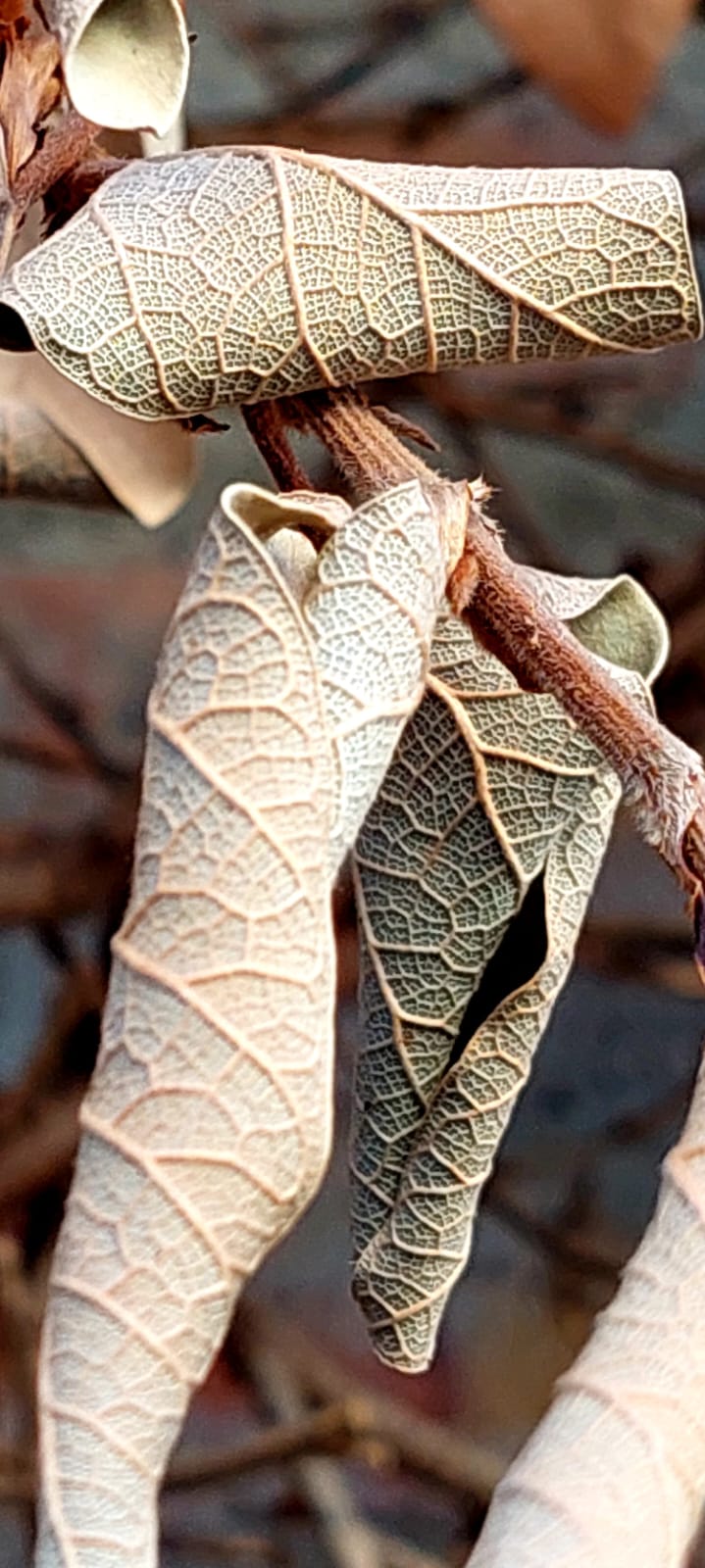
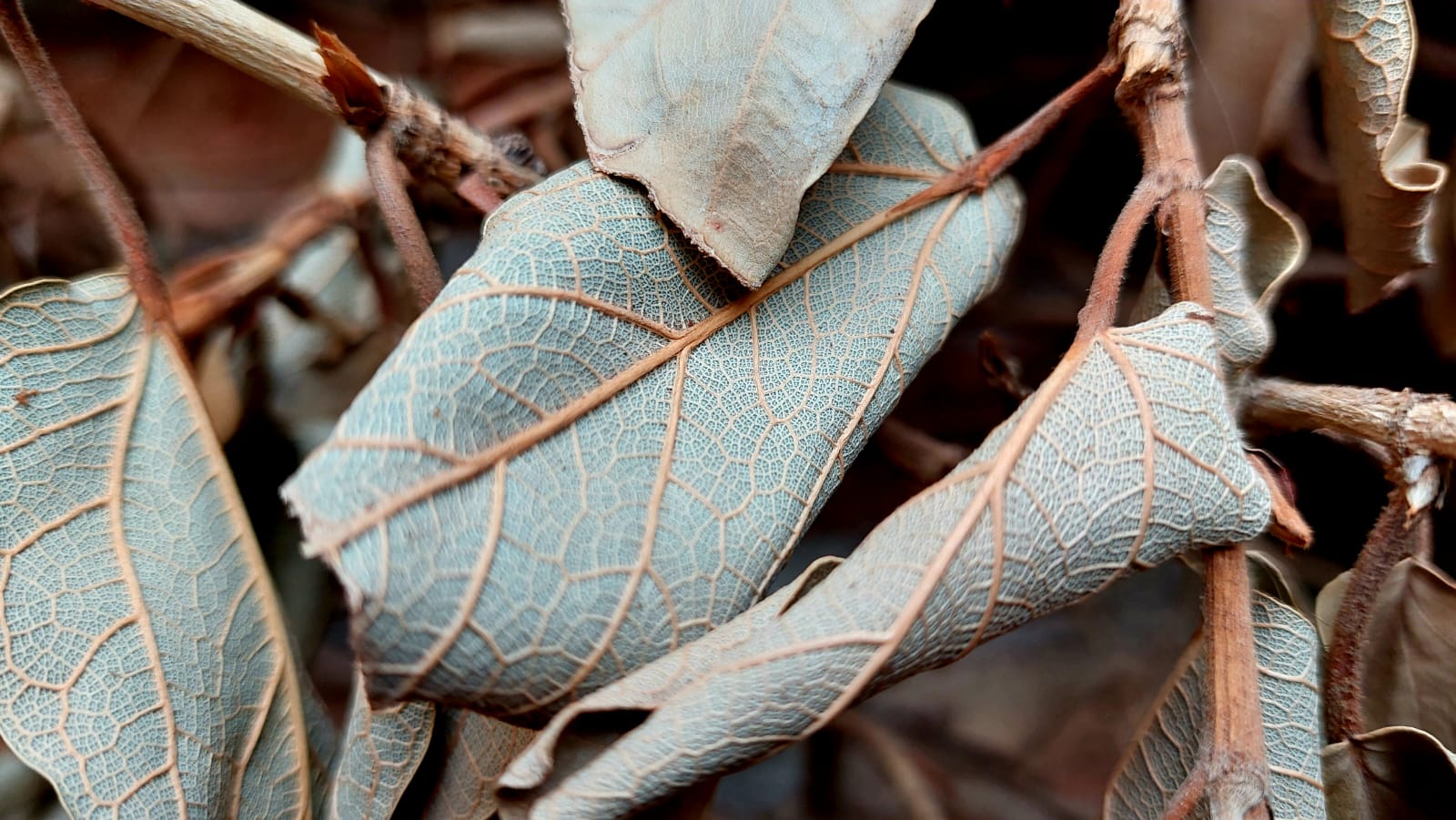
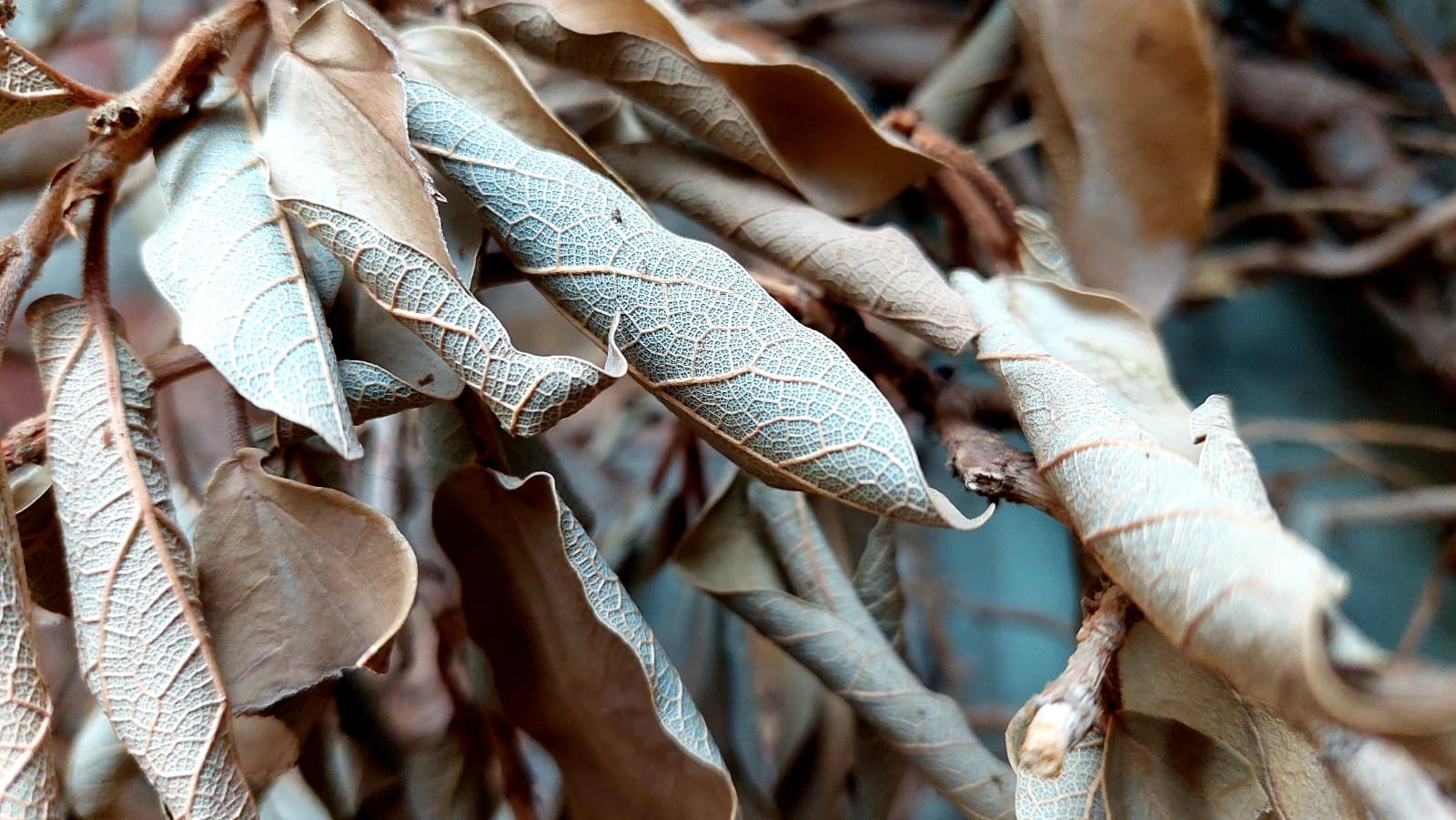
Nombre de las fotos: 1. Crecía salvaje. Me gustaba su desmesura. Tenía yo una pequeña selva en mi patio. 2. Ella que había sido plantada del otro lado del muro, se fue a vivir la vida a las casas vecinas y en la mía, se instaló. 3. Mi vecino nuevo decidió cortar el tronco principal y sacar la raíz de la tierra. Cortó la planta exactamente en el borde la medianera, el límite de su propiedad. 4. Ahora la trepadora se ha quedado sin conexión con la tierra. Hago consultas desde ayer ¿puede un árbol sobrevivir sin su raíz? 5. En unos días iré viendo morir lentamente esta planta, que fue testigo de nuestra vida todos estos años, mientras crecían los hijos, cuando colgaba la ropa, en nuestro descanso del sol.
Las fotografías retratan a una planta en particular (una individuación de la especie vegetal) que durante 15 años habitó en mi patio, aunque su raíz y el tronco principal estaban en una casa lindera. Esa casa fue vendida y el nuevo propietario decidió talar el árbol. Así fue que sacó la raíz de la tierra y la planta que cubría por completo las paredes de mi patio y las de otros vecinos, murió en pocos días.
A partir de una poética de la imagen se trae a la conversación la relación sensible interespecie entre una familia humana y un ser vegetal que convivieron durante 15 años.
Este simple hecho acontecido en el espacio de cercanía y convivencia, abre debates posibles sobre antropocentrismo, derecho de propiedad, biodiversidad, interculturalidad y memoria.
¿Por qué son importantes estas fotografías en particular para su investigación?
Las fotografías son parte del proyecto de biopoética PROPIETARIO, Trabajo Final de la Diplomatura en Humanidades Ambientales en el cruce del Arte y la Tecnología de la Universidad Nacional de Tres de Febrero, Argentina.
Las fotos fueron tomadas y el poema “Propietario” escrito, como parte de un mismo acto artístico con distintos lenguajes expresivos. También se hicieron registros sonoros de los pájaros que visitaban la planta y todo ello confluyó en un videopoema y una publicación con material de reciclaje.
Las imágenes dan cuenta de la relación sensible interespecie humano-vegetal. La presencia de la planta en su corporalidad y la mirada humana que refleja la celebración de la existencia, coexistencia y la despedida.
La vida de los seres que respiramos sobre el Planeta Tierra, solo es posible gracias a las plantas que mantienen la atmósfera con una concentración de alrededor del 21% de oxígeno.
Propietario
Mis vecinos nuevos
decidieron sacar la enredadera que desde hace quince años
cubre por completo las paredes de mi patio y las de otros vecinos.
Hablamos.
La belleza.
La generosidad de esta planta que tiene la raíz de su lado de la pared
y extiende el follaje en las paredes vecinas.
También crece hacia el cielo erguida sobre sí misma
y da intimidad a nuestras casitas, a veces demasiado cercanas.
Pero no. Ayer serruchó el tronco principal
y sacó la raíz de la tierra.
Cortó la planta exactamente en el borde de la medianera
el límite de su propiedad.
Ahora la trepadora
extendida sobre las paredes de las casas vecinas
se ha quedado sin conexión con la tierra.
Los próximos días iré viendo morir lentamente a esta planta
que fue testigo de nuestra vida todos estos años.
Cuando comenzó a asomar de este lado del muro
decidí ofrecerle agua sobre la pared de ladrillos y así
se fue viniendo día tras día
hasta cubrir por completo mi patio.
Vivo en un desierto. Aquí una planta es un regalo.
Algo que se cuida y se agradece.
Solía regarla por las noches.
Recorría las paredes con la manguera
hasta que todas sus hojas estaban
mojadas y brillantes.
Me pregunto cuánto tardará en morir.
En soltarse de los ladrillos y caer.
Obcecada, la riego sobre la pared como siempre.
Pienso si habrá alguna forma de sobrevida para ella.
Se alivia un poco. Luego vuelve a su agonía.
Jamás echó una raíz de este lado.
Nunca un gajo.
Pero sí toda la gama de verdes,
hojas de distinto tamaño, ramas y frutos.
Perenne. En invierno sus hojas gruesas
de un verde oscuro casi negro
soportaban las finas capas de hielo. Luego renacía fortalecida.
Lanzaba ramas nuevas largas y delgadas
con hojas pequeñas y tiernas
que con ansia expansiva seguían estirándose por las paredes.
Tiene un esqueleto fuerte que se extiende
como si fueran venas sobre la pared.
Cuando se caigan todas las hojas, quedará aferrado y desnudo
o tal vez, se desplome vencido.
Crecía salvaje.
Me gustaba su desmesura.
Tenía yo una pequeña selva en mi patio.
Mis amigos la conocen como conocen a mi perro.
Una presencia en mi casa.
Los reflejos verdes del comedor a través del ventanal.
Hago consultas desde ayer.
¿puede una planta sobrevivir sin su raíz?
Sé que no es posible. Se irán secando las hojas,
volviéndose quebradizos los tallos.
En unos días aparecerán los ladrillos que la planta
fue cubriendo por completo en estos años.
Cuando crecían los hijos.
Mientras colgaba la ropa.
En nuestro descanso del sol.
Era mi lugar para mirar el cielo.
Buscar tu estrella. Hablarte.
Porque en ese lugar del patio, al mirar hacia arriba
solo se veía el follaje y el cielo
algo difícil en la ciudad.
La planta hizo que mi patio
fuera visitado por pájaros todas las mañanas.
Cantaban cerca de las ventanas, tomaban el agua de sus hojas.
Hoy los escucho desconcertados, se llaman,
se alborotan ante la novedad.
Ella que había sido plantada del otro lado de la pared
se fue a vivir la vida a la casas vecinas
y en la mía se instaló.
Ensayamos procedimientos de emergencia
cortes, bajadas a tierra, trasplantes, extranutrición.
Mi perro olfatea que algo extraño sucede en el patio.
Busco información: ficus pumila
Leo como hacer esquejes.
Los amigos me envían videos de jardinería.
Se acercan a evaluar la situación.
No encuentro como hacer vivir una planta sin raíces.
No busco ninguna metáfora en esto.
No la necesito.
No hay artificio aquí,
ni más profundidad que lo que tengo ante mis ojos
en este comienzo del invierno
casi llegando al wiñoy xipantv,
mi planta se muere.
Tienen un hijito y un perro guardián.
¿Miraba tu niño mientras cortabas, cuando sacaste la raíz?
Y cuando me contestaste que era mi responsabilidad
haberla dejado crecer de mi lado.
Propietario.
Proprietor. A human and vegetal family.
Edith Galarza, Neuquén, Argentina. edithgalarza.blogspot.com Youtube: @egalarza1000 IG: edithgalarzapoeta
Location and dates of the photos: June, 2023. Cumelén Neighborhood, Neuquén City, Puelmapu, Argentina.
Name of the photos: 1. She grew wild. I loved her untamed nature. I had a little jungle in my yard. 2. She, who had been planted on the other side of the wall, went to live her life in the neighbouring houses and settled in mine. 3. My new neighbour decided to cut the main trunk and pull the root out of the ground. He cut the plant right on the edge of the dividing wall, the boundary of his property. 4. Now the climbing plant is no longer connected to the ground. I’ve been asking questions since yesterday: can a tree survive without its roots? 5. In a few days, I will watch this plant slowly die, this plant that witnessed our lives all these years, while the children grew up, when we hung the laundry on it, when we rested from the sun.
The photographs depict a particular plant (an individual specimen of the plant species) that lived in my yard for 15 years, although its root and main trunk were in a neighboring house. That house was sold, and the new owner decided to cut down the tree. He pulled the root out of the ground, and the plant, which completely covered the walls of my yard and those of other neighbors, died within a few days.
Through a poetic approach to the image, the conversation turns to the sensitive interspecies relationship between a human family and a plant that coexisted for 15 years.
This simple event, which took place in a space of closeness and shared experience, opens up potential debates about anthropocentrism, property rights, biodiversity, interculturality, and memory.
Why are those particular photographs important to your research?
The photographs are part of the biopoetic project “Propietario” (Proprietor), the final project for the Diploma in Environmental Humanities at the Intersection of Art and Technology at the National University of Tres de Febrero, Argentina.
The photos were taken and the poem “Propietario” written as part of the same artistic act, employing different expressive languages. Sound recordings were also made of the birds visiting the plant, and all of this culminated in a video poem and a publication made with recycled materials.
The images reveal the sensitive interspecies relationship between humans and plants. The presence of the plant in its physical form and the human gaze reflect the celebration of existence, coexistence, and farewell.
The life of all living beings on Planet Earth is only possible thanks to plants, which maintain the atmosphere with an oxygen concentration of approximately 21%.
Proprietor
My new neighbors
decided to remove the vine that for fifteen years
completely covered the walls of my patio and those of other neighbors.
We talked.
The beauty.
The generosity of this plant, which has its roots on its side of the wall
and extends its foliage onto the neighboring walls.
It also grows upright towards the sky
and gives privacy to our little houses, sometimes too close together.
But no. Yesterday, he sawed off the main trunk
and pulled the roots out of the ground.
He cut the plant precisely at the edge of the dividing wall:
the boundary of his property.
Now the climber
spreading across the walls of the neighboring houses
has lost its connection to the ground.
Over the next few days, I will watch this plant slowly die,
a plant that has witnessed our lives all these years.
When it started to sprout on this side of the wall,
I decided to water it on the brick wall, and so
it came day after day until it completely covered my patio.
I live in a desert. Here, a plant is a present.
Something that is cared for and appreciated.
I used to water it at night.
I ran the hose along the walls
until all its leaves were wet and shiny.
I wonder how long it will take to die.
To detach itself from the bricks and fall.
Obstinate, I water it on the wall as always.
I wonder if there is any way for it to survive.
It gets a little relief. Then it returns to its agony.
It never put down a root on this side. Never a cutting.
But it did produce the whole range of greens,
leaves of different sizes, branches, and fruits.
Perennial. In winter, its thick, dark green, almost black leaves
withstood the thin layers of ice. Then it would be reborn, stronger.
It sent out long, slender new branches with small, tender leaves
that, with expansive eagerness, continued to stretch up the walls.
It has a strong skeleton that extends like veins across the wall.
When all the leaves fall, it will remain clinging on, bare
or perhaps, it will collapse, defeated.
It grew wild.
I liked its excess.
I had a small jungle in my yard.
My friends know it just like they know my dog.
A presence in my house.
The green reflections of the dining room through the window.
I’ve been asking questions since yesterday.
Can a plant survive without its roots?
I know it’s not possible. The leaves will dry up, the stems will become brittle.
In a few days, the bricks that the plant completely covered over these years will appear.
When the children were growing up.
While I hung the laundry.
During our respite from the sun.
It was my place to look at the sky.
Find your star. Talk to yourself.
Because in that spot in the yard, looking up,
all you could see was the foliage and the sky,
something rare in the city.
The plant brought birds to my yard every morning.
They sang near the windows, drank water from its leaves.
Today I hear them, bewildered, calling to each other, excited by the novelty.
She, who had been planted on the other side of the wall,
went to live her life in the neighboring houses
and settled in mine.
We tried emergency procedures:
cuttings, lowering it into the ground, transplanting, extra feeding.
My dog senses that something strange is happening in the yard.
I look for information: ficus pumila. I read about how to take cuttings.
Friends send me gardening videos. They come to assess the situation.
I can’t find a way to make a plant live without roots.
I’m not looking for any metaphor in this.
I don’t need one.
There’s no artifice here,
no more depth than what I see before my eyes
at the beginning of winter
almost reaching the xiñoy xipantv
my plant is dying.
They have a little boy and a guard dog.
Was your child watching while you cut, when you pulled out the root?
And when you answered me that it was my responsibility
to have let it grow on my side.
Proprietor.
 Narrativas Visuales/Visual Narratives