
Gabriela de la Piedra de la Cerda, Escuela de Arquitectura Universidad Mayor, Santiago, Chile. IG: @gabdelapiedra
Captura de las fotos: Entre 2015 y 2025, Santiago, Algarrobo y Chiloe (Chile); Ronda (España) y Osaka (Japon). Estas son algunas de un proyecto que tiene mas de 500, por lo que se podrían cambiar si es necesario.
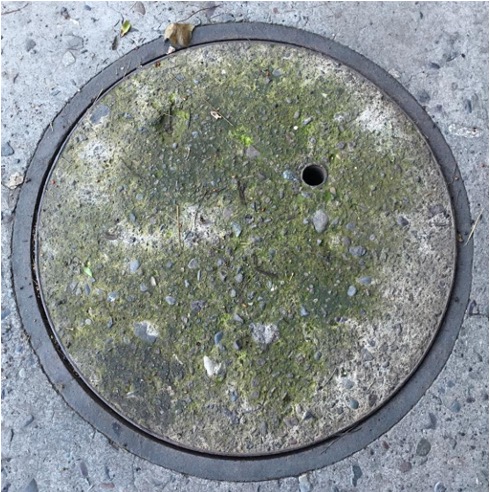
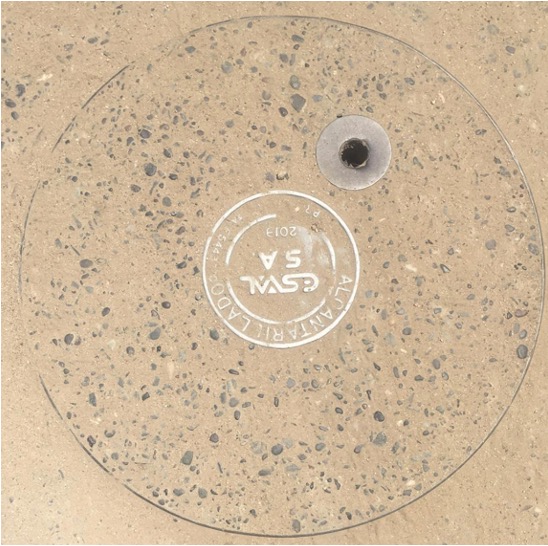
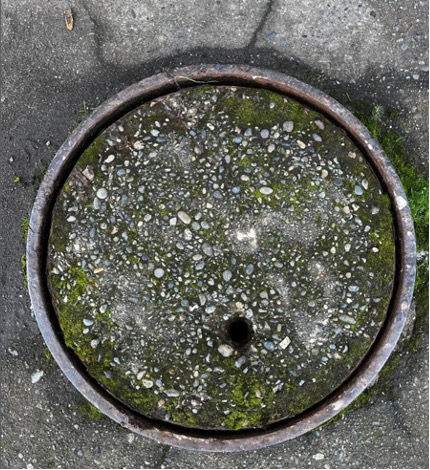


Nombre de las fotos: 1. Santiago, Chile. 2. Algarrobo, Chile. 3. Chiloé, Chile. 4. Ronda, España. 5. Osaka, Japon.
Las fotografías fueron tomadas durante recorridos cotidianos por distintos entornos urbanos: centros históricos, barrios residenciales y áreas periféricas. Cada imagen registra una tapa de alcantarillado desde una perspectiva cenital, transformando un objeto funcional y habitualmente invisible en un punto de reflexión estética y política. El contexto de estas imágenes es deliberadamente democrático: emergen de lugares socialmente diversos, donde el mismo elemento —la tapa— aparece constante, indiferente a la estratificación del espacio urbano. La serie se desarrolla en el espacio público, allí donde la infraestructura y el cuerpo en movimiento se encuentran, revelando lo que Henri Lefebvre (1968/2017) definió como la producción del espacio. A través de esta documentación sistemática, el proyecto construye un mapa visual y poético de lo común urbano, invitando a observar hacia abajo, hacia lo inadvertido, y a reconsiderar la belleza y la igualdad presentes en la materialidad compartida de la ciudad.
¿Por qué son importantes estas fotografías en particular para su investigación?
Estas fotografías son esenciales porque revelan la dimensión democrática y simbólica de la infraestructura urbana. Las tapas de alcantarillado, idénticas en su función pero diversas en su forma textura, representan una igualdad silenciosa en la ciudad: todos las pisamos, sin distinción de lugar ni condición. Este registro visual se sostiene en una observación reiterativa, casi ritual, que convierte lo ordinario en una forma de contemplación crítica. Siguiendo la línea de Richard Sennett (2012), el proyecto entiende el espacio público como ámbito de cooperación y coexistencia, y retoma de Henri Lefebvre (1968/2017) la idea del derecho a la ciudad como experiencia corporal y cotidiana. Fotografiar estas superficies no busca monumentalizar lo banal, sino reconocerlo como un territorio compartido, un patrimonio material que nos iguala. Cada imagen funciona así como un gesto de observación política: mirar hacia abajo se transforma en un acto de conciencia urbana.
Manhole Covers. The Common Beneath Our Feet: Poetics of the Urban Subsoil, Material Memory, and Everyday Democracy.
Gabriela de la Piedra de la Cerda, Architecture Scholl at Universidad Mayor , Santiago, Chile. IG: @gabdelapiedra
Location and dates of the photos: Between 2015 and 2025, Santiago, Algarrobo, and Chiloé (Chile); Ronda (Spain); and Osaka (Japan). These are some of the locations from a project comprising more than 500 photographs, and they can be adjusted if necessary
Name of the photos: 1. Santiago, Chile. 2. Algarrobo, Chile. 3. Chiloé, Chile. 4. Ronda, España. 5. Osaka, Japon.
The photographs were taken during everyday walks through diverse urban environments—historic centers, residential neighborhoods, and peripheral streets. Each image captures a manhole cover from a vertical perspective, transforming a functional and often invisible object into a site of aesthetic and political reflection. The context of these images is intentionally democratic: they emerge from socially diverse places where the same element—the manhole cover— remains constant, indifferent to the stratification of urban space. The series unfolds in public spaces where infrastructure and the moving body intersect, revealing what Henri Lefebvre (1968/2017) described as the production of space. Through this systematic documentation, the project constructs a visual and poetic map of the urban commons, inviting viewers to look downward—toward the unnoticed—and to reconsider the beauty and equality embedded in the shared materiality of the city.
Why are those particular photographs important to your research?
These photographs are essential because they reveal the democratic and symbolic dimension of urban infrastructure. Manhole covers, identical in function yet diverse in form and texture, embody a silent equality within the city: everyone walks upon them, regardless of place or condition. This visual record rests on a repetitive, almost ritual observation that turns the ordinary into a mode of critical contemplation. Following Richard Sennett’s (2012) understanding of public space as a sphere of cooperation and coexistence, and Henri Lefebvre’s (1968/2017) concept of the right to the city as a lived and bodily experience, the project approaches these surfaces as material expressions of shared urban life. The act of photographing them is not meant to monumentalize the banal but to acknowledge it as common ground—a collective heritage that unites us. Each image becomes a subtle political gesture: to look down is to become aware of what connects us beneath our feet.
 Narrativas Visuales/Visual Narratives