
Oscar Emmanuel Villacres Gracia, Ambato – Ecuador.
Captura de las fotos: 06 de Octubre, 2025. Ambato / Ecuador.
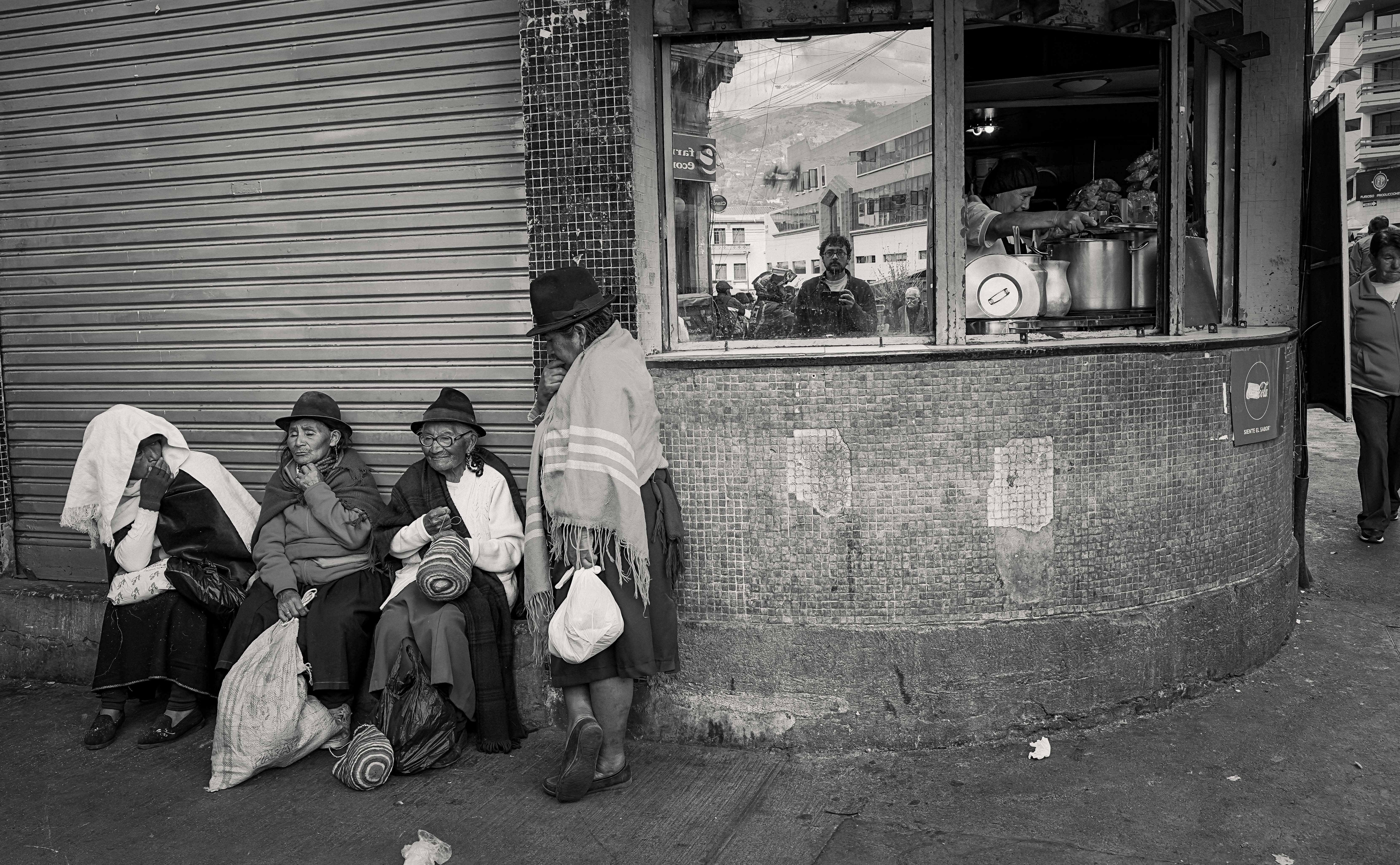
Nombre de las fotos: 1.ST / 2.ST / 3.ST / 4.ST / 5.ST.
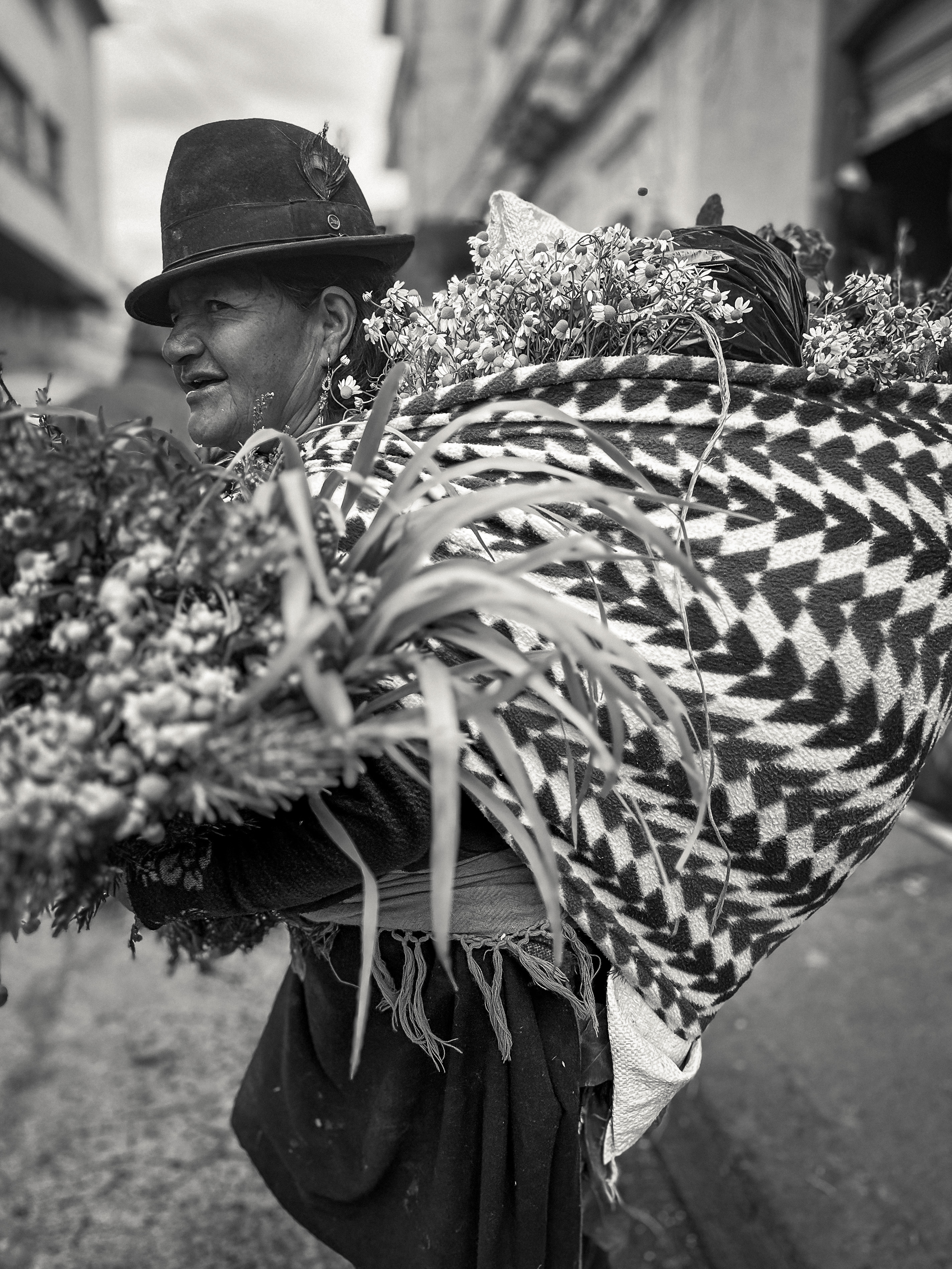
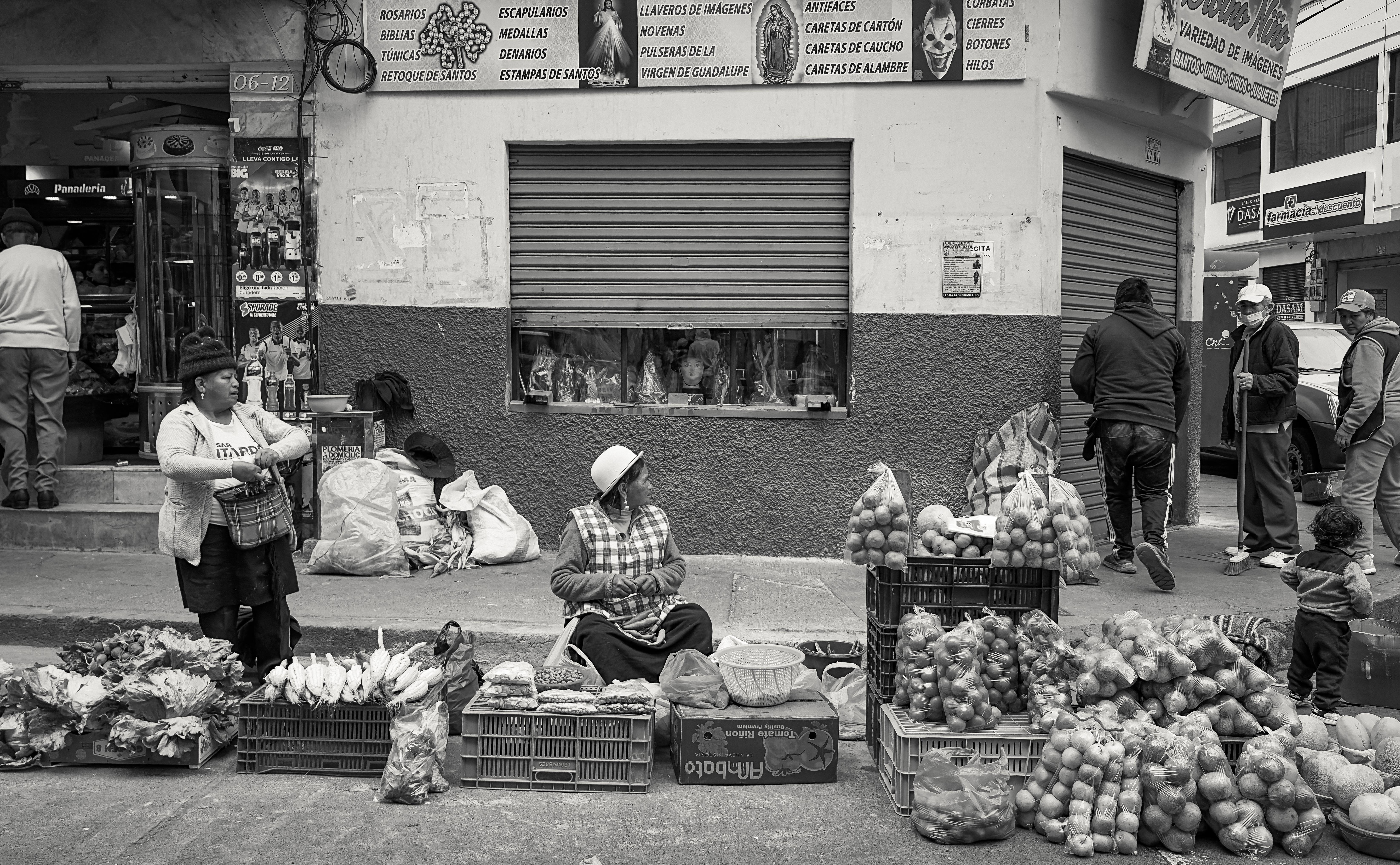
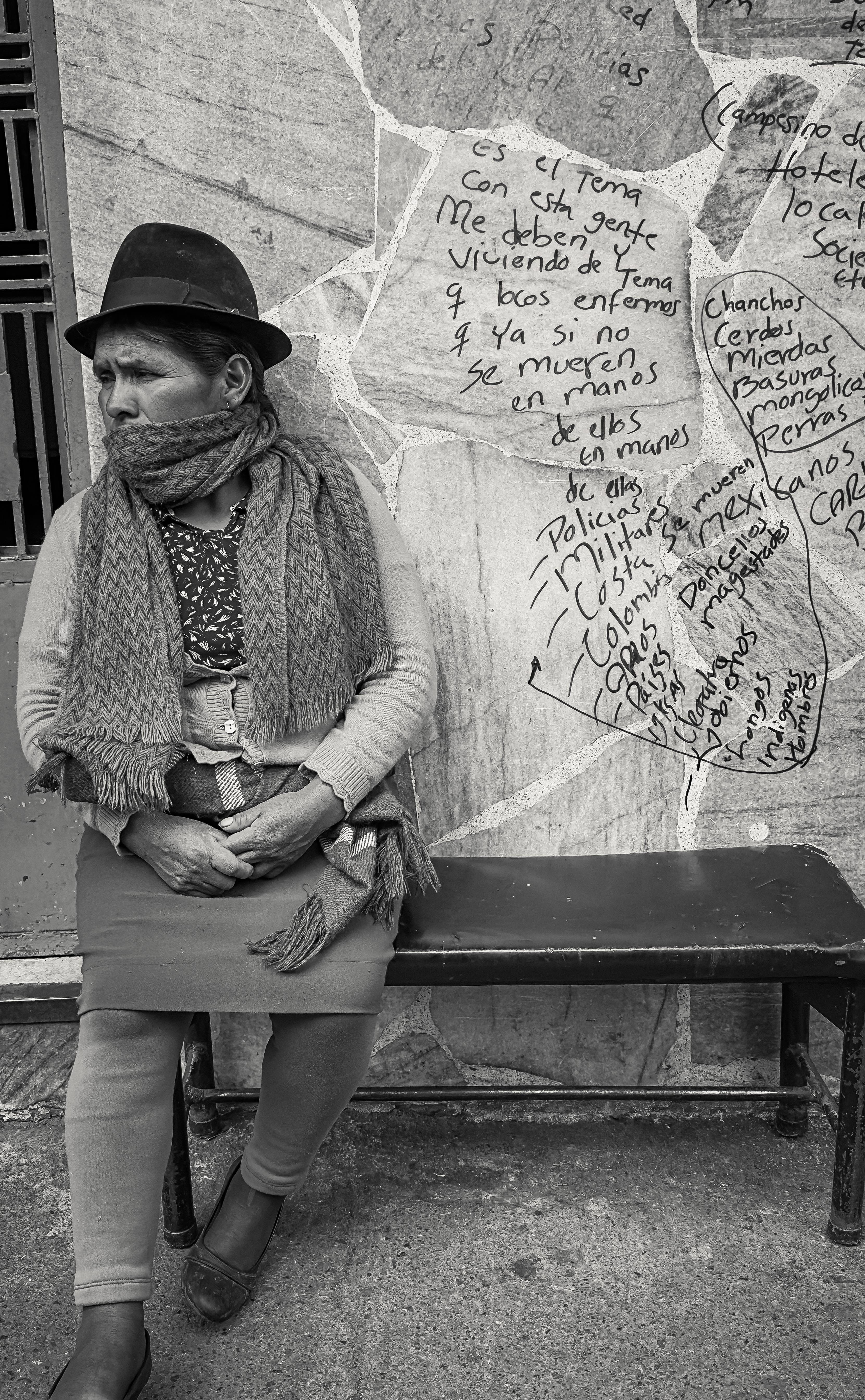
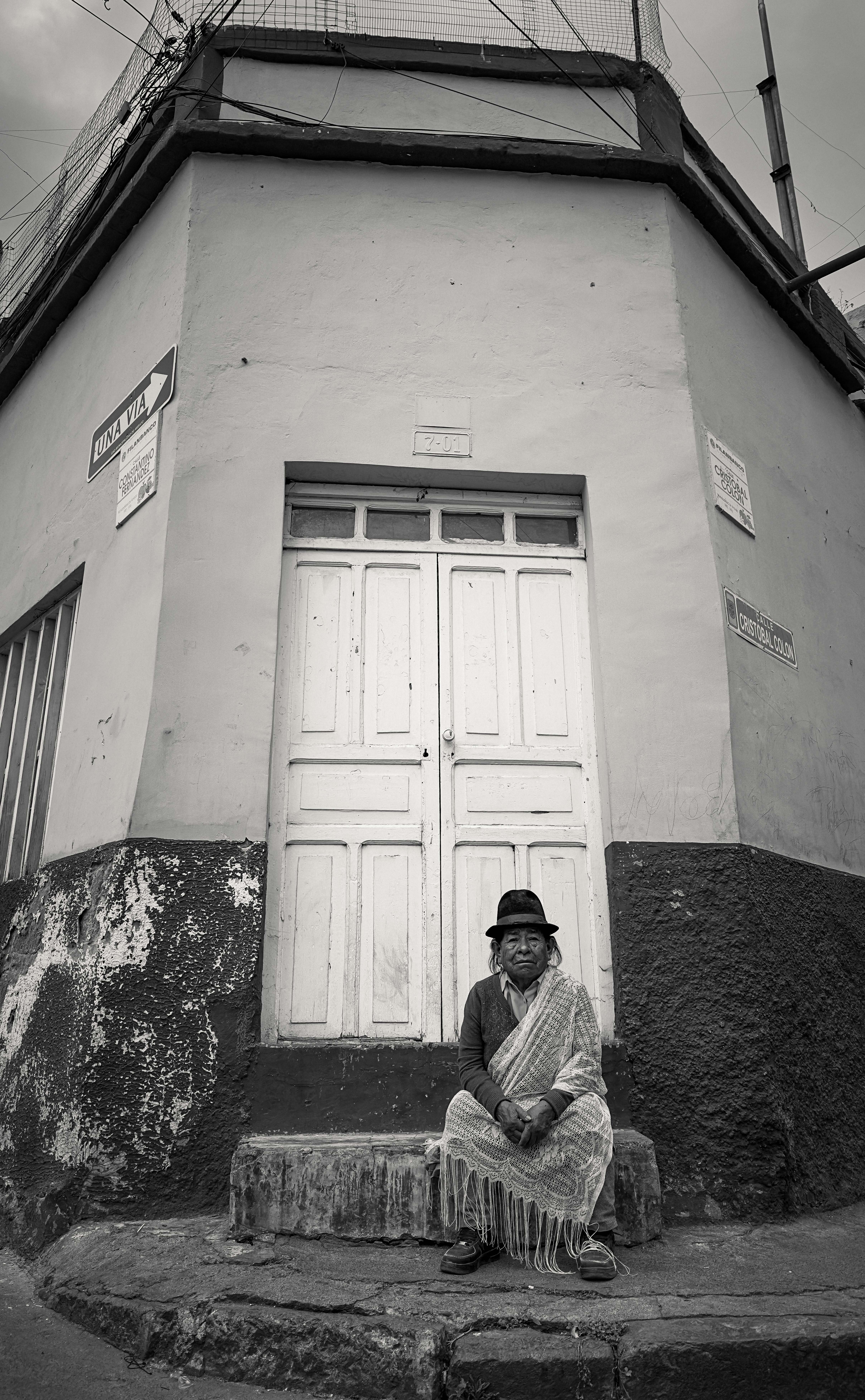
Las imágenes fueron tomadas en las calles del centro de Ambato, donde la rutina del comercio informal se mezcla con el pulso de la ciudad. En esquinas, aceras y portales, las mujeres indígenas se convierten en parte esencial del paisaje urbano: sus mantas, miradas y gestos dialogan con muros antiguos, puertas descascaradas y fachadas que también cuentan historias.
A través del blanco y negro, se busca resaltar la nobleza del trabajo cotidiano, la conexión entre cuerpo y territorio, y la poética resistencia de quienes habitan la calle no solo como espacio de paso, sino como lugar de vida.
¿Por qué son importantes estas fotografías en particular para su investigación?
Estas fotografías son una extensión de mi práctica de deriva urbana y fotografía callejera, donde estudio cómo las personas transforman el espacio a través de sus acciones y relaciones. Retratar a mujeres indígenas en su labor diaria permite reflexionar sobre las desigualdades, la identidad y la fuerza cultural que sostiene la vida urbana. En ellas se revela una arquitectura humana que da sentido al territorio, mostrando que cada esquina, cada puesto y cada gesto son fragmentos vivos de la memoria colectiva de Ambato.
Women who hold up the city
Oscar Emmanuel Villacres Gracia, Ambato – Ecuador.
Location and dates of the photos: October 6, 2025. Ambato / Ecuador.
Name of the photos: 1.ST / 2.ST / 3.ST / 4.ST / 5.ST.
The images were taken in the streets of downtown Ambato, where the routine of informal commerce blends with the city’s pulse. On street corners, sidewalks, and in doorways, Indigenous women become an essential part of the urban landscape: their shawls, gazes, and gestures converse with ancient walls, peeling doors, and facades that also tell stories.
Through black and white, the aim is to highlight the nobility of daily work, the connection between body and territory, and the poetic resilience of those who inhabit the street not only as a space for passing through, but as a place of life.
Why are those particular photographs important to your research?
These photographs are an extension of my urban drift and street photography practice, where I study how people transform space through their actions and relationships. Portraying Indigenous women in their daily work allows me to reflect on inequalities, identity, and the cultural force that sustains urban life. They reveal a human architecture that gives meaning to the territory, showing that every corner, every stall, and every gesture are living fragments of Ambato’s collective memory.
 Narrativas Visuales/Visual Narratives