
Rodrigo Alexis Ortega Chavarría, Master in Visual Anthropology, Facultad Latinoamericana de Ciencias Sociales FLACSO Ecuador. Postgraduate in Higher Education, Universidad Central de Chile. Graduate in Fine Arts, Universidad de Artes y Ciencias Sociales ARCIS, Chile. Website: https://issuu.com/rodrigo7656/docs/portafolio_rodrigo_ortega_2018
Fechas de captura: 01. Agosto de 2021, Quito, Ecuador. 02. Agosto de 2021, Quito, Ecuador. 03. Agosto y septiembre de 2021, Quito, Ecuador. 04. Octubre de 2021. 05. Noviembre de 2022.


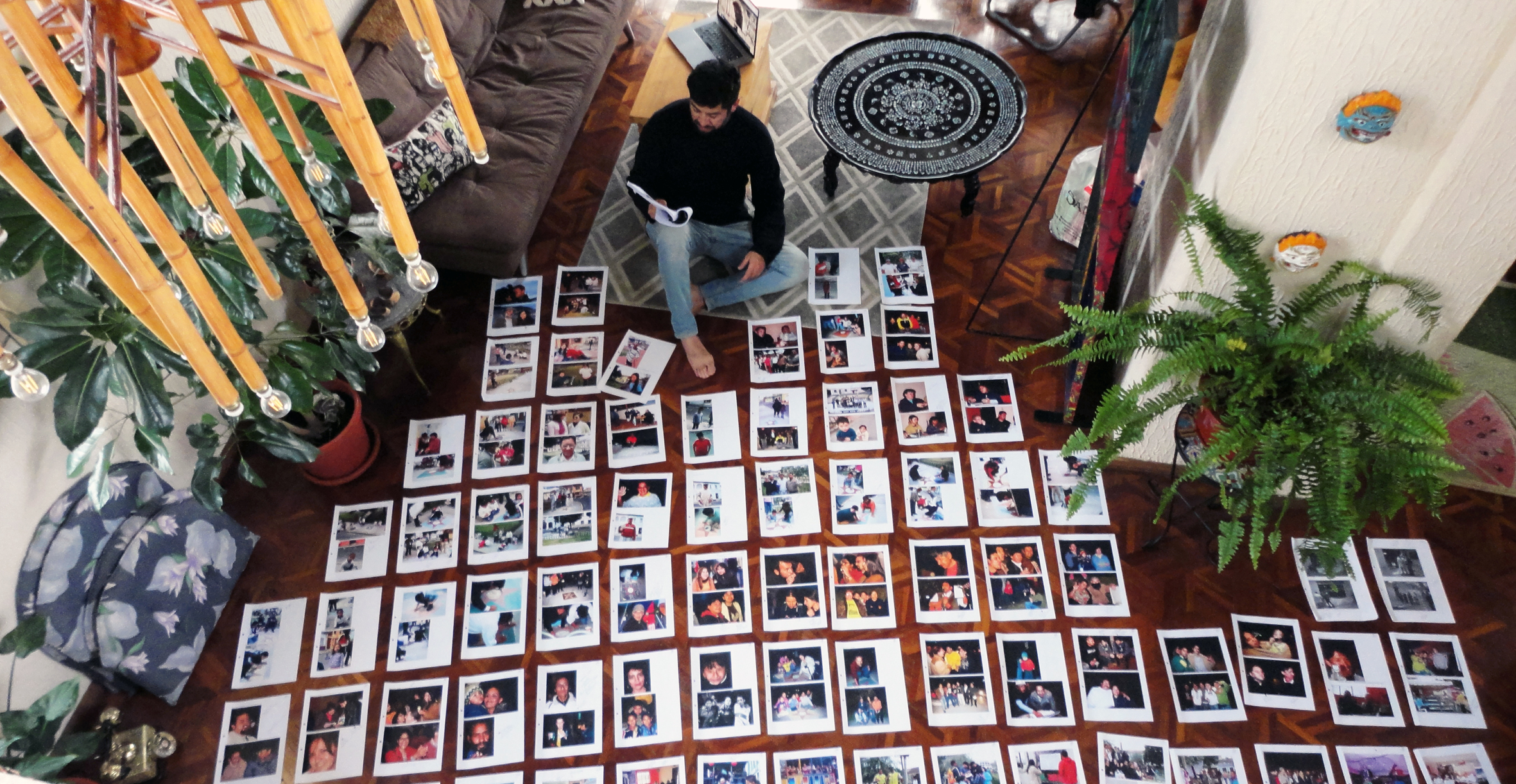


Nombre de las fotos: 1) Estado de uno de los siete discos duros del archivo al zur‐ich, agosto de 2021. 2) Sir Ralph Richardson 1964, fotografía autografiada. Estado del Fondo Teatro Sucre, Archivo Nacional de Ecuador, serie fotografías, caja 17, folio 1963‐1968. 3) Impresión, organización y codificación de parte del archivo fotográfico digital al zur‐ich, agosto‐septiembre de 2021. 4) Elicitación pública del archivo al zur‐ich. Parque de las Flores, ciudadela México, Quito, Ecuador, octubre de 2021. 5) Maleta archivo con 3635 fotografías de la parroquia Chimbacalle de la ciudad de Quito donada al CAC, noviembre de 2022.
Estas imágenes fueron hechas en el marco del proyecto “Atlas al zur‐ich. Un archivo artístico sobre comunidades barriales del Sur de Quito”. De carácter antropológico visual y financiado por los Fondos de Cultura del Gobierno de Chile, convocatoria 2021, consistió en la recuperación, organización y materialización del archivo visual (nativo digital) de los 20 años del Encuentro de Arte y Comunidad al zur‐ich en Ecuador (2002‐2022). Al zur‐ich fue una plataforma para el arte contemporáneo que cada año convocó a artistas ecuatorianos e internacionales a trabajar proyectos de arte en comunidades barriales estigmatizadas del Sur de de Quito para luego ampliar su rango de operación a comunidades rurales de otros cantones del país. En estos 20 años al zur‐ich logró producir no sólo una enorme cantidad de archivo fotográfico y audiovisual sobre las comunidades, sino también debates sobre sus anhelos y conflictos cotidianos en los territorios, anticipándose al posterior desarrollo de esta práctica en el resto de la región. Así, mi propuesta no sólo puso el acento en el rescate de dicho acervo visual comunitario sino también en la relevancia de la materialización de lo digital como estrategia de recuperación de los encuentros sociales efectivos, afectivos y no virtuales.
¿Por qué son importantes estas fotografías en particular para su investigación?
Lejos de lo que pensamos, el deterioro, desorden y pérdida también afectan a los dispositivos de almacenamiento digital. Suponemos que el solo hecho de capturar una imagen asegura su existencia irrefutable y duradera. No obstante, cuando estos archivos se dañan se pierde con ello la posibilidad de construir relatos de sentido presente y futuro. Tal como sucede con los archivos físicos almacenados en precarias condiciones, por falta de recursos o mera indolencia, así también los archivos digitales de al zur‐ich se encontraban desperdigados en varios discos duros, sin codificación de sus imágenes y sin haber sido vistas por quienes en ellas aparecían. Emulando el museo imaginario de Malraux, comencé a organizarlas para exponerlas públicamente. Materialicé 3635 fotografías del archivo y las llevé de vuelta a uno de sus lugares de origen. Casi 20 años después, muchos de sus protagonistas se reencontraron con su propia imagen. Emociones, recuerdos y anhelos surgieron con ese proceso, del cual donamos, al Centro de Documentación del CAC de Quito, una maleta de archivo físico con las fotografías, a la manera de las boîtes en valise de Duchamp, para que estas sean rearticuladas por las viejas y nuevas generaciones bajo una mirada de conjunto, lejos del visionado “una a una” que impone la pantalla digital de un teléfono celular.
Brief critical chronicle about the materialization of a photographic, digital native and community archive of the South of Quito
Rodrigo Alexis Ortega Chavarría, Master in Visual Anthropology, Facultad Latinoamericana de Ciencias Sociales FLACSO Ecuador. Postgraduate in Higher Education, Universidad Central de Chile. Graduate in Fine Arts, Universidad de Artes y Ciencias Sociales ARCIS, Chile. Website: https://issuu.com/rodrigo7656/docs/portafolio_rodrigo_ortega_2018
Dates: 1) August 2021, Quito, Ecuador. 2) August 2021, Quito, Ecuador. 3) August and September 2021, Quito, Ecuador. 4) October 2021. 5) November 2022.
Name of the pictures: 1) Condition of one of the seven hard drives of al zur‐ich archive. August 2021. 2) Sir Ralph Richardson 1964, autographed photograph. Condition of the Sucre Theater Fund, National Archive of Ecuador, photographic series, box 17, folder 1963‐1968. 3) Printing, organization and coding of a part of the al zurich’s digital photographic archive. August‐September 2021. 4) Public elicitation of the archive al zur‐ich. Parque de Las Flores, México citadel, Quito, Ecuador. October 2021. 5) Archive suitcase with 3635 photograph of the Chimbacalle parish in Quito City. Donated to CAC in november 2022.
These images were made within the framework of the project “Atlas al zurich. An artistic archive about neighborhood communities in the South of Quito.” Of a visual anthropological nature and financed by the Culture Funds of the Government of Chile, 2021 call, it consisted of the recovery, organization and materialization of the visual archive (digital native) of the 20 years of the Encuentro de Arte y Comunidad al zur‐ich in Ecuador (2002‐ 2022). Al zur‐ich was a platform for contemporary art that each year brought together Ecuadorian and international artists to work on art projects in stigmatized neighborhood communities in the South of Quito and then expand its range of operation to rural communities in other cantons of the country. In these 20 years, al zur‐ich managed to produce not only an enormous amount of photographic and audiovisual archives about the communities, but also debates about their desires and daily conflicts in the territories, anticipating the subsequent development of this practice in the rest of the region. Thus, my proposal not only placed emphasis on the rescue of said community visual heritage but also on the relevance of the materialization of the digital as a strategy for the recovery of effective, affective and non‐virtual social encounters.
Why are those particular photographs important to your research?
Far from what we think, deterioration, disorder and loss also affect digital storage devices. We assume that the mere fact of capturing an image ensures its irrefutable and lasting existence. However, when these archives are damaged, the possibility of constructing stories with present and future meaning is lost. As happens with physical files stored in precarious conditions, due to lack of resources or mere indolence, al zur‐ich’s digital files were also scattered on several hard drives, without encoding their images and without having been seen by those who they appeared in them. Emulating Malraux’s imaginary museum, I began to organize them for public display. I materialized 3,635 photographs from the archive and took them back to one of their places of origin. Almost 20 years later, many of its protagonists were reunited with their own image. Emotions, memories and longings arose with this process, from which we donated, to the Documentation Center of the CAC of Quito, a physical archive suitcase with the photographs, in the manner of Duchamp’s boîtes en valise, so that they could be rearticulated by the old and new generations under an overall view, far from the “one by one” viewing imposed by the digital screen of a cell phone.
 Narrativas Visuales/Visual Narratives